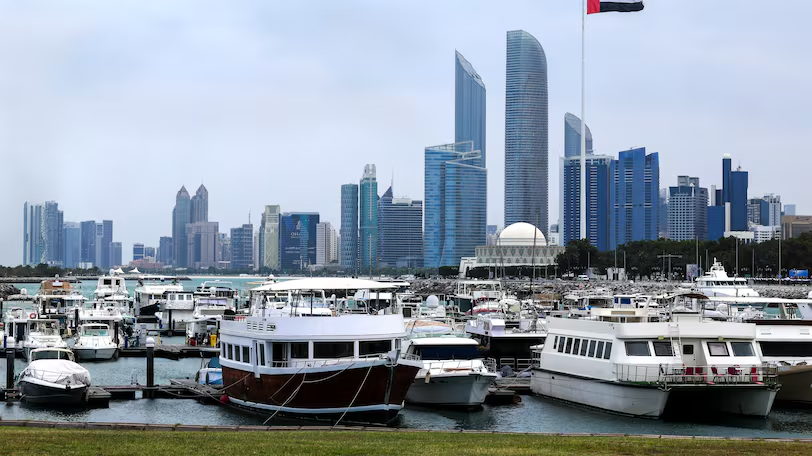

The 2029 Annual Meetings of the World Bank Group and the International Monetary Fund will take place in Abu Dhabi, United Arab Emirates, in October 2029, marking the second time the UAE will host the prestigious gathering of global economic policymakers. The decision was made by a vote of the Boards of Governors of the two institutions, according to a statement issued by the IMF press centre on Friday. The last time the Annual Meetings were held in the UAE was in 2003, in Dubai.
The Annual Meetings bring together central bankers, ministers of finance and development, private sector leaders, civil society representatives, media, and academia to discuss the most pressing issues facing the global economy, including global economic and financial stability, job creation, and poverty eradication. The gathering serves as a critical platform for shaping international economic policy coordination, with outcomes influencing everything from debt relief frameworks to climate finance commitments.
The meetings are typically held for two consecutive years at the World Bank Group and IMF headquarters in Washington, D.C., and every third year in one of the institutions’ member countries. The 2026 Annual Meetings will take place in Bangkok, Thailand, in October, where an official signing ceremony for the UAE to host the 2029 Meetings will be held. The rotation system ensures that member countries across different regions have opportunities to host, reflecting the institutions’ commitment to inclusive global governance.
For the global economy, the 2029 meetings will convene against a backdrop of ongoing structural shifts. The rise of non-bank financial flows, the acceleration of artificial intelligence adoption, and the transition to low-carbon economies are reshaping policy priorities. The meetings will also likely address debt sustainability challenges facing low-income countries, many of which are in Sub-Saharan Africa, and the need for multilateral cooperation on cross-border taxation, digital finance regulation, and climate adaptation financing.
The choice of Abu Dhabi is significant from a geopolitical and economic perspective. The UAE has positioned itself as a global hub for trade, finance, and logistics, with sovereign wealth funds that are among the world’s largest investors. Hosting the Annual Meetings reinforces the Gulf region’s growing influence in international economic governance, alongside Saudi Arabia’s recent hosting of World Economic Forum special meetings and Qatar’s role in mediating regional conflicts. For African countries, including Nigeria, the location offers proximity and cultural familiarity, potentially facilitating stronger participation in what is often a Western-dominated forum.
The statement noted that the institutions look forward to welcoming the UAE and the rest of their membership at the upcoming Spring Meetings in Washington, D.C., where discussions will focus on the global economy, job creation, and support for countries affected by the impacts of the war in the Middle East. The war in the region, which has disrupted shipping routes and contributed to energy price volatility, has direct implications for oil-importing and oil-exporting countries alike. For Nigeria, a major oil producer, the conflict’s impact on global crude markets and refining dynamics will be a key area of interest.
For Nigerian policymakers, the 2029 meetings present an opportunity to showcase the country’s economic reform progress. By 2029, the Tinubu administration will have had six years to implement its Renewed Hope agenda, including tax reforms, fiscal consolidation measures, and infrastructure investments. The extent to which these reforms translate into improved growth, reduced poverty, and greater economic resilience will shape Nigeria’s credibility and influence at the meetings. Active participation in the preparatory processes, including the Spring Meetings and committee-level engagements, will be essential for ensuring that Nigeria’s priorities are reflected in the global policy agenda.