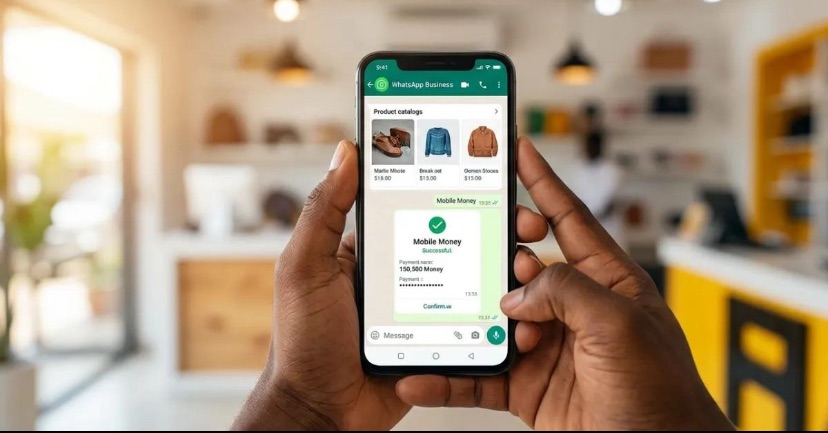

For many Nigerians, WhatsApp is no longer just an app for chatting with friends and family. It has quietly become a marketplace where entrepreneurs advertise products, negotiate prices, receive orders and build relationships with customers.
From fashion and food to beauty products, electronics and home services, small businesses are increasingly using WhatsApp as their main business platform.
Unlike traditional businesses that may require a physical shop, website or large advertising budget, WhatsApp allows entrepreneurs to start with what they already have — a smartphone, internet connection and a product or service to sell.
For some business owners, the platform has reduced the cost of reaching customers while making communication much faster.
“WhatsApp has made it easier for me to talk directly to customers. I can post what I have available, answer questions and receive orders without paying for a shop,” said Adedipe Temilade, a small business entrepreneur.
The growth of WhatsApp-based businesses is also being driven by the platform’s business features. Entrepreneurs can create business profiles, display products in catalogues, share prices and communicate with several customers throughout the day.
Many sellers also use WhatsApp Status as a free advertising channel. A single post can reach hundreds of contacts, while satisfied customers can help spread products through referrals and group chats.
For food vendors, the platform has become particularly useful. Customers can view daily menus, place orders and receive delivery updates without visiting a physical location.
Fashion sellers are also taking advantage of WhatsApp to display new arrivals, collect customer measurements and arrange payments and delivery.
The model is attractive to young Nigerians because it lowers the barrier to entry. Someone with limited capital can begin selling from home instead of spending heavily on rent, furniture and other shop expenses.
However, running a business entirely through WhatsApp also comes with challenges. Sellers must build trust, respond quickly to customers and protect their accounts from scams and unauthorised access.
Payment issues, fake orders, delivery problems and unreliable internet connectivity can also affect businesses that depend heavily on digital communication.
Despite these challenges, the growing use of WhatsApp for commerce shows how Nigerian entrepreneurs are adapting to changing consumer behaviour.
Customers increasingly want convenience. They want to see products, ask questions, negotiate, make payments and arrange delivery without leaving their homes. WhatsApp brings many of these activities into one place.
For small businesses, the platform is therefore becoming more than a communication tool. It is evolving into a low-cost digital storefront.
As more Nigerians turn to social and mobile commerce, businesses built around WhatsApp could continue to grow, particularly among young entrepreneurs looking for affordable ways to enter the market.
The rise of these businesses also shows that entrepreneurship does not always begin with a large office or expensive storefront. Sometimes, it begins with a phone, a product and the willingness to start selling.