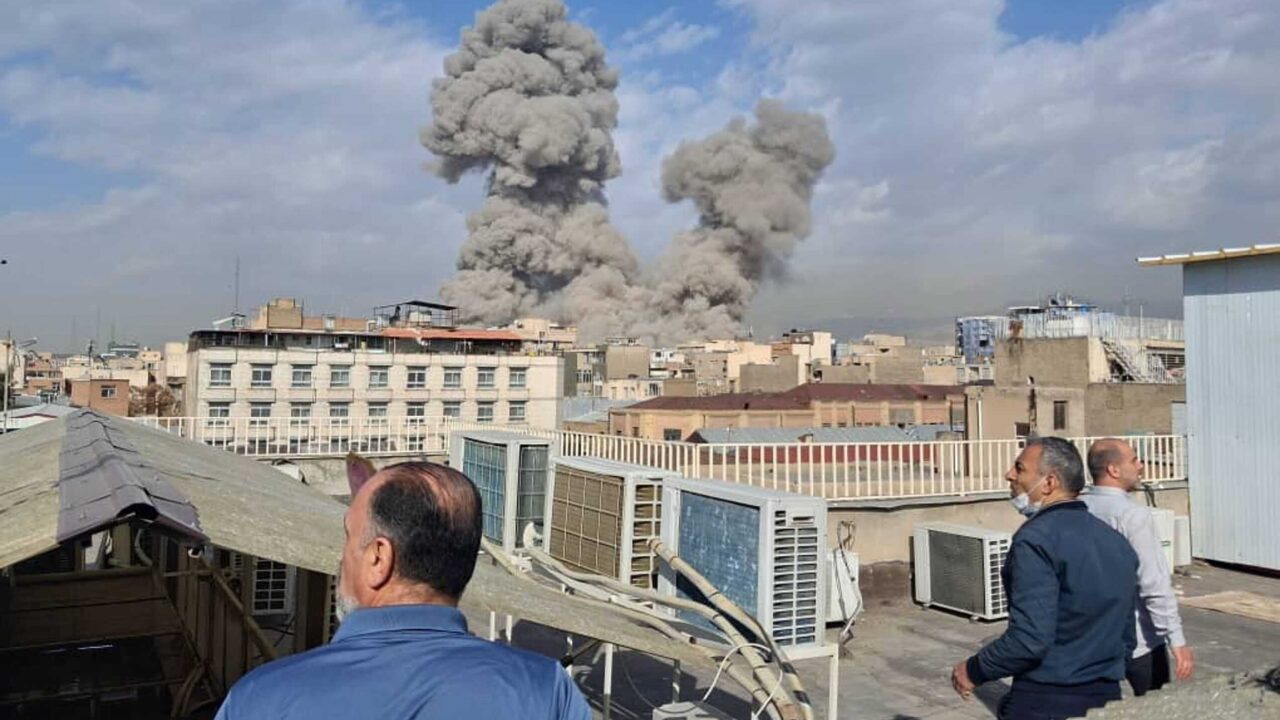

The coordinated military strikes launched by the United States and Israel against Iran on 28 February 2026 have unleashed a conflict that is rapidly reshaping global energy markets with profound and contradictory implications for Nigeria’s economy. While the opening phase of “Operation Epic Fury” achieved remarkable tactical success—eliminating Iran’s Supreme Leader Ayatollah Ali Khamenei and senior Revolutionary Guard commanders—the strategic aftermath presents Nigeria with a classic double-edged shock: higher oil revenues against soaring import costs, inflationary pressures, and heightened fiscal uncertainty.
The most immediate global consequence has been the effective closure of the Strait of Hormuz, through which approximately 20 percent of the world’s oil and a similar share of liquefied natural gas passes daily. An Iranian general has threatened to “burn any ship” seeking to navigate the strait, warning that oil prices could reach $200 in coming days. International ship-tracking platform Kpler reports that at least 150 tankers have dropped anchor in open Gulf waters beyond the strait, with vessel operators refusing transit. Oil exports through the strait plunged to about 4 million barrels on 28 February, less than one-quarter of normal daily traffic.
Brent crude surged approximately 10 percent to exceed $82 per barrel on Monday, trading substantially above Nigeria’s 2026 budget benchmark of $64.85 per barrel. Goldman Sachs warns that if shipping through the strait were halted for a month, oil prices could eventually eclipse $100 per barrel. For Nigeria, a petrostate where crude sales fund the majority of foreign exchange earnings and government revenue, higher prices would normally represent unalloyed good news.
However, Nigeria’s relationship with oil revenue has never been simple. Production capacity currently hovers around 1.5 million barrels per day, significantly below technical capacity of nearly 2 million barrels due to years of underinvestment, pipeline vandalism, and crude theft. More critically, much of Nigeria’s crude production is already provisioned through long-term contracts with international trading firms. These arrangements mean windfall gains may not flow immediately into government coffers.
The more immediate and painful impact is on refined petroleum imports. Nigeria’s continued reliance on imported petrol and diesel means higher crude prices translate directly into increased landing costs. The Dangote Petroleum Refinery raised its petrol gantry price from N774 to N875 per litre on Monday, citing crude volatility and replacement costs. NNPC retail outlets in Abuja now dispense petrol at N875 per litre, with pump prices expected to align toward N890–N900 per litre at partner stations. For ordinary Nigerians already grappling with elevated inflation, each price increase compounds household economic stress.
Dr. Muda Yusuf, CEO of the Centre for the Promotion of Private Enterprise (CPPE), warns that the conflict represents a “classic double-edged shock” for Nigeria. While higher oil prices may strengthen fiscal and external balances in the short term, inflationary pressures, welfare deterioration, capital flow volatility, and global growth risks pose significant countervailing threats. Yusuf urges the government to strengthen oil production capacity, intensify anti-theft operations, channel excess revenues into stabilisation funds, and deepen domestic refining to reduce vulnerability to imported refined products.
The LNG market has been particularly hard hit. Qatar, which supplies roughly 20 percent of global LNG, suspended production at its massive Ras Laffan facility after Iranian strikes prompted precautionary shutdowns. QatarEnergy has declared force majeure on contractual delivery obligations, sending European gas futures jumping by as much as 46 percent. While Nigeria’s LNG exports are less directly exposed, global price volatility affects contract renegotiations and investment decisions in the domestic gas sector.
The conflict has also manifested domestically. Members of the Islamic Movement of Nigeria (IMN), led by Ibrahim El Zakzaky, have held coordinated demonstrations across several northern states including Gombe, Niger, Kano, Bauchi, Yobe, and Sokoto, mourning Khamenei’s death and condemning US actions. The Inspector General of Police Olatunji Disu has warned that Nigeria “will not serve as theatre for foreign conflicts,” directing intensified surveillance around worship centres and public spaces. Any sustained domestic unrest would impose additional economic costs through disrupted commerce and heightened security expenditure.
Diplomatically, Nigeria has adopted a cautious posture of strategic hedging. The Ministry of Foreign Affairs called for “maximum restraint” and strict adherence to international law, without condemning either Iran or the US-Israeli coalition. This calibrated response reflects Abuja’s complex balancing act: close security cooperation with Western partners, significant trade ties with Gulf states, and a religiously diverse domestic landscape acutely sensitive to Middle Eastern politics. Cheta Nwanze, a risk analyst at Lagos-based SBM Intelligence, notes that some African governments are “gambling that the US-Israeli alliance would win, and would have more influence going forward.”
The African Union has expressed deep concern, warning that escalation could threaten global peace, food and energy security, and exacerbate existing humanitarian crises across the continent. ECOWAS has aligned with the AU’s call for calm, noting that events in the Middle East will have “serious consequences for international peace and security, for global energy markets, trade, and food supply chains, especially for West Africa.”
As the conflict continues to unfold, the path to resolution remains unclear. Iran’s Supreme National Security Council has ruled out negotiations with Washington and is prepared for a prolonged confrontation. The United States signals that operations could extend for weeks. For Nigeria, navigating this new landscape of heightened volatility requires disciplined economic management that converts geopolitical turbulence into resilience rather than vulnerability: strengthening production capacity, protecting critical infrastructure, building fiscal buffers, and accelerating the transition to domestic refining that insulates the economy from imported price shocks.