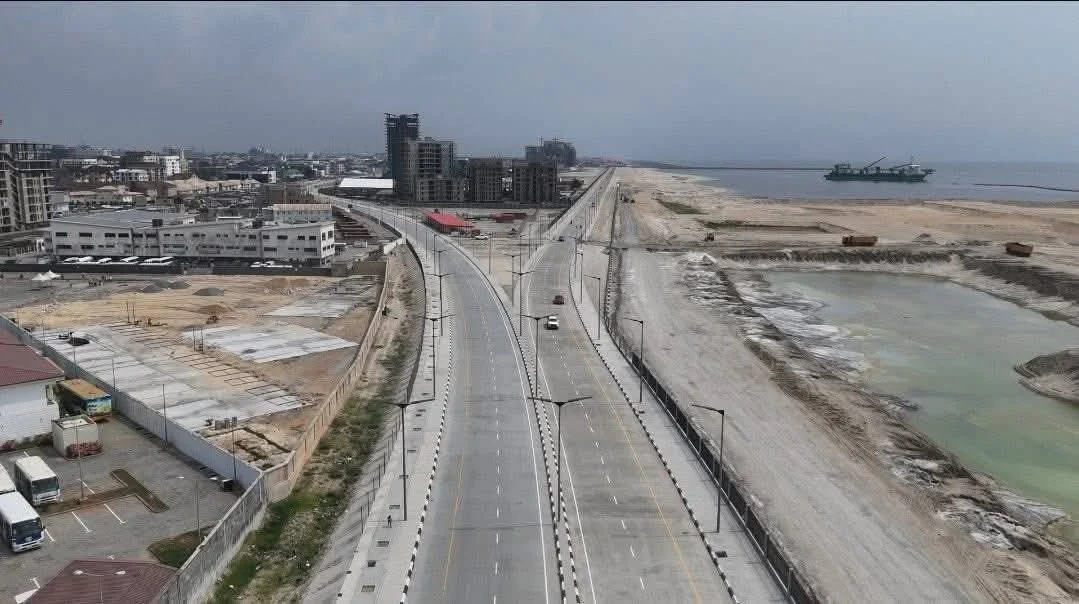

Nigeria’s debate over abandoned public infrastructure has returned to the spotlight after Minister of Works David Umahi suggested that the 750-kilometre Lagos-Calabar Coastal Highway could be jeopardised if President Bola Tinubu loses the 2027 presidential election.
Speaking on Arise Television on Friday, October 23, 2026, Umahi described the highway as a personal initiative of Tinubu and argued that the project required continuity in government to be completed.
“If President Tinubu does not come back in 2027 (God forbid), the Lagos-Calabar Coastal Highway will be gone,” the minister said.
His remarks have raised questions about the long-term protection of publicly funded infrastructure and whether major national projects should depend on the political fortunes of the administrations that initiate them.
Umahi made the comments while dismissing reports that the coastal highway had been abandoned in favour of the East-West Road. He maintained that the original project remained intact, although the Federal Government had directed that parts of the coastal route should align with the existing East-West Road corridor.
The minister also expressed confidence that the highway could be completed within approximately three years, despite ongoing construction and design work across several sections.
In a report published on October 23, 2026, Nairametrics quoted Umahi as saying that work was progressing across five of the highway’s nine sections, with Rivers, Delta, Bayelsa and Edo among the areas still to be covered.
The Federal Ministry of Works, in an update published in October 2026, said the first section, covering approximately 47 kilometres, had been completed, while construction on the second section, covering about 55 kilometres, had advanced towards completion of pavement works. Major flyovers, overpasses and underpasses were also under construction.
These updates indicate that work is progressing, but they do not establish that the entire 750-kilometre route is close to completion.
The controversy also highlights a longstanding challenge in Nigeria’s public investment system: projects can suffer delays, funding gaps and changes in priorities when administrations change.
One frequently cited illustration is the Presidential Projects Assessment Committee established under former President Goodluck Jonathan in 2011. The committee reportedly identified 11,886 federal projects and estimated that completing them would cost ₦7.78 trillion. The figures have since featured in discussions about the financial consequences of incomplete public works.
Projects such as the Ajaokuta Steel Company and the Mambilla Hydropower Project also illustrate how prolonged delays, contractual disputes and implementation difficulties can prevent major investments from delivering their intended economic benefits.
However, continuity alone does not guarantee value for money. Governments must also assess whether projects remain economically viable, whether contracts provide value for public funds and whether construction milestones justify further expenditure.
The Lagos-Calabar Coastal Highway has faced public scrutiny over its cost, route, environmental implications and implementation. Former Labour Party presidential candidate Peter Obi has questioned the project’s long-term prospects and called for an independent audit, reflecting wider concerns about transparency and accountability in major infrastructure spending.
The policy challenge, therefore, is not simply to ensure that every project continues after a change of government. It is to establish transparent rules for deciding which projects should continue, be redesigned or be discontinued.
Multi-year budgeting, independent technical audits, public disclosure of contract costs and progress reports, and stronger legislative oversight could help reduce politically motivated interruptions while allowing governments to address genuine financial or engineering problems.
Umahi’s warning has placed the coastal highway at the centre of this debate. While the minister maintains that the project is progressing, his suggestion that its future depends on Tinubu’s re-election raises a fundamental question about Nigeria’s development priorities.
Public infrastructure is financed with public resources, making its long-term value a national concern rather than the legacy of any single administration.