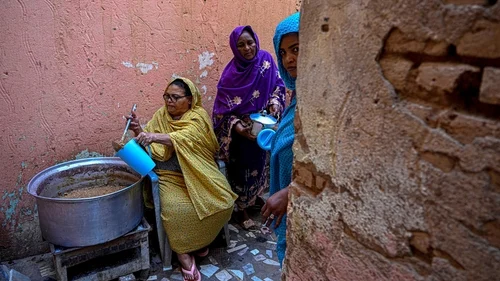

The Global Report on Food Crises 2026 has revealed that nearly two-thirds of the world’s hungriest people are concentrated in just ten countries, with the Democratic Republic of the Congo, Nigeria, Afghanistan, and Ethiopia accounting for the largest shares of acute food insecurity. The report, produced by the Food Security Information Network in collaboration with the Global Network Against Food Crises, presents a sobering picture of a world where conflict, climate extremes, and economic shocks continue to drive millions into acute hunger despite decades of development investment.
According to the report, approximately 164 million people across 44 countries experienced acute food insecurity requiring urgent action in 2025, a figure that has remained persistently high for several years. Of these, more than 100 million people are concentrated in just ten countries, reflecting a troubling geographic concentration of hunger that demands targeted intervention. The Democratic Republic of the Congo tops the list with an estimated 26 million acutely food-insecure people, driven by decades of conflict, displacement, and weak agricultural infrastructure.
Nigeria ranks second among the ten worst-affected countries, with an estimated 22 million people facing acute food insecurity. The report attributes Nigeria’s hunger crisis to a combination of conflict-driven displacement in the northeast, banditry and farmer-herder clashes in the north-central and northwest regions, and economic shocks including inflation and currency depreciation that have eroded household purchasing power. The removal of fuel subsidies in 2023, while fiscally necessary, contributed to higher transportation and food costs, compounding the challenges faced by vulnerable households.
The persistence of acute hunger in Nigeria, one of Africa’s largest economies, highlights a fundamental paradox: a country with vast agricultural potential and significant oil wealth continues to see millions of its citizens unable to access sufficient, safe, and nutritious food. The disconnect between macroeconomic indicators and household welfare has become a central theme of Nigeria’s development challenge. While GDP growth has averaged around 3.5 per cent in recent years, poverty and food insecurity remain stubbornly high, reflecting the unequal distribution of economic gains and the vulnerability of rural livelihoods to conflict and climate shocks.
From a policy perspective, the report calls for a fundamental shift from crisis response to prevention, arguing that humanitarian assistance alone cannot break the cycle of hunger. Investments in conflict resolution, climate adaptation, and social protection systems are essential to building resilience. For Nigeria, this means addressing the root causes of displacement in the northeast, improving security in agricultural zones, and expanding targeted social safety nets that reach the most vulnerable households. The government’s Renewed Hope Agenda includes commitments to agricultural transformation and social protection, but implementation has been hampered by fiscal constraints and security challenges.
The report also underscores the role of global food systems in shaping local hunger outcomes. While Nigeria produces staple crops such as cassava, yam, and maize in significant quantities, post-harvest losses remain high due to inadequate storage and transportation infrastructure. The country also remains dependent on imports for key commodities such as wheat and rice, exposing domestic food prices to global market volatility. Strengthening local value chains, reducing post-harvest losses, and improving market access for smallholder farmers are critical pathways to reducing Nigeria’s hunger burden.
As the global community prepares for the second half of the decade, the concentration of hunger in a small number of countries offers both a warning and an opportunity. The warning is that without urgent intervention, millions will continue to suffer. The opportunity is that targeted, well-funded programmes in ten countries could dramatically reduce the global hunger burden. For Nigeria, the report serves as a reminder that economic growth alone is insufficient; inclusive development that reaches the most vulnerable is essential to fulfilling the promise of the Renewed Hope Agenda.