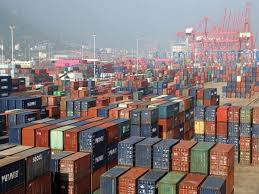

Nigeria’s agricultural sector is grappling with a profound economic contradiction where thriving informal trade networks are simultaneously eroding the nation’s global competitiveness. According to recent industry analysis, the country loses approximately $1.2 billion annually due to the rejection of agricultural exports in international markets. These losses are primarily driven by quality control failures, such as high aflatoxin levels and unapproved pesticide residues, which stem from a systemic lack of transparency across fragmented supply chains. For the Nigerian economy, this “trust-me” model of commerce has become a multi-billion dollar liability, preventing the nation from capturing the high-value premiums currently being secured by regional competitors like Kenya and Ethiopia.
The crisis is rooted in the “information asymmetry” that exists between rural smallholder farmers and global off-takers. A typical Nigerian agricultural transaction involves four or more layers of intermediaries (middlemen) before reaching an exporter. At each node, critical market intelligence and quality specifications—such as moisture content or food safety standards—are lost or ignored. From a business journalism perspective, this structural failure creates a “risk premium” on Nigerian produce. When international buyers cannot verify the production practices of a shipment, they either discount the price or shift their procurement to origins with more robust traceability systems. This collective reputational damage affects all Nigerian exporters, regardless of their individual compliance levels.
The historical evolution of this system explains its persistence. Following the dismantling of state marketing boards under the 1986 Structural Adjustment Programme (SAP), the role of aggregation shifted to private “licensed buying agents” and traditional middlemen (dilali). While these actors perform an essential market-making function in regions with poor infrastructure and limited access to finance, they often operate without accountability to either the producer or the end-buyer. This disconnect means that a farmer using unidentified chemicals may never receive the feedback necessary to correct their behavior, as the intermediary’s primary incentive is immediate volume rather than long-term quality.
The fiscal implications of these inefficiencies extend beyond immediate revenue losses. Repeated rejections at European and Asian ports discourage agricultural investment and exacerbate rural poverty, driving migration to already strained urban centers. For the “Renewed Hope” agenda to achieve its target of significant non-oil export growth, the agricultural value chain must undergo a digital and institutional transformation. Integrating “Compliance-as-a-Service” (CaaS) and bidirectional information systems can reduce the cost of quality assurance, ensuring that a bag of soy or ginger can be traced back to its origin. This level of transparency is no longer a luxury but a fundamental requirement for entering the $130 billion global specialty crop market.
Ultimately, the goal is not to eliminate intermediaries but to align their profit motives with global standards. Moving toward market-based accountability requires a mix of infrastructure investment—such as temperature-controlled storage and aggregation hubs—and a pricing mechanism that explicitly rewards high-quality, traceable produce. As global traceability requirements, such as the EU Deforestation Regulation (EUDR), become more stringent in 2026, Nigeria’s “trust-based” economy must evolve into a “standards-based” one. Closing the $1.2 billion value gap is the most direct path to boosting Nigeria’s foreign exchange earnings and ensuring the long-term survival of its agricultural heartlands.