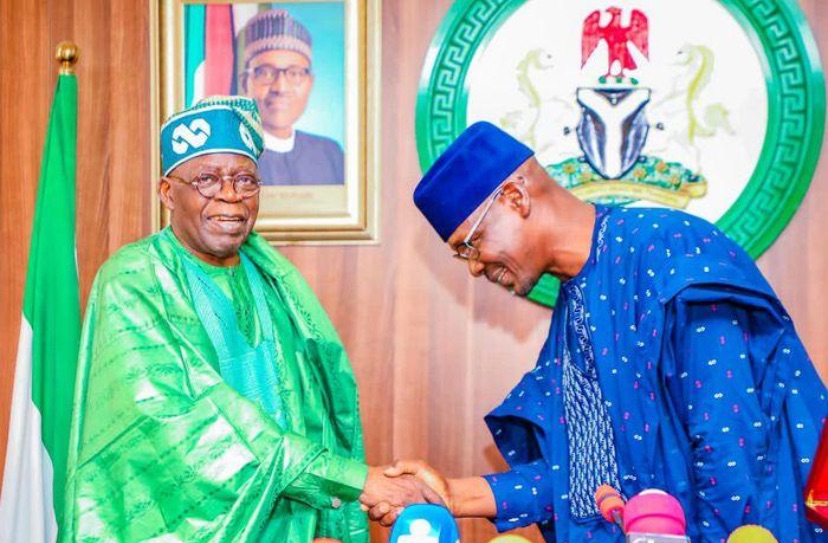

Nasarawa State Governor Abdullahi Sule has said the economic reforms introduced by President Bola Ahmed Tinubu have significantly increased the state’s monthly allocation from the Federation Account, giving the government more room to fund infrastructure and other development projects.
Sule said Nasarawa’s monthly allocation, which previously stood between N3.8 billion and N4.5 billion, has now risen to an average of between N14 billion and N16 billion.
The governor made the disclosure on Saturday in Lafia while receiving members of the Renewed Hope Ambassadors National Media Tour led by Bayo Onanuga, Special Adviser to the President on Information and Strategy. The team was in the state to inspect federal and state government projects. (Trending News)
According to Sule, the increase in funds available to Nasarawa has created additional fiscal space for the state government to execute major projects without relying heavily on bank borrowing.
He attributed the improved financial position to reforms implemented by the Tinubu administration, particularly the removal of the petrol subsidy.
Before the reforms, Sule said the state struggled with limited resources and had difficulty financing major capital projects. He noted that Nasarawa had previously needed to borrow about N5 billion for a single market project.
The governor said the situation has changed, with the state now able to undertake larger infrastructure projects using increased revenue.
Sule said his administration has been able to execute projects estimated at about N90 billion without borrowing from banks. The projects cover areas including roads, industrial development, education, healthcare and water supply. (Vanguard News)
He acknowledged that the removal of the petrol subsidy and other economic reforms initially created hardship for Nigerians. However, he argued that the measures have subsequently increased the amount of money available to the three tiers of government.
The governor also praised Tinubu for taking what he described as difficult decisions that created additional financial resources for states and local governments.
The increase in allocations is important for state governments because monthly Federation Account revenue remains a major source of funding for many states.
Higher allocations can give governments greater capacity to finance infrastructure, pay salaries, support public services and implement development programmes. However, the effectiveness of the additional revenue ultimately depends on how responsibly governments deploy the funds.
Sule therefore urged journalists and citizens to look beyond the completion of individual projects and examine how government policies are generating the resources used to finance them.
The development also highlights one of the central arguments surrounding Tinubu’s economic reforms: whether the short-term pressure caused by measures such as subsidy removal can eventually translate into stronger public finances and greater investment.
For Nasarawa, the governor believes the increase in federal allocations is already creating room for larger development projects.
The challenge now is ensuring that the additional resources translate into sustainable improvements in infrastructure, businesses and living standards for residents.
As Nigeria continues to adjust to the reforms, the financial position of states will remain an important measure of how the changes are affecting governments and the wider economy.