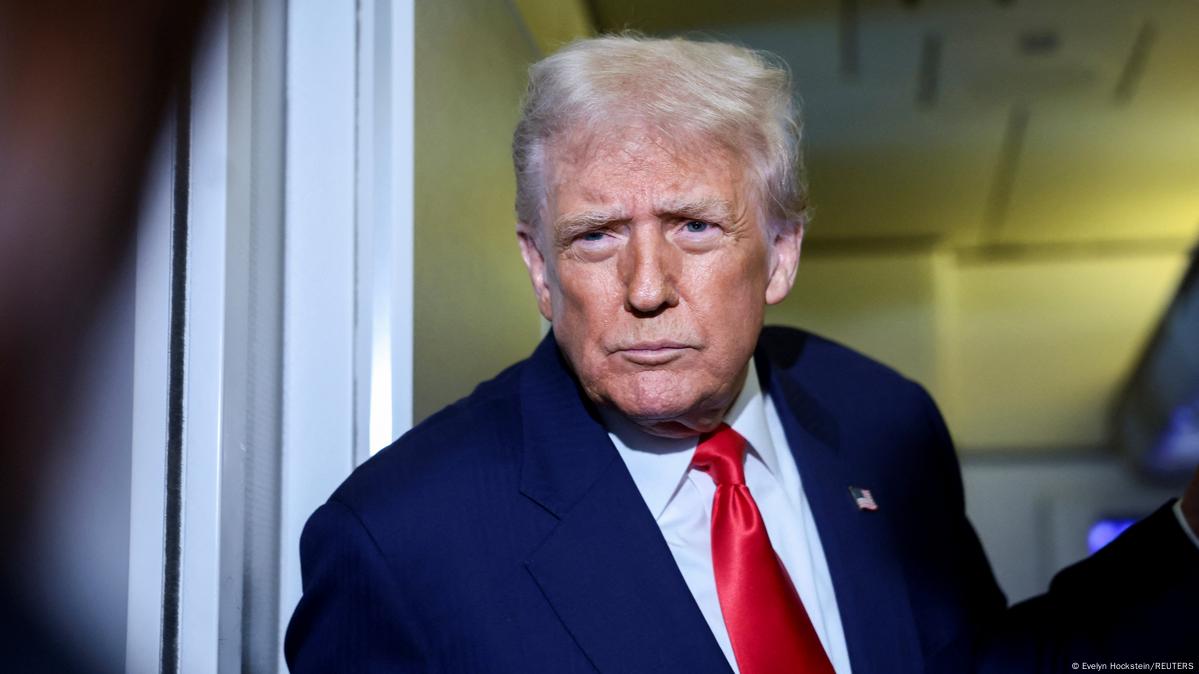

United States President Donald Trump dramatically escalated diplomatic tension with Nigeria yesterday, indicating that the deployment of US military power, including airstrikes and ground troops, was under consideration. The threat came as Mr Trump doubled down on claims that Christians are being killed “in very large numbers” in the West African nation, a situation he described as Christianity facing an “existential threat.”
Speaking to reporters, the US President confirmed that he had instructed the Pentagon to “prepare for possible action” and warned of an immediate suspension of US aid to Nigeria, Africa’s most populous nation. When asked directly if he envisaged troops on the ground or air strikes, Mr Trump responded: “Could be. I mean, other things. I envisage a lot of things… We’re not going to allow that to happen.” This follows the earlier formal designation of Nigeria as a “Country of Particular Concern” by the US over alleged widespread religious freedom violations.
The government in Abuja swiftly rejected the US President’s portrayal of the country’s internal security challenges. President Bola Tinubu, in an earlier statement, pushed back against the claim of religious intolerance, asserting that the characterisation “does not reflect our national reality, nor does it take into consideration the consistent and sincere efforts of the government to safeguard freedom of religion and beliefs for all Nigerians.”
The highly unusual threat spurred a high-level meeting in Abuja coordinated by the National Security Adviser (NSA), Mallam Nuhu Ribadu. Speaking on behalf of his colleagues, the Chief of Defence Staff (CDS), Olufemi Oluyede, stated that while Nigeria welcomed all support to tackle terrorism, the suggestion that Christians were being singled out for persecution was inaccurate. “Terrorism is a global problem… if we have countries out there who are ready to support Nigeria, we are willing to have them on board to help us checkmate the acts of terrorism within the space of Nigeria,” Mr Oluyede said. He stressed that the Nigerian security apparatus was doing its best to checkmate the complex problem.
Adding to the government’s rebuttal, Nasarawa State Governor Abdullahi Sule dismissed the claims of religious genocide as false and damaging misinformation being circulated abroad. Speaking to Arise News, Governor Sule maintained that Nigeria’s security challenges have nothing to do with religion, stating: “There is definitely nothing like religious genocide in Nigeria. These claims often come from politicians or frustrated individuals who don’t understand the consequences of their statements.”
The diplomatic fallout immediately hit Nigeria’s financial markets. As reported earlier, the Nigerian stock market lost N246 billion in value, while the country’s dollar bonds were among the worst performers globally, as investors sought safety amid heightened geopolitical risk.
Economic Consequences Deepen the Crisis
The Centre for the Promotion of Private Enterprise (CPPE) warned that even the rhetoric alone was “unwarranted, counterproductive, and economically destabilising.” Dr Muda Yusuf, the Chief Executive Officer of CPPE, stated that the threat immediately sends unsettling signals to the global investment community.
“The statement risks undermining the country’s image as a stable investment destination, unsettling financial markets, and eroding confidence among both domestic and international investors,” Dr Yusuf warned. He explained that a prolonged crisis could trigger capital flight from portfolio and equity investors, leading to a decline in foreign investment and venture capital funding. This, in turn, would cause the Naira to depreciate further and increase the country’s sovereign bond yields, thereby raising the government’s borrowing costs. Dr Yusuf asserted that unilateral military action would destabilise the Nigerian economy, threaten regional stability, and aggravate humanitarian conditions.
The CPPE analysis noted that Nigeria’s security challenges are complex and multifaceted, including insurgency, terrorism, farmer-herder clashes, and banditry, and are not state-engineered, stressing that the victims cut across all religious and ethnic lines.
Meanwhile, the political opposition African Democratic Congress (ADC) blamed President Tinubu’s administration for the deepening crisis, citing worsening insecurity and diplomatic failures for plunging the nation into “global disrepute.” They pointed to the rising number of fatalities across the country as evidence that the administration was failing in its most sacred duty. However, even the opposition party cautioned against the proposed American intervention. “Mobilising or threatening military intervention would be counterproductive, undermining our democratic aspirations and long-term unity,” the ADC stated.
Echoing the call for de-escalation, Governor Ademola Adeleke of Osun State appealed for renewed diplomatic engagement between Abuja and Washington. He argued that the American intervention should serve as a “wake-up call” to rigorously implement new security measures, adding: “Peaceful interface between Abuja and Washington holds the key rather than military intervention by the American government.”
The overwhelming consensus from Nigeria’s government, political figures, and economic experts is that the way forward must be through diplomatic channels and cooperative support to address complex internal security issues, rather than through foreign military threats. They are urging Washington to look beyond single narratives and engage strategically to protect Nigeria’s economic stability and sovereignty.