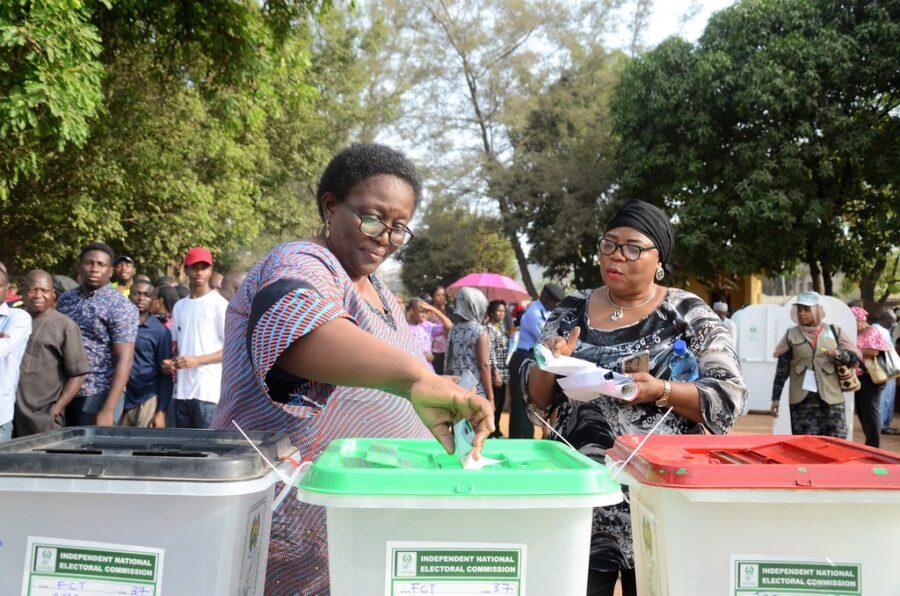

The Federal Capital Territory (FCT) Area Council elections in Kuje Area Council were characterized by a calm atmosphere and heavy security presence as voters headed to the polls on Saturday, February 21, 2026. Despite early concerns regarding political volatility, the exercise was largely peaceful, with security agencies maintaining a visible “show of force” at key polling units and entry points to ensure the safety of the electorate and electoral officials.
The security and operational consequence of this deployment was the successful deterrence of potential thuggery and ballot interference. Personnel from the Nigeria Police Force, Nigeria Security and Civil Defence Corps (NSCDC), and the Nigerian Army were strategically positioned to manage crowds and monitor movements. This proactive stance helped maintain order in Kuje, a location historically known for competitive local contests, ensuring that the democratic process proceeded without the disruptions often associated with grassroots elections.
Analytically, the conduct of the polls highlighted both successes and areas for improvement in Nigeria’s electoral logistics. While security was airtight, some polling units experienced slight delays in the commencement of voting due to the late arrival of materials. However, the Bimodal Voter Accreditation System (BVAS) was reported to have functioned optimally in most surveyed areas, significantly reducing the time spent on accreditation and increasing the credibility of the voter verification process.
The impact on “Voter Turnout and Civic Participation” is a vital dimension of the Kuje experience. While the tight security provided a sense of safety, residents noted that the heavy presence of armed personnel in some residential neighborhoods might have contributed to a “cautious” turnout in the early hours. Nevertheless, as the day progressed and reports of a peaceful environment spread, more residents emerged to cast their ballots, demonstrating a resilient commitment to local governance and community representation.
Furthermore, domestic and international observers monitoring the Kuje axis commended the level of coordination between INEC and the security agencies. The absence of major reports of violence or “vote-buying” during the morning session suggested that the pre-election warnings and sensitization efforts by civil society groups were effective. Local leaders urged the youth to remain law-abiding throughout the collation process, emphasizing that the peace maintained during voting must extend to the announcement of results.
The long-term outlook for FCT local governance depends on the transparency of the final tally currently moving to the collation centers. The Kuje experience serves as a template for how security-led stability can safeguard the ballot in potentially sensitive areas. For now, the focus shifts to the post-election phase, with stakeholders calling on all political parties to accept the outcome in good faith and utilize legal channels for any grievances, thereby preserving the peace recorded during the polls.