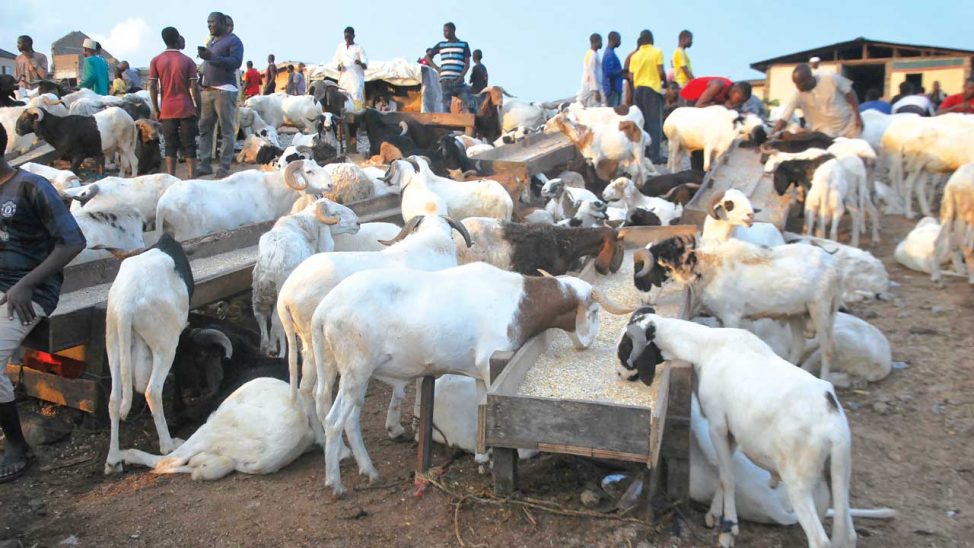

Ram prices in Kano have surged to as high as ₦700,000 in major livestock markets ahead of Eid-el-Kabir, even as traders report unusually weak customer turnout, highlighting a growing mismatch between rising supply-side costs and weakening household purchasing power.
Market checks across key trading hubs in the ancient commercial city show that medium to large-sized rams typically used for Eid sacrifices are now significantly more expensive than in the same period last year. Medium-sized animals that sold for about ₦250,000–₦300,000 in June 2025 now go for roughly ₦450,000–₦600,000, while larger rams have crossed the ₦700,000 threshold. This represents a year-on-year increase of roughly 80–100%.
Traders attribute the sharp rise to a combination of structural cost pressures: transport expenses have surged following the removal of fuel subsidies, more than doubling in some cases, while feed costs have climbed due to inflation in key grains such as maize and sorghum. Supply from pastoral regions has also tightened, with insecurity along key northern corridors, including Katsina, Zamfara, and Kaduna disrupting movement and reducing herd availability. Similar price pressures are being reported in other major cities, including Lagos and Abuja, though Kano remains the region’s primary livestock hub.
Despite higher prices, market activity has been notably subdued. Traders say foot traffic is lower than expected for the Eid season, with many potential buyers delaying purchases or exiting the market entirely after price checks. The slowdown reflects mounting cost-of-living pressures across Nigerian households, where discretionary spending has been increasingly squeezed by persistent inflation and elevated food prices. Some buyers who remain active are shifting preferences toward smaller animals such as goats or younger rams. Nigeria’s inflation rate stood at 33.95% as of May 2026, with food inflation exceeding 40%
Analysts say the developments reflect broader stress across Nigeria’s livestock value chain. According to the Livestock Farmers Association of Nigeria (LFAN), the cost of transporting a truckload of rams from Kano to Lagos has increased from about ₦350,000 in 2024 to over ₦800,000 in 2026, with much of the increase passed on to consumers.
Economists and market observers say weakening urban purchasing power is contributing to subdued demand ahead of Eid-el-Kabir. While traders across Kano livestock markets have attributed slow sales to inflation, rising feed costs, and higher transportation expenses, analysts note that many households are becoming more cautious in their spending as food and living costs continue to climb.
Still, traders remain cautiously optimistic that demand may strengthen closer to Eid, when last-minute buyers typically enter the market regardless of price levels. Historically, a significant share of livestock sales occurs in the final days before the festival, often accounting for nearly half of total seasonal turnover. However, some market participants warn that if current trends persist, unsold animals could accumulate, increasing the likelihood of post-festival price corrections.
A herder from Jigawa State, who requested anonymity due to security concerns, said livestock availability has declined this season. “We brought fewer rams this year. We lost animals to rustlers, and feeding costs are much higher than before. If prices don’t cover our costs, we are operating at a loss.”
The current market conditions underscore the intersection of inflationary pressure, logistics constraints, and security risks in Nigeria’s agricultural economy. As Eid approaches, the balance between affordability and cultural demand will likely determine whether prices stabilize or climb further in the final days of the season.