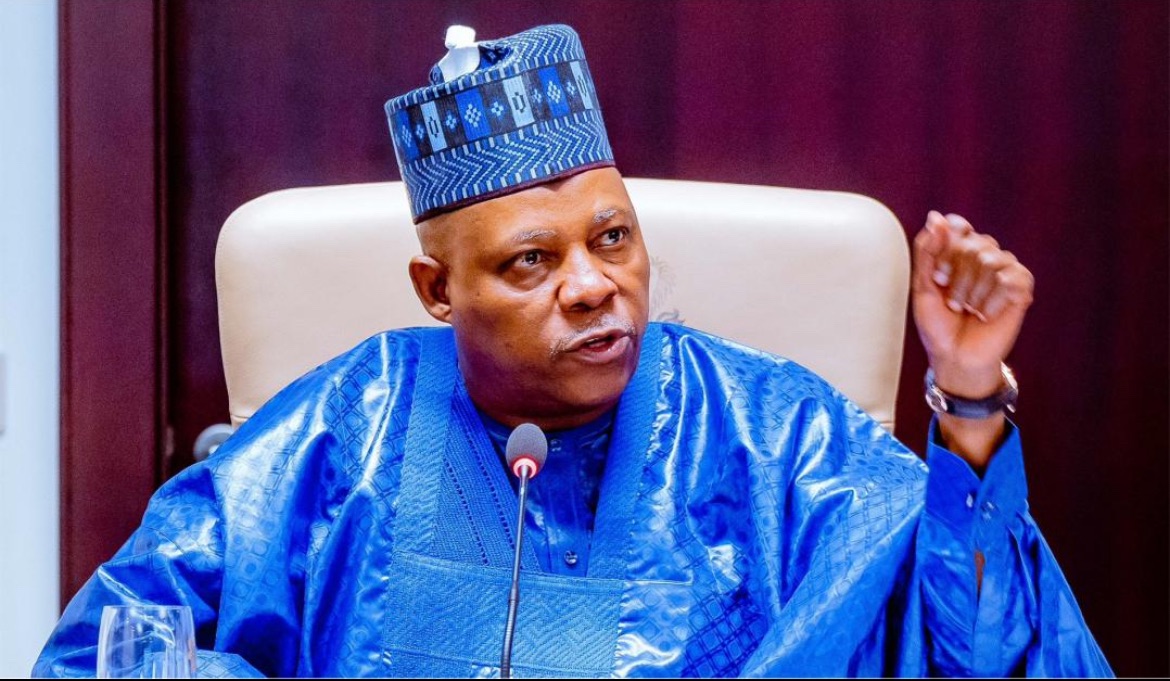

Vice President Kashim Shettima has called for stronger accountability in the implementation of Nigeria’s major food and agriculture programmes, including the $500 million Nigeria Sustainable Agricultural Value-Chains for Growth (AGROW) project.
Shettima made the call during the seventh meeting of the Presidential Food Systems Coordinating Unit (PFSCU) Steering Committee held at the State House in Abuja on Friday.
The meeting brought together state governors, federal ministers, private-sector players and development partners to assess the country’s food situation and discuss ways to improve coordination across the agricultural sector.
Shettima, who chairs the committee, said government interventions must produce clear and measurable benefits for farmers, businesses and households.
According to the PFSCU, the Vice President stressed the need for greater visibility in the implementation of ongoing food-system programmes. He said stakeholders must ensure that resources committed to these initiatives result in practical improvements rather than remaining at the level of plans and policies.
The committee reviewed several major initiatives, including the AGROW programme, the National Agribusiness Policy Mechanism, the proposed National Agro-Productivity System and the National Food and Nutrition Crisis Preparedness Framework.
The AGROW programme, which received $500 million in financing from the World Bank, is designed to improve agricultural productivity, strengthen value chains and increase food security in Nigeria.
The PFSCU said the design and coordination stage of AGROW has been completed and responsibility has now moved to the Federal Ministry of Agriculture and Food Security as well as participating states.
Shettima said Nigeria must continue building its capacity to produce enough food locally while ensuring that families can access food at affordable prices.
He also called for closer cooperation between federal and state governments, private businesses and other institutions involved in agriculture and food distribution.
With the major harvest season approaching, the committee discussed measures to support farmers and improve domestic food production. Attention was also given to the movement of food from farming communities to markets and consumers.
Transportation costs, logistics, market access, levies and other distribution challenges were identified as factors that can significantly increase food prices.
The committee therefore stressed the need to make the food supply chain more efficient so that farmers can reach consumers at lower costs.
Jigawa State Governor Umar Namadi urged authorities to keep farmers at the centre of agricultural policies. He highlighted the importance of irrigation, farm inputs, financing, production support and access to markets.
Minister of Finance and Coordinating Minister of the Economy, Taiwo Oyedele, also called for better alignment between Nigeria’s domestic production and trade policies.
PFSCU Executive Secretary Marion Moon said government decisions must be based on reliable data so that interventions can reach farmers, communities and markets where they are most needed.
The committee further noted that trade policies could help address genuine food supply shortages but should be balanced with measures that protect domestic farmers and agribusinesses.
The World Bank approved the $500 million AGROW financing in April 2026. The funding is expected to tackle challenges including low farm productivity, climate-related shocks and poor market access.
The initiative comes as the government seeks to strengthen Nigeria’s agricultural sector, reduce food insecurity and build a more resilient food system.