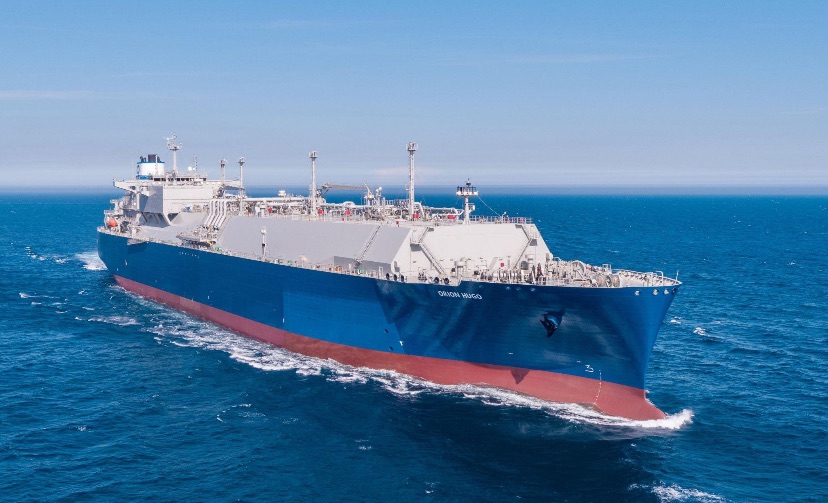

Global energy company Shell has projected that demand for liquefied natural gas (LNG) will continue to grow steadily over the coming decades, even as the industry faces geopolitical tensions and supply disruptions.
In its LNG Outlook 2026 report, Shell estimated that global LNG demand will rise from 422 million metric tons in 2025 to nearly 700 million metric tons annually by 2050. This represents an increase of about 65 percent, highlighting the growing role of natural gas in the world’s future energy mix.
The company released the forecast at a time when the global LNG market is experiencing significant pressure. The ongoing conflict in the Middle East has disrupted energy supplies following the closure of the Strait of Hormuz, one of the world’s most important shipping routes for oil and natural gas. Since the crisis began in late February 2026, nearly 20 percent of normal monthly LNG supply has been affected, creating uncertainty in global energy markets.
Despite these disruptions, Shell believes the LNG industry has shown remarkable resilience. The company expects global LNG trade to remain largely unchanged in 2026 before returning to stronger growth in 2027.
Speaking in the report, Shell’s President of Integrated Gas, Cederic Cremers, said the industry has adapted well to changing market conditions despite the economic challenges created by the conflict. He noted that while the crisis has affected several sectors, the LNG industry has continued to respond effectively.
According to the report, South and Southeast Asia will remain the biggest drivers of future LNG demand, accounting for about 40 percent of global imports by 2050. Many countries in the region are moving away from coal-fired power plants and replacing them with cleaner natural gas to reduce carbon emissions.
Shell also noted that demand is increasing in developed Asian countries such as Japan, where expanding data centres are creating new electricity needs that LNG can help meet.
Beyond electricity generation, LNG is expected to play a larger role in the transport sector. The report forecasts that the use of LNG as marine fuel will increase sevenfold to 27 million metric tons per year by 2035 as the shipping industry adopts cleaner fuel alternatives.
To support rising demand, around 180 million metric tons of new LNG production capacity is expected to become operational by 2030. This expansion is expected to improve supply, reduce prices, and make LNG more accessible to emerging importing countries.
The outlook also presents opportunities for Africa, where several countries are investing heavily in LNG production.
Mozambique continues to expand its LNG industry after beginning production at the Coral Sul project in 2022. The country plans to launch the Coral Norte project in 2028 while also developing another floating LNG facility with a production capacity of 6 million metric tons annually.
Nigeria, one of Africa’s leading LNG exporters, is also expected to benefit from growing global demand through the Nigeria LNG (NLNG) project, where Shell remains a major shareholder. Algeria, the continent’s second-largest LNG exporter, is also strengthening its production following a rebound in exports during 2026.
Shell estimates that an additional 200 million metric tons of LNG production capacity will be required during the 2030s and 2040s to satisfy future global demand beyond projects already under construction.
Meanwhile, the African Energy Chamber reports that Africa has attracted more than $50 billion in LNG investments in 2026, reflecting growing investor confidence in the continent’s natural gas industry.