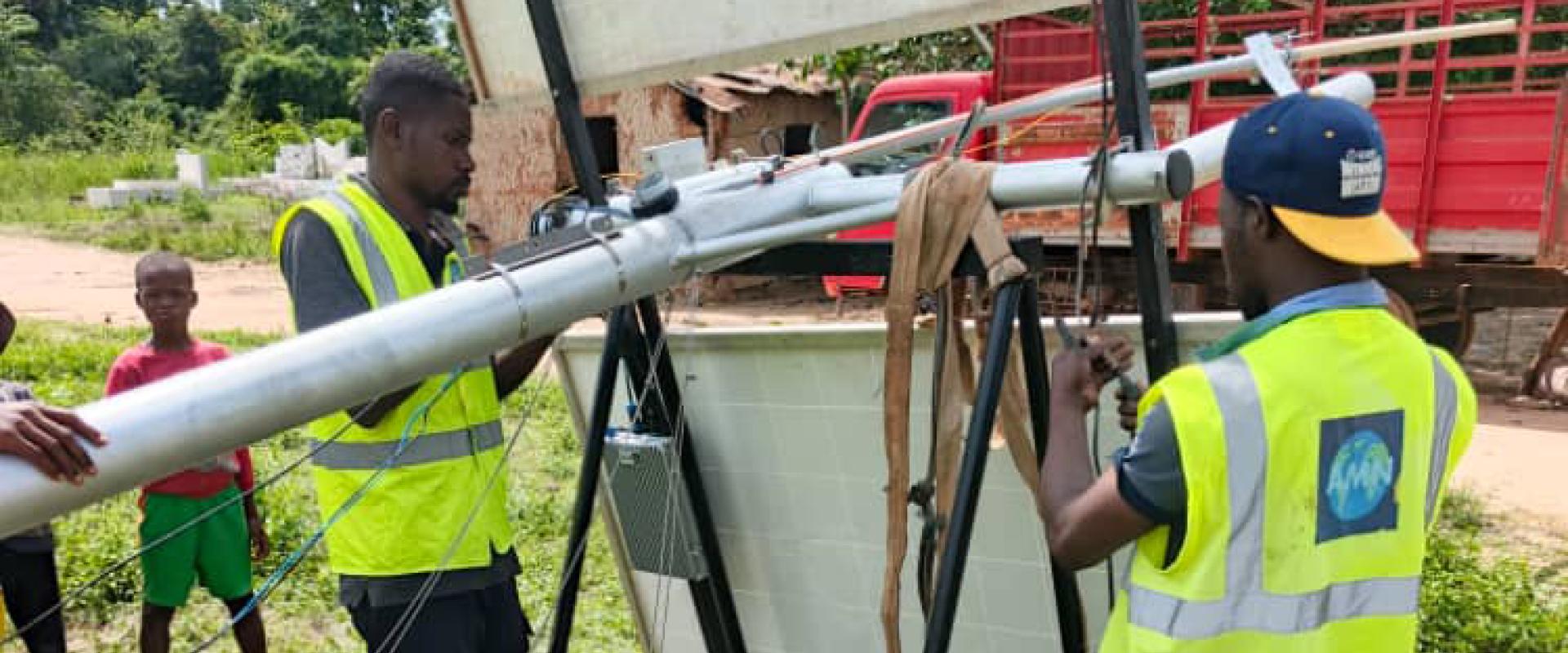

Satellite communications provider SES and Africa Mobile Networks (AMN) have completed the upgrade of more than 200 telecom sites across Côte d’Ivoire, extending reliable 2G and 3G mobile data coverage to over 500,000 people in remote and previously underserved communities. The rollout, carried out between May and June 2025, marks a significant step in bridging the digital divide in rural West Africa, where limited terrestrial infrastructure has long constrained access to essential communication services.
The project involved a major expansion of SES’s satellite capacity dedicated to AMN, resulting in faster connection speeds and improved network reliability for mobile users in isolated regions. With the upgrades complete, SES has announced plans to increase its satellite capacity even further to meet the rising demand for data and voice services.
AMN, which focuses on deploying mobile network infrastructure in hard-to-reach areas, has seen rapid growth in its operations. The company now manages more than 300 active sites in Côte d’Ivoire, up from just 60 in 2022, and aims to reach 360 sites by the end of 2025. Importantly, AMN is preparing to launch its first 4G installations later this month, which will enable faster data transmission and support more advanced mobile applications.
The technical foundation of AMN’s expansion lies in its innovative software-defined Radio Access Network (RAN) platform, which supports multiple generations of mobile technology — 2G, 3G, and 4G, on a single unit. This design significantly reduces deployment and maintenance costs, allowing the company to expand connectivity more efficiently across sparsely populated or geographically challenging areas.
AMN’s Chief Executive Officer, Michael Darcy, described the initiative as transformative for the communities involved. “In many of these areas, the mobile network is not just a means of communication; it is a lifeline,” he said. “People rely on it for mobile money transactions, access to education and health services, and staying connected with the wider world.” He added that the partnership with SES has made it possible to deliver consistent, high-quality service in regions where terrestrial networks are neither economically viable nor technically feasible.
The broader economic and social implications of the project are considerable. By improving access to mobile data and voice services, rural communities gain entry into digital financial ecosystems, enabling secure and convenient transactions through mobile money platforms. This not only facilitates trade and entrepreneurship but also helps integrate rural economies into national and regional markets. Enhanced connectivity also supports education, allowing students and teachers to access online resources, and strengthens healthcare delivery by enabling telemedicine and rapid information sharing among practitioners.
For Côte d’Ivoire, a country with ambitious digital transformation goals, the expansion of mobile coverage aligns with the government’s push to achieve nationwide internet access and promote inclusive development. Improved rural connectivity is expected to drive greater participation in the digital economy, particularly among smallholder farmers and informal traders who make up a large share of the workforce.
From a business perspective, the collaboration between SES and AMN underscores the growing role of satellite technology in extending mobile networks across Africa. Traditional fibre and terrestrial networks remain concentrated in urban centres, while many rural areas continue to lack the infrastructure to support stable connectivity. Satellite-based solutions offer a cost-effective alternative, particularly in countries with difficult terrain or dispersed populations.
SES’s satellite capacity enables telecom operators like AMN to deliver services rapidly without waiting for expensive ground infrastructure to be built. This agility is crucial as mobile data consumption rises across the continent, fuelled by smartphone adoption, mobile banking, and digital entertainment. By combining satellite backhaul with low-cost RAN technology, the SES–AMN partnership demonstrates a scalable model for rural connectivity that could be replicated in other African markets.
The timing of this expansion is also significant in light of Africa’s broader digital agenda. The African Union’s Digital Transformation Strategy aims to ensure that every individual, business, and government institution on the continent has access to affordable broadband by 2030. Côte d’Ivoire’s rural connectivity drive contributes directly to this goal, showcasing how private-sector innovation can complement national and regional policy frameworks.
As AMN prepares to activate its first 4G sites, the benefits for users are expected to multiply. Faster speeds will enable new digital services such as video learning platforms, e-commerce, and cloud-based applications that were previously inaccessible. For SES, the project demonstrates the scalability of satellite-backed mobile connectivity as part of a long-term strategy to close Africa’s digital access gap.
Ultimately, the SES and AMN collaboration reflects a new phase in Africa’s telecom evolution, one where technology, innovation, and partnership converge to make digital inclusion a practical reality for even the most remote communities. By extending reliable mobile access to half a million Ivorians, the initiative not only transforms everyday life but also lays the foundation for broader social and economic growth across rural Côte d’Ivoire.