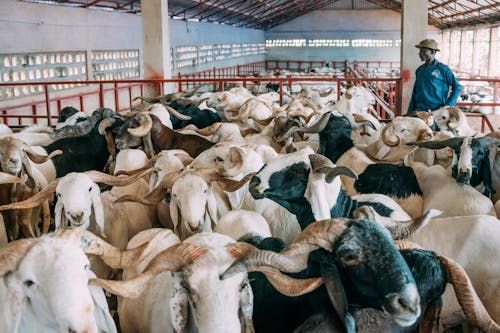

Nigeria’s livestock industry is attracting renewed attention as private sector players push for large-scale investments aimed at unlocking billions of dollars in market value. The latest move signals growing confidence in the sector’s potential, even as stakeholders acknowledge long-standing structural challenges that have limited its growth.
At the centre of this momentum is a proposed investment drive expected to unlock about $3 billion in pastoral market opportunities within the next three to five years.The initiative is largely driven by private investors working alongside policymakers and development partners to reposition the sector as a viable economic engine. This push gained prominence during a major industry forum held in Abuja, where key actors across the livestock value chain, including producers, processors, financiers, and regulators, came together to build partnerships and negotiate deals.
The gathering focused on strengthening collaboration and rebuilding trust in a fragmented system that has struggled with inefficiencies for years. Nigeria’s livestock sector already plays a significant role in the economy, contributing roughly $32 billion and supporting the livelihoods of about 75 million households. Despite this, productivity remains low, and the country still relies heavily on imports, particularly for dairy products, with nearly 60 per cent of demand sourced externally. Industry experts argue that the gap between the sector’s potential and its current performance is largely due to systemic challenges.
These include high feed costs, weak infrastructure, limited access to finance, and poor market linkages. For instance, feed alone accounts for up to 70 per cent of production expenses, leaving farmers vulnerable to price fluctuations. Highlighting the urgency for reform, Director of Livestock Extension and Business Development, Shekamang Ayuba, noted that productivity levels remain far below global standards. He explained that local milk yields are less than 10 per cent of international averages, reflecting deep inefficiencies in production systems. He emphasised the importance of private sector involvement, stating that “Government alone cannot drive transformation of Nigeria’s livestock sector.
The future depends on bold, private sector-led investment across the entire value chain, from feed to processing to market linkages.” The investment push is supported by broader policy frameworks such as the National Livestock Master Plan and the National Livestock Growth Acceleration Strategy. These initiatives aim to scale the industry into a $74 billion to $90 billion market by 2035 through coordinated efforts between government, investors, and international partners. In addition, programmes like the World Bank-backed livestock productivity project are already targeting improved output and commercialisation across multiple states, with benefits expected to reach over a million Nigerians.
Stakeholders at the Abuja forum also stressed the need for practical solutions, including better financing models, improved infrastructure, and stronger regulatory frameworks. They noted that high lending rates, often above 25 per cent, make it difficult for investors to fund long-term projects such as modern abattoirs and cold storage facilities. Beyond funding, the role of structured markets and efficient processing systems was highlighted as critical. Industry leaders warned that unregulated slaughter operations continue to undermine formal businesses, creating an uneven playing field that discourages serious investment.
Ultimately, the $3 billion investment target reflects a broader shift toward market-driven growth in Nigeria’s livestock sector. As stakeholders deepen collaboration and address structural barriers, the industry is increasingly seen as a key pathway to improving food security, generating jobs, and boosting economic resilience.