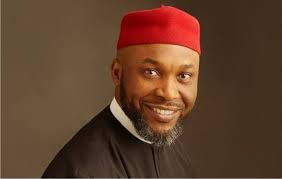

Former Aviation Minister Osita Chidoka has raised alarm over the soaring cost of political party nomination forms, warning that the fees set by the All Progressives Congress and other parties threaten to transform Nigeria’s democracy into an exclusive club accessible only to the wealthy. In a statement released on March 28, Chidoka argued that the nomination fees have moved beyond administrative cost recovery into outright exclusion.
The APC has set its presidential nomination form at ₦200 million (approximately $130,000), governorship at ₦150 million, Senate at ₦100 million, House of Representatives at ₦70 million, and State Assembly at ₦20 million. At Nigeria’s minimum wage of ₦70,000, a worker would need 238 years to afford a presidential form and 24 years to afford a State Assembly form.
Chidoka cited data from the Nigeria Deposit Insurance Corporation showing that over 97 percent of Nigerians have less than ₦500,000 in their bank accounts. “Yet we are setting entry fees at ₦20 million and above. Who exactly is this democracy designed for?” he asked.
The economic implications are stark. Assuming just four aspirants per seat, nomination fees could generate approximately ₦223.68 billion across the Senate, House of Representatives, and State Assemblies. This amount represents 74 percent of the budget for school construction, 56 percent of health capital spending, and exceeds the entire police capital budget. “In effect, the cost of accessing political office in one party is now competing with what Nigeria invests in education, health, and security,” Chidoka stated.
He argued that sustainable party funding is entirely achievable through member contributions. A party with 800,000 members paying ₦25,000 annually (approximately ₦2,000 monthly) would generate ₦20 billion per year, excluding donations. “Parties can be sustainably funded by their members and supporters, not by turning nominations into a high-priced gateway that excludes the majority,” he said.
Globally, Nigeria’s approach stands as an outlier. In South Africa, Brazil, India, and Mexico, candidates emerge through internal democratic processes, not financial barriers. Chidoka noted that leaders such as Lula, Modi, Clinton, or Obama would likely not have emerged if their systems demanded ₦200 million upfront.
“The signalling is disturbing. We are saying that leadership in Nigeria is not about ideas, competence, or service. It is about money. That is dangerous,” Chidoka warned. He urged the APC and all political parties to reconsider these fees, arguing that Nigeria cannot build a representative democracy if access to the ballot is priced beyond the reach of its citizens.