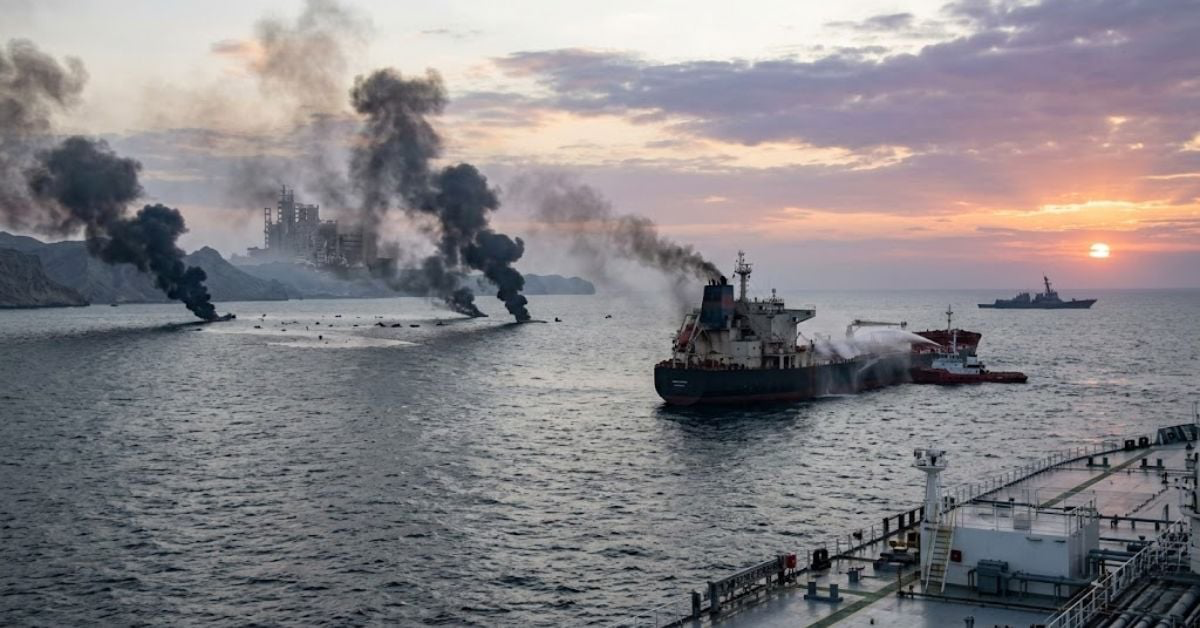

Global oil prices surged on Monday following renewed violence in the Strait of Hormuz, after President Donald Trump offered US naval assistance to escort commercial vessels through the strategic waterway, escalating tensions with Iran. Brent crude jumped more than 5 per cent to trade near $128 per barrel, approaching the $130 high recorded last month, as markets priced in heightened risk of supply disruption from one of the world’s most critical oil transit chokepoints.
The Strait of Hormuz, through which approximately 20 per cent of global oil consumption passes daily, has been at the centre of the ongoing conflict between the United States and Iran. President Trump’s offer to help ships transit the strait follows a series of seizures and attacks on tankers over recent weeks, including the latest incident where Iranian forces seized two cargo ships. Tehran has vowed retaliation for US Navy actions, and the situation remains highly volatile.
For Nigeria, higher oil prices present a mixed picture. As Africa’s largest oil producer, the federal government benefits from increased revenue from crude sales, with the benchmark oil price used in budget planning typically set well below current levels. The Nigeria National Petroleum Company Limited could see improved cash flows, potentially increasing remittances to the Federation Account. However, Nigeria remains a net importer of refined petroleum products despite the start of operations at the Dangote Refinery, meaning higher global crude prices translate directly into more expensive petrol, diesel, and aviation fuel for domestic consumers.
The pass-through effect on inflation is immediate. Higher fuel costs increase transportation expenses, which cascade into food prices, manufacturing inputs, and household utilities. The Central Bank of Nigeria, which has been battling to bring inflation down from previous peaks, may see its efforts undermined by renewed energy price pressures. Additionally, the government faces difficult choices between allowing full passthrough of higher import costs or absorbing some of the increase through subsidy-like mechanisms, which would reverse key fiscal reforms. The coming weeks will test Nigeria’s ability to manage external shocks while maintaining economic stability.