
The Nigerian National Petroleum Company Limited (NNPC Ltd) has taken another step toward restoring Nigeria’s struggling refining sector by signing a new agreement with foreign partners. The deal, which involves two Chinese firms, is aimed at reviving operations at the Warri and Port Harcourt refineries, both of which have faced repeated shutdowns despite huge repair investments.
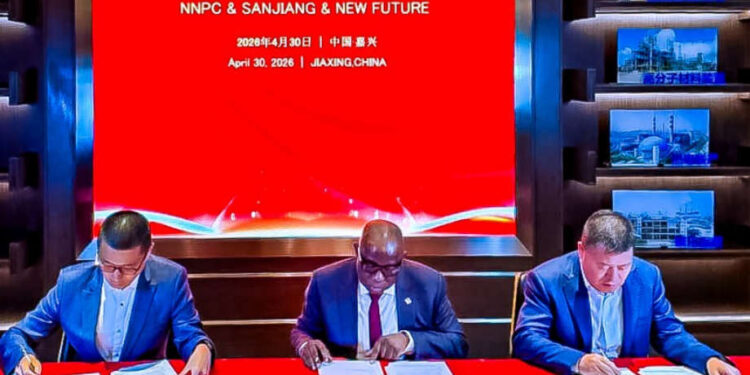
According to reports, the agreement is structured as a Memorandum of Understanding (MoU) that will pave the way for deeper collaboration. The partnership is expected to help complete ongoing rehabilitation work, improve efficiency, and ensure long-term sustainability of the facilities. The MoU was signed with Sanjiang Chemical Company Limited and Xinganchen (Fuzhou) Industrial Park Operation and Management Co. Ltd. It was executed in Jiaxing City, China, on April 30, 2026, by NNPC’s Group Chief Executive Officer, Bashir Bayo Ojulari, alongside top representatives of the Chinese companies.
This new arrangement is expected to lead to a Technical Equity Partnership (TEP), a model that allows the foreign firms to contribute technical expertise, funding, and operational support. Under the proposed framework, the partners will focus on completing unfinished rehabilitation work, managing operations, and maintaining the refineries to meet global standards.
Beyond restoring production, the agreement also includes plans to upgrade and expand the facilities. These improvements are intended to produce cleaner fuels, boost profitability, and increase petrochemical output. In addition, the project could support the development of gas-based industrial hubs around the refinery locations, opening up more economic opportunities. For years, Nigeria has struggled to keep its state-owned refineries running efficiently. Despite billions of dollars spent on repairs, the facilities have remained largely underperforming or inactive. The Port Harcourt refinery, for example, briefly resumed operations in late 2024 but was shut down again after a few months. Similarly, the Warri refinery has experienced repeated cycles of rehabilitation and shutdown, limiting its ability to consistently supply refined petroleum products. These challenges have forced Nigeria, despite being a major crude oil producer, to rely heavily on fuel imports.
NNPC described the signing of the MoU as a significant milestone after months of negotiations between both parties. The company expressed optimism that the collaboration would unlock long-term value and finally deliver sustainable refining capacity in the country.
If successfully implemented, the partnership could reduce Nigeria’s dependence on imported fuel, strengthen energy security, and improve the overall performance of the oil and gas sector. However, given past failed attempts, stakeholders will be watching closely to see whether this new agreement can deliver lasting results.