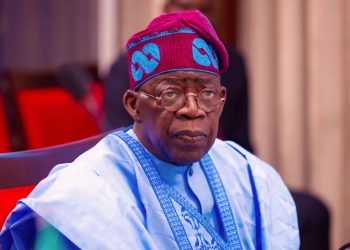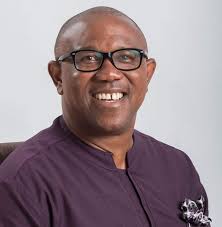

The presidential candidate of the Labour Party in the 2023 general election, Mr Peter Obi, has questioned President Bola Tinubu over persistent power failures across Nigeria, arguing that the administration’s inability to address the electricity crisis undermines its economic reform agenda. Obi raised the concerns in a series of posts on his verified X account, pointing to recurring grid collapses and inadequate supply as fundamental obstacles to industrial growth and job creation.
Obi noted that despite significant spending on the power sector over the years, Nigerian households and businesses continue to suffer from unreliable electricity, forcing them to rely on expensive diesel and petrol generators. He argued that the cost of self generation is a major drain on disposable income and business profitability, making Nigerian products less competitive both domestically and internationally. The former Anambra State governor questioned where previous investments in the sector had gone and why visible improvements remained elusive.
From an economic perspective, power sector underperformance imposes a substantial tax on Nigerian enterprises. Manufacturers operating in industrial clusters such as Lagos, Ogun, and Kano spend a significant portion of their operating budgets on self generation, costs that competitors in countries with reliable grids do not bear. These costs are ultimately passed on to consumers in the form of higher prices or absorbed by businesses as lower profit margins. For small and medium enterprises, which operate on thinner margins, the burden of power costs can be the difference between viability and closure.
Obi’s critique taps into a broader frustration about the gap between policy pronouncements and lived reality. The Tinubu administration has made infrastructure development a central pillar of its Renewed Hope agenda, with notable projects in road and rail construction. However, the power sector, which is foundational to all other economic activities, has not seen commensurate progress. Grid collapses have continued to occur, and many Nigerians report that electricity supply has not improved meaningfully despite privatisation and policy reforms.
The former presidential candidate’s intervention is politically significant because it comes from a figure who remains popular among a substantial segment of the electorate. Obi’s third place finish in the 2023 election, combined with his strong performance in urban and youth demographics, means his critiques carry weight beyond his formal position as an opposition leader. By focusing on power, he is addressing a pain point that affects virtually all Nigerians, regardless of political affiliation, making it a potent line of attack.
The power sector’s challenges are multifaceted, including gas supply constraints, transmission infrastructure weaknesses, distribution company inefficiencies, and liquidity problems throughout the value chain. Successive administrations have attempted reforms, from privatisation to the introduction of service based tariffs, but fundamental issues remain unresolved. Obi’s questioning of Tinubu on this issue reflects a judgment that the current administration has not made sufficient progress in addressing these structural problems.
The government’s response to Obi’s critique will be closely watched. Officials may point to ongoing investments in transmission infrastructure, efforts to improve gas supply, and the commissioning of new power plants as evidence of progress. However, the public measures success not by inputs but by outcomes: hours of electricity per day, frequency of grid collapses, and the cost of power. By that measure, many Nigerians remain dissatisfied, creating political space for opposition figures like Obi to press the administration.
The power sector also has implications for the administration’s broader economic goals. Manufacturing cannot grow without reliable electricity. Digital economy ambitions require data centres and network equipment that run on stable power. Even the service sector, from banking to hospitality, depends on electricity for daily operations. Without addressing the power constraint, other reform efforts may yield diminishing returns, as the cost and unreliability of electricity undercut competitiveness across all sectors.
Obi’s questioning also raises the issue of accountability for past power sector investments. Billions of dollars have been spent on the sector since the return to democracy, including through the Power Sector Reform Programme, privatisation transactions, and various World Bank and African Development Bank funded projects. The lack of commensurate improvement in supply has led to questions about whether funds were properly utilised and whether reforms were appropriately designed. Obi’s challenge to Tinubu implicitly calls for an audit of past spending and a more effective strategy going forward.
As the 2027 election cycle approaches, infrastructure and economic management will be central campaign themes. Obi’s early focus on power suggests that he intends to hold the administration accountable for its performance on issues that affect everyday Nigerians. Whether the government can demonstrate meaningful progress in the power sector before the next election will influence voter perceptions of its overall competence. For now, Obi’s questioning keeps the spotlight on an issue that many Nigerians consider a top priority.