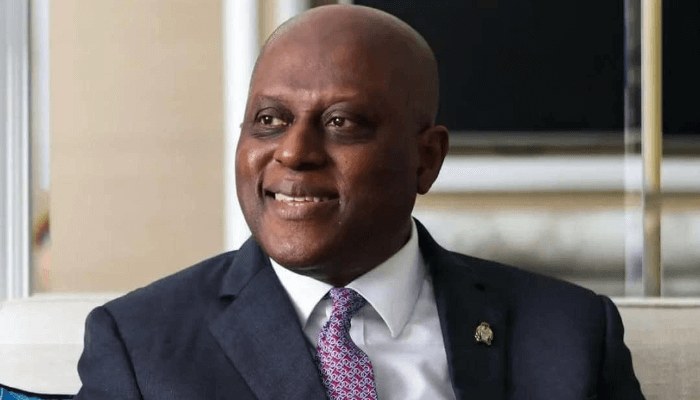

Nigeria’s economy, long burdened by crippling currency controls and a confusing system of multiple exchange rates, is showing compelling signs of a vigorous rebound that has captured the attention of global investors. Data from the Nigerian Foreign Exchange Market (NFEM) reveals a significant surge in confidence, marking a crucial turning point steered by the Central Bank of Nigeria (CBN) Governor, Olayemi Cardoso.
In October, total inflows into the Nigerian Foreign Exchange Market soared by 62.2 percent month-on-month to $5.15 billion in October from $3.18 billion, a five-month high. This mirrors a similar trend in the broader capital market, with the National Bureau of Statistics (NBS) reporting that total capital inflows in the first quarter of 2025 hit $5.6 billion, an impressive 67 percent rise from the previous year. This influx of capital has been credited to the CBN’s deliberate strategy to clean up the market. “Financial sector stability is buoying investors’ confidence in the domestic economy,” commented a Lagos-based investment analyst.
Since taking office in October 2023, Governor Cardoso’s reforms have focused on three core areas: clearing the FX backlog, unifying the country’s multiple exchange rates, and reducing the central bank’s heavy-handed interference in the market. The clearance of over $7 billion in FX backlog a move the World Bank hailed as a “bold intervention”—was pivotal, instantly enhancing long-term economic sustainability.
The positive change is also visible on the global stage. Nigeria’s sovereign risk spread, an indicator of default risk, has dropped to its lowest point since January 2020, effectively shedding the extra premium that had deterred foreign portfolio investors throughout the pandemic era.
Cordros Securities Limited noted that the surge “reflected strong participation from both foreign and domestic investors, supported by improving market sentiment and the global shift toward monetary policy easing.” Foreign inflows were the primary driver, accounting for 64.5 percent of the total in October, boosted by a staggering 120 percent jump in foreign portfolio investment (FPI). This money has predominantly flowed into money market instruments, which now dominate capital imports. Domestic investors have also been encouraged, with local inflows rising 28.4 percent due to more transparent market conditions. Cordros anticipates this momentum will continue, driven by sustained market confidence and “still-attractive carry-trade opportunities.”
Portfolio investment is clearly leading the charge. The latest NBS figures show that this type of capital now accounts for more than 92 percent of Nigeria’s total capital inflows, soaring by 150.8 percent year-on-year to $5.2 billion in the first quarter of 2025.
Ike Chioke, managing director of Afrinvest West Africa Limited, confirmed the trend, noting that “the bulk of the FPI flows was to money market instruments, up 162.2% year-on-year to $4.2 billion,” with strong growth also recorded in bonds and equities. The banking sector is the biggest beneficiary, capturing 55 percent of total inflows, while the United Kingdom remains Nigeria’s top investment partner, contributing 65 percent of all capital imported.
The renewed international sentiment is undeniable. Emre Akcakmak, portfolio manager at East Capital, stated that “Nigeria appears to be back in business as long-awaited economic reforms take shape,” citing improved currency liquidity, flexibility for investors to repatriate profit, and a more stable naira. Samir Gadio, head of Africa strategy at Standard Chartered, told Bloomberg that “portfolio inflows have likely been supported by improved confidence amid key structural reforms, better FX market functioning, and moderating dollar-naira volatility.”
Simultaneously, the National Bureau of Statistics has been redrawing the country’s economic map through a new Gross Domestic Product (GDP) rebasing exercise. This statistical update provides a clearer, more accurate snapshot of an economy that has changed dramatically since the last base year of 2010.
Statistician-General Adeyemi Adeniran explained that the rebased nominal GDP for 2019 was N205.09 trillion, rising to N372.82 trillion in 2024. He stressed that this is not just about a larger number but about providing “accurate, timely data that supports smarter policy and economic planning.” The rebasing revealed a structural shift, with agriculture and services now contributing a larger share to nominal GDP, while industry’s share has shrunk.
Economist Aliyu Ilias noted that this update gives “long-overdue visibility” to previously under-represented sectors like entertainment and creative industries. He believes this new visibility will inherently make Nigeria “appear stronger to foreign investors, which will naturally help us attract more capital,” while also providing a “more reliable framework for fiscal planning.”
Seun Onigbinde, director of BudgIT, concurred, saying rebasing “must reflect policy evolution” in sectors like telecommunications and banking, allowing the government to “better measure tax efficiency, design social programmes, and gauge sectoral growth with precision.”
To support this expanded economic canvas and the government’s ambitious $1 trillion GDP target by 2030, the CBN is initiating a major recapitalisation drive for commercial banks. “Will Nigerian banks have sufficient capital relative to the financial system’s needs in servicing a $1 trillion economy in the near future? In my opinion, the answer is no unless we take action,” Governor Cardoso recently told bank executives. This move aims to position banks to fund large-scale transactions in critical sectors like infrastructure, energy, and manufacturing, all central to the 2030 blueprint.
Despite the wave of foreign capital and the improved statistical outlook, analysts are cautious, warning that the path to long-term prosperity requires more than just financial engineering.
While the CBN’s reforms have been a resounding success in restoring market credibility making the naira steadier and allowing Nigeria to successfully issue a $2.25 billion Eurobond, further demonstrating global trust the next phase must focus on the real economy.
As Lagos-based economist Nelson Adedeji stressed, “We must acknowledge that genuine economic growth extends beyond statistical adjustments.” He insists that for ordinary Nigerians to feel a tangible impact, reforms must aggressively tackle infrastructure deficits, security challenges, and manufacturing competitiveness.
Gabriel Okeowo of BudgIT echoed this sentiment: “Rebasing or rising inflows mean little if inflation and unemployment remain high.” He urged policymakers to ensure that the returning capital is directed to productive sectors, not just speculative ventures, to drive broad-based job creation and better living standards.
The story of Nigeria’s recent economic journey is one of quiet, methodical rebuilding. By aligning the naira closer to market forces and cleaning up the central bank’s books, the Cardoso-led CBN has effectively reopened doors to the international market. The numbers are telling a hopeful story: investors are returning, and a long-held economic dream now appears to be a plan in motion. The challenge now lies in translating financial stability into a lasting, inclusive economic expansion that benefits all Nigerians. As Emre Akcakmak put it, “Nigeria is again on investors’ radar not because it’s perfect, but because it’s reforming.”