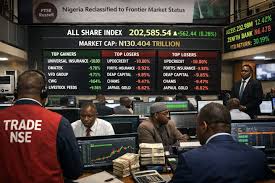

Nigeria’s equities market is rapidly approaching a historic N140 trillion valuation, driven by renewed foreign investor interest following the country’s reclassification to Frontier Market status on April 7. The upgrade by FTSE Russell has triggered a strong rally, with market capitalisation rising by about N10 trillion in just over a week, reflecting the immediate impact of improved global visibility on investor sentiment and capital flows.
By April 17, the All Share Index climbed to 217,167.57 points, while total market value reached N139.8 trillion (approximately $100 billion), supported by eight straight days of gains. Analysts say the reclassification has boosted investor confidence, improved liquidity, and increased Nigeria’s visibility among global funds, particularly passive index trackers that must now include Nigerian equities in their portfolios. The September implementation date gives fund managers time to adjust positions, suggesting further buying pressure ahead.
Large-cap stocks, particularly in banking and consumer goods, are leading the surge as foreign portfolio investors target liquid assets with strong fundamentals. Energy firms are also benefiting from favourable oil prices and production growth, adding another layer of momentum. Year-to-date returns have risen to 39.53 per cent, with experts expecting continued momentum as global index funds gradually increase exposure to Nigerian equities. The rally represents a significant turnaround from the foreign exchange-driven outflows that characterised previous years, signalling a restoration of confidence in Nigeria’s macroeconomic direction.
From an investment climate perspective, the Frontier Market reclassification validates the Central Bank of Nigeria’s foreign exchange reforms and the government’s broader economic stabilisation efforts. Foreign portfolio investors, who fled during the height of the FX crisis, are now returning to capture both capital appreciation and attractive dividend yields. However, sustaining this momentum will require continued policy consistency, improved liquidity in the official FX market, and tangible progress on structural reforms that enhance the ease of doing business.