
The ongoing conflict involving Iran, Israel, and the United States has entered its eighth week, sending persistent shockwaves through Nigeria’s economy that are forcing commodity traders to fundamentally rethink their business models. From petrol stations to food markets, the effects are already visible, as higher freight costs and erratic shipping routes feed directly into consumer prices. A new report by SBM Intelligence warns that the disruption is not a short-term shock but the start of a deeper structural realignment in how global trade operates.
The most immediate pressure point is fuel prices. Nigerians have seen petrol prices jump from N830 per litre in February to about N1,325 by late March, while diesel climbed to N1,550 and above. Transport fares have tripled along some corridors, compounding the cost burden for traders and consumers alike. At the centre of the disruption is the Strait of Hormuz, a critical artery for global oil and gas flows, where commercial traffic has plummeted from 135 vessels to just 4 per day. For Nigerian traders, this uncertainty is feeding directly into delayed shipments, higher landing costs, and tighter margins.
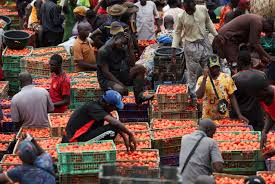
To survive this “new normal,” SBM Intelligence recommends several practical strategies. The most immediate defensive move is a shift to contingency inventory management, with traders holding at least 30 days of stock for essential commodities. The report’s survey of 220 traders across nine Nigerian cities found that those who stocked up before the March price spike were the only ones who avoided buying at peak prices or shutting down operations. For small and medium-scale traders, the formation of bulk buying groups is recommended as a practical workaround, pooling resources to reduce per-unit costs and gain leverage for better rates.
With traditional shipping lanes through the Strait of Hormuz and the Suez Canal now exposed to asymmetric attack risks, traders are advised to pivot toward overland corridors and the African Continental Free Trade Area framework, using West African ports as viable alternatives to Red Sea routes. Additionally, with petrol prices expected to remain above N1,200 per litre for the foreseeable future, businesses should consider long-term adjustments, including investment in solar-powered cold storage and a gradual shift of long-haul freight toward rail. Access to timely market intelligence is also emerging as a competitive edge, with 34 per cent of traders now willing to pay for services that help distinguish legitimate taxes from extortion and provide price and transport alerts.
The report describes the “Persian trap” as a slow-burning strategic miscalculation, with the conflict increasingly resembling a war of attrition that will stretch supply chains, energy markets, and shipping routes far beyond the Middle East for the remainder of 2026. For West Africa, the consequences are indirect but immediate: persistent volatility in fuel prices, freight costs, and commodity flows, with traders and consumers alike forced to adjust to a prolonged period of uncertainty.