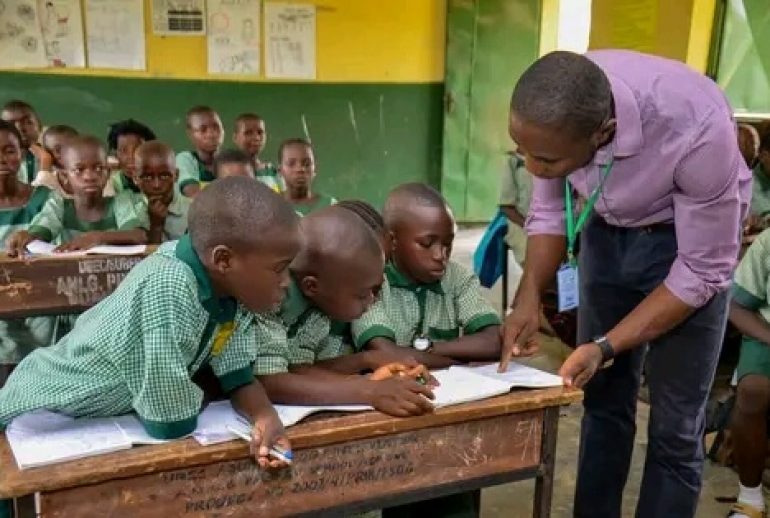

Nigeria’s teachers are facing unpaid salary entitlements, staff shortages and uneven implementation of welfare policies, raising concerns about the government’s commitment to improving conditions in the country’s schools.
Four years after the Federal Government approved a special salary scale for teachers in basic and secondary schools, implementation has yet to begin for most state-employed teachers, according to the Nigeria Union of Teachers (NUT).
The union renewed its demand for action at the 2026 World Teachers’ Day celebration in Abuja on October 5. In a report published that day, The PUNCH quoted NUT National Deputy President Kizito Kalu as urging the government to establish a clear process for implementing the salary structure approved in 2022 under former President Muhammadu Buhari.
The delay is compounded by disputes over the approved 27.5% salary increment for teachers, which some states have yet to implement, according to reports on the union’s demands.
Salary arrears have also left teachers in several states struggling to meet their financial obligations. The PUNCH editorial published today October 18, 2026, titled Improve teachers’ welfare, reported that the NUT had issued ultimatums to 19 states over outstanding payments.
Teachers were reportedly owed 15 months of fractional pay in Kogi State, 10 months in Benue, about 8.5 months in Bayelsa and 6 months in Ekiti. The editorial also reported that 10 states had only partially implemented the national minimum wage for teachers, while four had yet to begin implementation.
The figures point to significant differences in how teachers’ entitlements are being handled across the country. The union has warned that delayed payments and poor working conditions are damaging morale in a profession central to Nigeria’s education system.
The manpower shortage adds to the pressure. The October 18 PUNCH editorial cited an estimated shortfall of 1.19 million teachers against a workforce of 915,913, with rural and hard-to-reach communities particularly affected.
Inadequate recruitment has contributed to overcrowded classrooms and heavier workloads for teachers who remain in service. Poor pay and limited professional support also raise concerns about the retention of experienced educators, including those seeking better opportunities abroad.
Some states are taking steps to address staffing gaps. Akwa Ibom Governor Umo Eno approved the recruitment of an additional 2,000 teachers during the state’s World Teachers’ Day celebration on October 5, 2026. Channels Television reported on September 16 that the state had approved recruitment across several public-service sectors, including 1,000 secondary school teachers, before the later announcement increased the number of teachers to be employed.
However, recruitment alone will not resolve the crisis unless governments also ensure regular salaries, adequate facilities and working conditions that encourage teachers to remain in the profession.
Retirement benefits are another source of concern. The Harmonised Retirement Age for Teachers Act extends the retirement age from 60 to 65 and the maximum service period from 35 to 40 years, whichever comes first. The PUNCH editorial reported that about 22 states had domesticated the law, leaving teachers in other states waiting for similar treatment.
Beyond salaries and retirement benefits, many public schools require better classrooms, furniture, teaching materials and access to modern learning technology. These conditions affect both teachers’ ability to work effectively and pupils’ access to quality education.
At the federal level, the government reaffirmed its commitment to better teacher welfare, professional development and improved working conditions during the October 5 celebration. The Federal Ministry of Information and National Orientation reported that Education Minister Tunji Alausa highlighted these priorities at the event.
The challenge is translating those commitments into measurable improvements.
Federal and state governments need clear timelines for implementing approved salary structures, settling arrears, recruiting qualified teachers and applying retirement benefits. Sustained investment in school infrastructure and professional training is also necessary to improve learning conditions.
For Nigeria’s education system to improve, teachers must be able to depend on their salaries, work in adequately equipped classrooms and see a clear future in the profession. Without progress on these basic needs, government commitments to education reform will remain difficult to measure in the daily realities of schools.