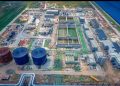
Manufacturing companies in Nigeria are increasingly shifting from diesel to natural gas as rising fuel prices continue to increase production costs and reduce profits across the industrial sector.
Stakeholders say the move toward gas is becoming necessary rather than optional, as businesses struggle to cope with unstable energy prices and unreliable electricity supply.
At a recent business and investment forum organised by Shell Nigeria Gas in Port Harcourt, Rivers State, the Board Chairman of the Niger Delta Chambers of Commerce, Industry, Trade, Mines and Agriculture, Idaere Gogo Ogan, said natural gas could transform industrial activity in the region.
Represented by the Board Secretary, Chief Solomon Edebiri, he explained that efficient use of gas could revive struggling industries and improve economic activity in the Niger Delta.
He noted that over 500 companies in the region had shut down in recent years due to high operating costs, poor infrastructure, and wider economic challenges.
The forum brought together energy players, manufacturers, and investors to explore how gas adoption can reduce costs and improve productivity.
Across Nigeria and other emerging markets, diesel prices have continued to rise due to global tensions, including disruptions in the Middle East. Many industries, especially telecom operators, rely heavily on diesel generators to power their operations.
Telecom companies are among the worst affected, as they depend on diesel-powered generators to run base stations in areas without reliable electricity. This has made it more expensive to expand mobile and internet coverage in rural and underserved communities.
Reports show that developing countries collectively rely on hundreds of gigawatts of diesel generator capacity across millions of sites, often exceeding the capacity of national power grids. In Africa, up to 70 percent of telecom towers depend on diesel, which accounts for a large portion of operating costs.
Energy experts estimate that fuel expenses for telecom operators in Africa have increased by as much as 60 percent in the past two years, driven further by global oil supply disruptions.
In Nigeria, grid electricity remains unstable in many regions, with some areas experiencing availability as low as 40 to 50 percent. This forces businesses and telecom providers to rely on expensive backup generators.
Experts warn that rising diesel costs will likely increase the price of telecommunications services or reduce profit margins for operators. As a result, companies are beginning to explore alternatives such as solar energy and natural gas.
Industry analysts also suggest that satellite technology may play a growing role in providing backup connectivity in the future, especially as direct-to-device services develop.
At the Port Harcourt forum, Shell Nigeria Gas announced it had expanded its customer base with new industrial clients in Ogun State, including Intercontinental Distillers Limited II and Rumbu Industries Limited. The company now supplies gas to over 150 industrial customers across several Nigerian states.
According to Shell Nigeria Gas officials, companies that switch to natural gas benefit from lower and more stable energy costs, improved efficiency, and reduced exposure to fuel price volatility.
The company also signed new gas supply agreements with additional firms in Rivers and Bayelsa States, strengthening its distribution network in the region.
Experts at the event agreed that increased adoption of natural gas could help revive industrial production in the Niger Delta while improving Nigeria’s broader energy security.
However, global energy challenges continue to add pressure. Geopolitical tensions affecting oil supply routes, including the Strait of Hormuz, have pushed crude oil prices above $120 per barrel, worsening fuel inflation in many developing countries.
Countries such as Nigeria, Pakistan, Bangladesh, and the Philippines are among the most affected due to their dependence on imported fuel and weak power infrastructure.
Overall, stakeholders say the shift to natural gas is becoming a key survival strategy for industries facing rising energy costs and unstable electricity supply.