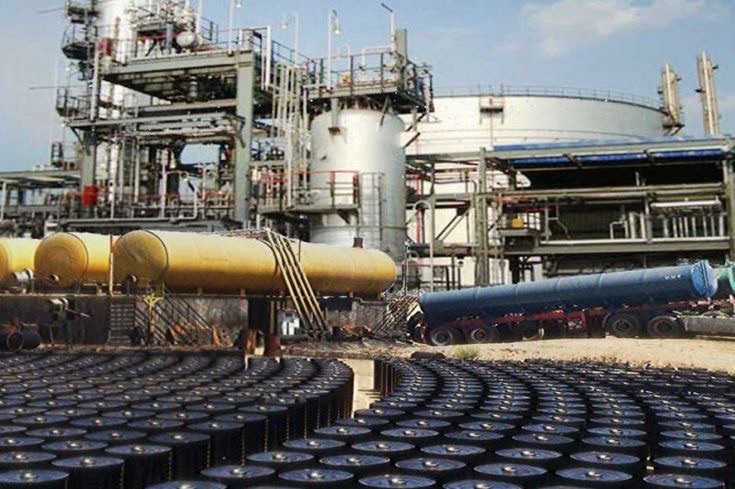

Nigeria’s local refining sector failed to utilise crude oil worth an estimated $3.13 billion in the first quarter of 2026, raising fresh concerns about inefficiencies in the country’s domestic crude supply system.
According to data released by the Nigerian Upstream Petroleum Regulatory Commission (NUPRC), oil producers supplied large volumes of crude oil to local refiners between January and March 2026, but a significant portion remained unused due to commercial disagreements and structural challenges within the industry.
The figures showed that oil producers made about 68.7 million barrels of crude oil available to local refineries during the three-month period. However, refiners were only able to lift 28.5 million barrels, leaving over 40 million barrels unutilised.
This means that less than half of the crude allocated for domestic refining was actually delivered and processed, despite ongoing efforts by the government to boost local refining capacity and reduce fuel imports.
The NUPRC explained that although 61.9 million barrels were officially allocated to domestic refineries under the Domestic Crude Supply Obligation policy, actual refinery offtake remained low. The commission said the supply conversion rate stood between 36 and 46 percent by the end of the first quarter.
A monthly breakdown of the figures revealed the scale of the shortfall.
In January, producers offered 25.3 million barrels of crude oil, but refiners lifted only 9.2 million barrels. This left about 16.1 million barrels unused, with an estimated value of $1.09 billion.
In February, refiners lifted 9.1 million barrels out of the 19.8 million barrels offered, creating a gap of 10.7 million barrels worth around $749 million.
Similarly, in March, producers supplied 23.6 million barrels, but refiners only took 10.1 million barrels, leaving 13.5 million barrels unutilised and valued at approximately $1.28 billion.
Industry experts say the situation reflects deeper problems in Nigeria’s crude oil supply framework. Despite the introduction of the Petroleum Industry Act and policies designed to support local refining, many refiners still face challenges accessing suitable crude at competitive prices.
The NUPRC blamed the low crude uptake on pricing disputes, mismatched crude grades, and the current “willing buyer, willing seller” arrangement, which allows both producers and refiners to negotiate terms commercially rather than through fixed enforcement.
The issue has also affected the operations of major refining projects, including the Dangote Petroleum Refinery and several modular refineries across the country.
The Crude Oil Refiners Association of Nigeria (CORAN) said the growing dependence of Dangote Refinery on imported crude oil is mainly due to pricing concerns and differences in crude quality.
CORAN Publicity Secretary, Eche Idoko, explained that many Nigerian producers sell Brent-linked crude oil at premium prices, while the Dangote refinery often imports West Texas Intermediate crude because it is more suitable for its refining operations and may be more commercially attractive.
According to him, local refiners are struggling to compete under the current pricing structure, especially when imported crude offers lower costs and fewer risks.
He called for the introduction of a domestic pricing system that reflects Nigeria’s local refining realities and reduces exposure to international pricing pressures and insurance costs.
Analysts believe that unless Nigeria reforms its domestic crude pricing and supply framework, the country may continue to face difficulties achieving energy self-sufficiency, despite massive investments in refining infrastructure.
The latest development has renewed concerns about whether Nigeria’s current crude supply system can fully support its long-term goals of boosting local refining, reducing fuel imports, and conserving foreign exchange.