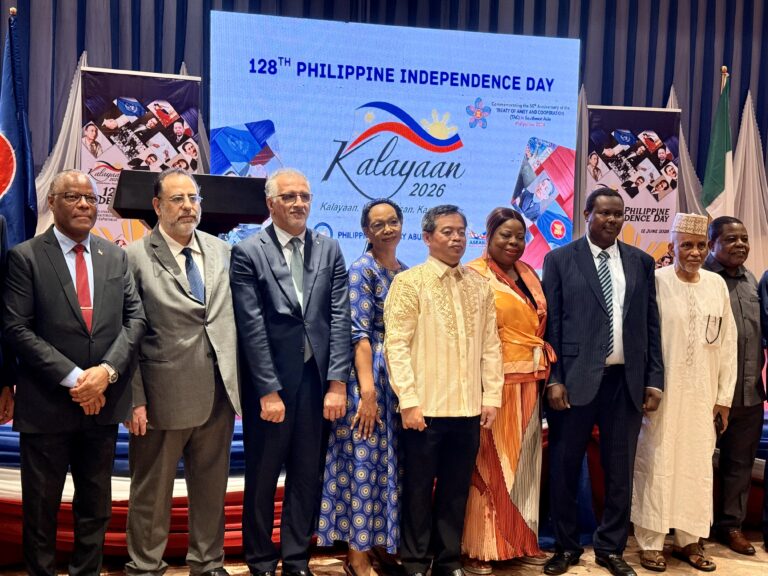

Bilateral trade between Nigeria and the Philippines has surged by 700% over the past three years, rising from $47 million in 2023 to approximately $300 million in 2025, as both countries intensify efforts to strengthen economic and diplomatic relations.
The figures were disclosed by Philippines Ambassador to Nigeria, Mersole J. Mellejor, during the 128th Philippine Independence Anniversary celebration held at the Philippine Embassy in Abuja.
Although the current trade volume remains relatively modest, Ambassador Mellejor said the rapid growth highlights the significant potential of commercial relations between the two countries.
To further accelerate economic cooperation, the envoy announced plans to establish a Nigeria-Philippines Business Council. The proposed platform is expected to facilitate structured business engagements, promote investment opportunities, and strengthen private-sector collaboration.
“This is to ensure that business between the two countries is conducted in a more organised manner and to enable players on both sides to leverage their strengths,” Mellejor said.
Nigeria and the Philippines established diplomatic relations in August 1962 and have maintained strong ties for more than six decades. Both countries are now exploring broader cooperation in key sectors including agriculture, energy, labour mobility, education, and capacity building.
Education has become a major pillar of the relationship, with more than 9,000 Nigerian students currently enrolled in Philippine higher institutions. Cultural exchanges have also deepened, with Afrobeats gaining popularity in the Philippines while Filipino television dramas continue to attract audiences in Nigeria.
Representing Nigeria’s Ministry of Foreign Affairs, Chief of Protocol Babagana Wakili reaffirmed Abuja’s commitment to expanding bilateral cooperation. He also commended the Filipino community in Nigeria for its contributions to the healthcare, education, and technology sectors.
The sharp increase in trade reflects a growing trend among emerging economies to diversify economic partnerships amid shifting global trade dynamics. However, the relationship remains heavily concentrated, with mineral fuels and oils accounting for about 99% of Philippine imports from Nigeria.
Analysts say the proposed Business Council could help broaden trade into sectors such as manufacturing, agriculture, technology, and services, reducing dependence on oil-related exports.
For Nigeria, stronger ties with the Philippines offer greater access to Southeast Asian markets, while the Philippines stands to benefit from opportunities in Africa’s largest economy and most populous nation.
As both countries seek to institutionalise their expanding commercial relationship, attention will focus on whether the impressive growth can be sustained and diversified beyond its current commodity-driven foundation.