
The Nigerian Electricity Regulatory Commission (NERC) and the German development agency GIZ, under the Nigerian Energy Support Programme (NESP), have intensified their collaboration to combat the rising tide of infrastructure vandalism across the country. Following high-level talks on Monday, February 16, 2026, both organizations announced a unified strategy focused on technical innovation, community-led protection, and “embedded generation” to shield the power sector from sabotage. For the Nigerian economy, this partnership is a critical defensive maneuver intended to stop the massive financial bleed caused by the repair of vandalized assets and the resulting grid instability.
The economic consequence of power infrastructure vandalism is a direct “productivity tax” on Nigerian businesses. When transmission towers are toppled or transformers are stripped of copper, the immediate fallout is often a nationwide grid collapse or localized blackouts that last for weeks. Beyond the N1.4 billion recently reported in single-incident repair costs, the broader impact is the loss of industrial output and the increased reliance on expensive, carbon-heavy diesel generators. By partnering with GIZ, NERC aims to move from a reactive “fix-it” approach to a proactive “prevent-it” framework that safeguards the nation’s infrastructure investments.
Analytically, the NERC-GIZ collaboration is unfolding across several primary pillars, starting with the promotion of Embedded Generation. GIZ is working with Distribution Companies (DisCos) to host on-site power plants within their franchise areas. This allows electricity to be generated and distributed locally, reducing the risk of a single act of vandalism on the long-distance national grid plunging entire regions into darkness.
The partnership is also finalizing Net-Billing Regulations, which provide frameworks allowing private entities to feed excess power into the grid, creating a more decentralized and resilient “prosumer” market. Furthermore, recognizing that security agencies cannot be everywhere, the initiative is deploying Community-Led Protection through South-West Regional Sensitisation workshops. These efforts empower local communities and traditional rulers to act as first-line guardians of power assets in remote areas.
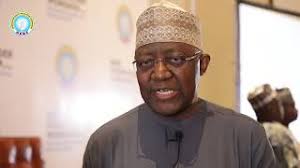
The impact on “Sector Sustainability” is a vital dimension of this partnership. NERC Chairman Dr. Musiliu Oseni noted that the collaboration has already produced some of the “best mini-grid regulations in Africa,” which are now serving as a benchmark for the continent. By integrating these regulatory wins with the federal government’s new “Power Rangers”—a specialized security unit within the NSCDC the commission is building a multi-layered shield around the Nigerian Electricity Supply Industry (NESI). This combined effort of boots on the ground and policy on the desk is intended to restore investor confidence in a sector long plagued by security risks.
Additionally, the talks highlighted the importance of SCADA/EMS project integration, which allows for real-time digital monitoring of the grid. If a segment of the network is tampered with, the system can now trigger immediate alerts, allowing security forces to respond faster than ever before. This “Digital Watchdog” capability, supported by GIZ’s technical expertise, is essential for a country aiming to achieve a stable 10,000MW generation target by the end of the 2027 election cycle.
The long-term economic outlook for Nigeria’s power sector depends on the successful “de-risking” of its physical assets. As NERC and GIZ continue to refine the rules for embedded generation and community policing, the goal is to make vandalism an “unprofitable venture” for saboteurs. A stable and secure grid is the bedrock of the government’s industrialization agenda; without it, the dream of a fully electrified Nigeria will remain out of reach. For now, the NERC-GIZ alliance represents a sophisticated, global-standard response to one of the most persistent threats to the nation’s energy sovereignty.