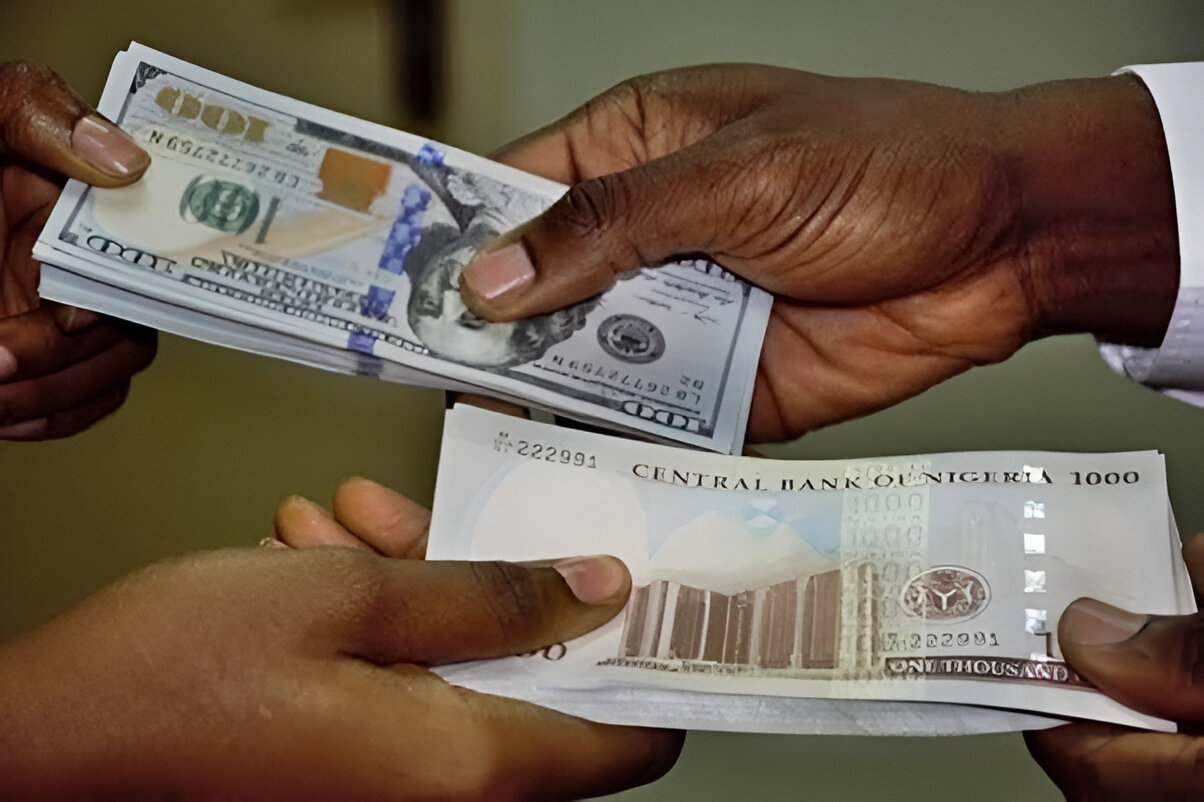

Nigeria’s currency came under renewed pressure as the naira weakened to N1,389 per dollar, following a sharp decline in the country’s external reserves.
Data from the Central Bank of Nigeria shows that reserves fell by about $850 million within three weeks, dropping to $49.18 billion between March 11 and April 2, 2026. The depreciation reflects ongoing volatility in global currency markets, driven largely by geopolitical tensions and shifting investor sentiment.
Intraday trading data showed the naira fluctuating between N1,381/$ and N1,390/$, settling at an average rate of N1,386.3/$, an indication of sustained pressure in the foreign exchange market. Compared to its pre-Easter level of N1,382.75/$, the latest rate signals a mild but notable weakening of the local currency.
Market activity also remained active, with interbank turnover on the Nigerian Foreign Exchange Market (NFEM) reaching 48.7 million across 71 recorded deals.
Analysts attribute the currency pressure partly to global developments involving the United States and Iran, which have influenced investor confidence and capital flows.
Following the announcement of a temporary ceasefire by U.S. President Donald Trump, the U.S. dollar weakened broadly against major global currencies. Despite this, Nigeria’s external position appears to be under strain. The recent drop in reserves marks a reversal from earlier gains recorded in the year.
Governor of the Central Bank, Olayemi Cardoso, had previously announced that reserves peaked at $50.45 billion in February 2026, the highest level in 13 years, driven by improved inflows and policy reforms.
The latest decline has raised concerns among investors about the sustainability of reserve growth and the stability of the naira.
Analysts note that while global factors play a role, domestic fundamentals, including reserve levels and foreign exchange liquidity, remain critical to the currency’s outlook.
The development underscores emerging pressures on Nigeria’s external sector, even as authorities continue efforts to stabilise the currency and maintain investor confidence.