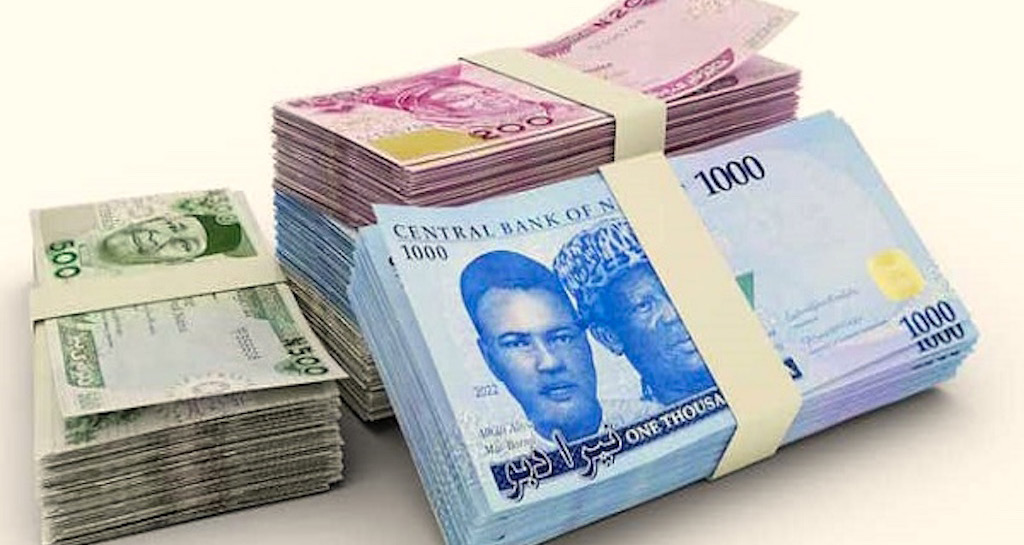

The naira has climbed to its strongest level in two years, with the official exchange rate reaching ₦1,326.69 per dollar on Wednesday, September 2. But outside the formal foreign-exchange market, the improvement looks far less impressive, and for many Nigerians, it has yet to translate into cheaper living.
In the parallel market, the dollar was quoted at around ₦1,400 to ₦1,410 on Wednesday, according to market trackers and financial reports. Aboki Forex, for instance, put the dollar at about ₦1,400 buying and ₦1,405 selling, while another tracker quoted around ₦1,410.
At ₦1,405, the difference from the official rate is about ₦78 per dollar. For someone needing $1,000 outside the formal market, that represents roughly ₦78,000 in additional cost.
For Nigerians paying overseas school fees or medical bills, travelling, or running businesses that depend on imported goods and inputs, such differences can quickly become significant.
So the important question is no longer simply whether the naira has strengthened. It has. The bigger question is whether Nigerians are feeling that strength.
There are clear signs behind the naira’s improvement. Formal remittance inflows through International Money Transfer Operators reached a record $947 million in July, according to the Central Bank of Nigeria. The figure brought formal inflows for the first seven months of 2026 to about $3.8 billion, up 50.2% from the same period in 2025. CBN Governor Olayemi Cardoso said the July figure was bringing the country closer to the bank’s target of $1 billion in monthly formal remittance inflows.
But stronger foreign-exchange liquidity does not automatically mean cheaper goods.
An importer may still be selling inventory purchased when the dollar was significantly more expensive. Manufacturers also face costs for electricity, transport, labour, logistics and other inputs. A stronger naira can reduce some costs, but it does not erase the rest.
That helps explain why Nigerians can see the exchange rate improving without seeing an immediate drop in prices.
The latest inflation data illustrate the disconnect. The National Bureau of Statistics said headline inflation slowed to 15.43% in July, from 15.91% in June. But food inflation moved in the opposite direction, rising to 20.31% year-on-year, while monthly food inflation accelerated sharply to 5.56%, from 3.75% in June.
For households, that distinction matters. Food is not an expense most families can postpone simply because the currency market is improving.
The ₦1,326.69 exchange rate therefore matters, but its significance will ultimately depend on how long the naira can remain stable, how easily businesses and consumers can access foreign currency through formal channels, and whether lower import costs eventually reach the prices Nigerians pay.
For now, the naira’s two-year high remains more visible on currency screens than in household budgets.
The currency may be stronger.
The real test is whether Nigerians can feel that strength on the shelf.