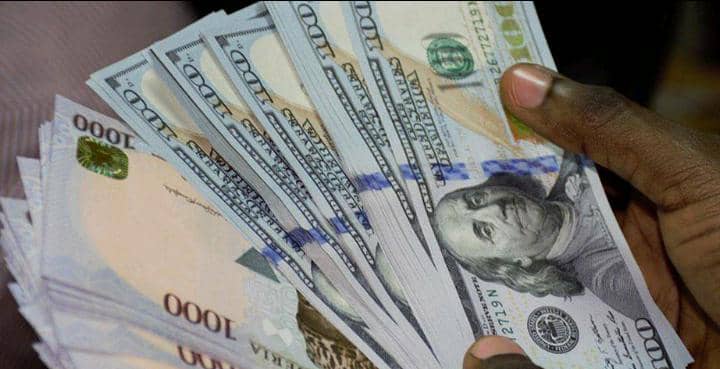

The Nigerian currency, the naira, closed trading on Friday, October 31, 2025 at ₦1,427.5 to the US dollar, marking a sustained two-week rally. This follows a climb from around ₦1,452.5 at the start of the week, showing a steady upward trajectory.
Throughout the week the naira traded at ₦1,447, ₦1,445 and ₦1,431/$1 on Tuesday, Wednesday and Thursday respectively, illustrating a consistent strengthening trend. Meanwhile, on a week-to-week basis the currency improved by approximately 1.9%, closing at ₦1,427.5 compared to around ₦1,455 a week earlier.
At the same time that the naira was gaining, the country’s foreign exchange reserves rose to US $43.17 billion, up from US $42.8 billion recorded the previous week. This increase is considered one of the strongest reserve levels in months, reflecting improved foreign-exchange inflows and enhanced liquidity in the FX market.
Analysts attribute the stronger naira to several factors: improved dollar inflows, enhanced interventions by the Central Bank of Nigeria (CBN), and rising investor confidence in the government’s monetary and FX reforms. The improvement is also linked to rising oil revenues, increased diaspora remittances, and Nigeria’s exit from the grey list of the Financial Action Task Force (FATF), which together have boosted capital-inflow expectations.
One Lagos-based financial analyst, Kitan Babajide, remarked: “The combination of improved reserves, stronger inflows, and renewed policy discipline is clearly helping the naira regain ground.” He added that maintaining these gains will hinge on fiscal prudence, transparent FX management, and accelerated structural economic reforms. Similarly, Muda Yusuf, economist and former DG of the Lagos Chambers of Commerce and Industry, emphasised that improved regulatory oversight and a positive perception of the economy, thanks to exit from the FATF grey list, could enhance foreign direct investment (FDI) and improve the forex environment.
Despite the upside, experts remain cautiously optimistic. They warn that sustaining the naira’s rally will require continued reforms and disciplined fiscal strategy. If these underlying conditions falter, the currency could relapse.
The stronger naira and rising reserves signal improved macro-economic stability, which could lower import costs, reduce inflationary pressure, and attract foreign investment. For Nigeria, this means a potentially stronger balance of payments position and enhanced borrowing capacity on international markets, aiding broader economic recovery and investor confidence.