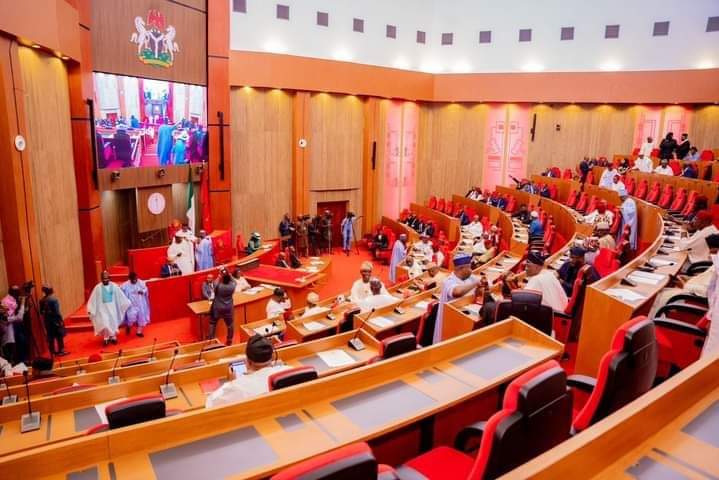

A heated debate over electronic election result transmission has exposed deep divisions within Nigeria’s National Assembly, creating uncertainty that analysts warn could damage the country’s economic prospects and democratic credibility. The controversy stems from the Senate’s recent amendment process for the Electoral Act 2022, where a proposal to mandate real-time electronic transmission to the INEC Result Viewing (IReV) portal was reportedly rejected, a move that has drawn fierce criticism from opposition parties, civil society, and some legislators who dispute this characterization.
The legislative friction centers on whether the Independent National Electoral Commission (INEC) should be compelled by law to electronically transmit results or maintain discretionary power. Supporters of the Senate’s position argue for flexibility. Senate President Godswill Akpabio explained that the amendment did not “reject” e-transmission but aimed to maintain the law’s flexibility for INEC to manage the process. This view is echoed by Senator Kenneth Eze (Ebonyi Central), who clarified that the Senate was right to retain existing provisions to avoid technical bottlenecks in areas with poor network coverage.
External analysts like former lawmaker Sergius Ogun argue that the current 2022 provision is sufficient and warn against over regulating technical operations by law. Legal practitioner Todimu Ige notes that the focus should be on INEC’s execution rather than just changing the wording of the law. These perspectives emphasize a pragmatic approach, prioritizing operational feasibility over a rigid mandate.
However, a strong coalition of voices condemns the move as a severe setback for transparency. Yunusa Ya’u, Convener of the CSO Situation Room, described the deletion of mandatory real-time transmission as “retrogressive” and a major threat to transparency. Mma Odi, Co-convener of the same group, stated that keeping the process discretionary for INEC significantly weakens democratic credibility. Political analyst Achike Chude argued that mandatory uploads are essential to stop the “darkness” of manual collation where rigging thrives. Adding his significant weight, former Vice President Atiku Abubakar condemned the move as a missed opportunity to fix the loopholes identified during the 2023 elections.
Amidst this polarized debate, several figures occupy a more nuanced middle ground. Senator Enyinnaya Abaribe (Abia South) insisted that the law still allows for electronic transmission and that public reaction is based on a misunderstanding. Legal expert Dr. Sam Amadi cautioned that while the law remains flexible, the lack of a mandate leaves room for judicial confusion later. Kunle Lawal of Electoral College Nigeria stated that the real issue is not the law itself, but whether INEC has the technical will to actually use the IReV portal. Legal analyst AbdulKareem Musa observed that the reduced notice period for elections is actually more dangerous than the e-transmission clause.
The economic implications of this legislative uncertainty are profound. Multiple analyses indicate that Nigeria’s investment climate and sovereign risk profile are directly tied to perceptions of electoral integrity. Transparent and technologically backed elections are viewed by international rating agencies and foreign investors as a proxy for institutional maturity and stability. The rejection of a digital audit trail may heighten perceptions of political risk, potentially increasing the cost of borrowing for the government as investors demand a higher risk premium.
Conversely, the simultaneous move to impose stiffer penalties for vote buying is seen as a positive, targeted attempt to sanitize the political economy. Analysts suggest that effectively enforced penalties could reduce the black market for political influence, ensuring public resources are better managed and directed toward growth driving infrastructure. However, this addresses only the demand side of electoral corruption, while the rejection of electronic transparency leaves the supply side of trust unaddressed.
The decision carries significant consequences for Nigeria’s burgeoning tech sector. A state backed mandate for digital transmission would have served as a massive proof of concept for the country’s digital economy, catalyzing investment in cybersecurity and data management. Instead, the reliance on manual processes keeps the electoral framework labor intensive and misses an opportunity to leverage domestic digital capabilities. This disconnect sends a mixed signal to the global tech community about Nigeria’s commitment to digital transformation.
Fiscal concerns are also paramount. The logistical costs of physical collation remain a significant drain on the national budget. While stiffer penalties for electoral crimes are a step toward accountability, the continued reliance on antiquated transmission methods ensures the cost of democracy in Nigeria remains disproportionately high, limiting fiscal space for essential services and economic stimulus.
Opposition parties have formalized their discontent. The Peoples Democratic Party (PDP) has urged the Senate to reconsider, emphasizing the link between electoral transparency and economic stability. Similarly, the African Democratic Congress (ADC) criticized the decision as a setback for democratic evolution that introduces significant risks to economic stability. Both parties argue that manual processes sustain a transparency deficit that can lead to market volatility and capital flight.
Within the Senate itself, conflicting narratives have emerged, further clouding the issue. Senator Ireti Kingibe (ADC, FCT) rebutted claims of rejection, asserting that approximately 85 percent of senators voted in support of technological reform during clause by clause consideration. She emphasized the distinction between the transfer of results and the more rigorous transmission to the IReV portal. This internal communication gap itself contributes to policy signal risk that investors monitor closely.
The path forward now rests with a seven member conference committee inaugurated by the House of Representatives to reconcile the divergent versions of the bill. The House version champions a digital mandate, while the Senate’s version retains INEC’s discretionary power. This harmonization process is a decisive moment that will shape Nigeria’s sovereign risk profile and influence foreign investor confidence.
Civil society organizations have issued stern warnings. A coalition including Yiaga Africa and the Centre for Liberty argues that retaining manual collation creates loopholes for manipulation and undermines democratic progress. They warn that this friction introduces a layer of institutional risk that could dampen investor sentiment and complicate Nigeria’s efforts to project a stable, transparent governance framework.
As the nation targets economic diversification and seeks to move beyond oil reliance, the strength of its democratic institutions remains the ultimate barometer of its success. The final harmonized Electoral Act will send a powerful signal. A clear mandate for electronic transmission would de risk the political environment, act as an insurance policy for the economy, and align Nigeria’s political processes with its digital aspirations. The coming weeks will determine whether the legislature chooses a path of digital modernization or remains tethered to a costly and contentious system that threatens both democratic credibility and long term economic growth.