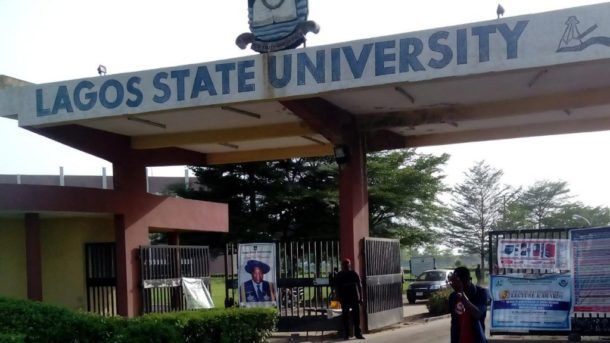

Lagos State University (LASU) is currently grappling with high electricity expenses, spending more than N200 million every month to keep its campuses running. This was revealed by the Lagos Commissioner for Tertiary Education, Mr. Tolani Sule, who explained that the rising cost reflects a wider problem affecting public universities across Nigeria.
According to him, the huge bill covers both electricity from the national grid and the heavy use of diesel-powered generators. Like many institutions, LASU relies on generators due to unstable power supply, which significantly increases operating costs. The funds are used to power lecture halls, hostels, administrative offices, and other essential facilities.
Sule made this known during the sod-turning ceremony for the TETFund/PPP Students’ Hostel Project at the university’s main campus in Ojo. He noted that such recurring expenses are placing serious financial strain on the institution, leaving less money available for academic development and infrastructure upgrades.
He admitted that balancing these costs with other pressing needs has become increasingly difficult. However, he expressed hope that ongoing plans by the Federal Government to provide a dedicated power plant would bring relief. “With this power plant being planned for us, we believe a major challenge in electricity supply will be addressed,” he said.
He added that a stable power supply would improve teaching, research, and overall student welfare. Sule also described the new hostel project as part of broader efforts to improve infrastructure and living conditions for students across tertiary institutions.
The Commissioner praised both the Lagos State Government and the university’s management for sustaining LASU’s reputation as a leading institution. He also highlighted the importance of collaboration between federal and state authorities, noting that such partnerships help reduce financial pressure on state-owned universities. He further called for similar support for other institutions like LASUSTECH and LASUED.
Speaking at the event, the Minister of Education, Dr. Tunji Alausa, said the hostel project aligns with the Federal Government’s wider plan to improve learning conditions nationwide. He explained that better infrastructure, including accommodation and electricity, is key to achieving global education standards.
Alausa disclosed that about N100 billion would be spent in 2026 on hostel construction across 50 institutions, with an additional N96 billion allocated for similar projects. “This administration recognises that quality education goes beyond lectures. It includes welfare, infrastructure, and a stable academic calendar,” he said.
He also announced plans for independent power projects at LASU, including an 11-megawatt plant at the main campus and a four-megawatt facility in Epe. These initiatives aim to reduce reliance on costly diesel and unreliable public power supply.
Highlighting the need for more accommodation, he noted that LASU has about 84,000 students but only around 7,000 bed spaces. “This clearly shows the gap we are working to bridge. Students’ welfare remains a top priority for this government,” he said.
The minister encouraged Nigerian youths to remain optimistic and embrace opportunities, stressing that government programmes are increasingly focused on building entrepreneurial and technical skills for national development.