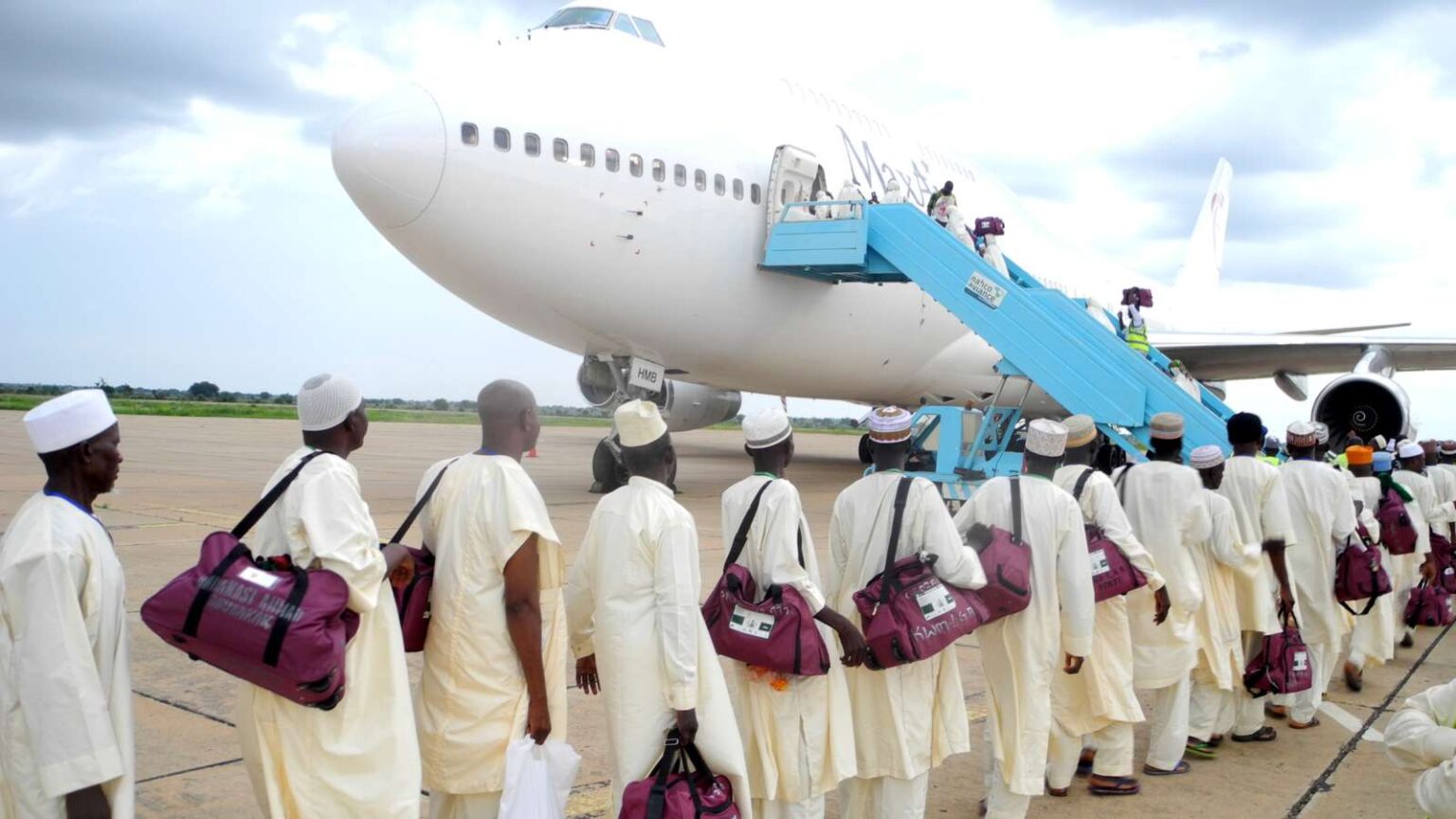

Nigeria’s federal government is evaluating targeted policy measures to cushion domestic airlines from surging global aviation fuel prices, as authorities move to safeguard the smooth execution of the 2026 Hajj airlift.
Officials familiar with the deliberations say the intervention could include fiscal incentives, temporary subsidies, or preferential foreign exchange access for carriers designated to transport pilgrims. The aim is to stabilise operating costs at a time when jet fuel commonly referred to as Jet A1 accounts for up to 40% of airline expenses, leaving operators highly exposed to price volatility.
The proposed measures reflect mounting concern that elevated fuel costs could disrupt logistics for one of the country’s largest annual international travel operations. Each year, tens of thousands of Nigerian pilgrims are airlifted to Saudi Arabia within a tightly coordinated schedule, requiring significant fleet capacity and financial outlay from participating airlines.
“Fuel price shocks have a direct and immediate impact on ticket pricing, route viability, and airline liquidity,” said an aviation analyst based in Lagos. “Without some form of policy support, carriers risk scaling back operations or passing on costs to pilgrims, which could create affordability and logistical challenges.”
Global jet fuel prices have remained under pressure amid supply constraints and geopolitical uncertainties, compounding structural issues in Nigeria’s aviation sector, including foreign exchange shortages and high maintenance costs. For local airlines, many of which operate thin margins, the cost burden has intensified in recent quarters.
Industry stakeholders have long advocated for government intervention to mitigate these pressures, particularly during high-demand periods such as the Hajj. Past support has ranged from coordinated scheduling to limited financial relief, though operators argue that a more structured framework is needed to ensure sustainability.
The government’s current review signals a more proactive stance. By exploring mechanisms to ease input costs, policymakers are seeking to prevent last-minute disruptions that could undermine both the travel experience for pilgrims and the credibility of Nigeria’s aviation management.
Beyond immediate logistics, the move also carries broader economic implications. Supporting airlines during periods of cost stress could help preserve sector capacity, protect jobs, and maintain critical international connectivity. However, analysts caution that any subsidy or incentive scheme must be carefully designed to avoid market distortions or fiscal strain.
“Short-term relief is understandable, but it should be paired with longer-term reforms,” the Lagos based analyst added. “That includes improving access to foreign exchange, investing in local refining capacity for aviation fuel, and strengthening airline balance sheets.”
For now, the government’s priority is clear: ensuring that the 2026 Hajj airlift proceeds without disruption. Final policy decisions are expected in the coming months, as authorities balance fiscal considerations with the operational realities facing Nigeria’s aviation sector.