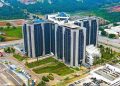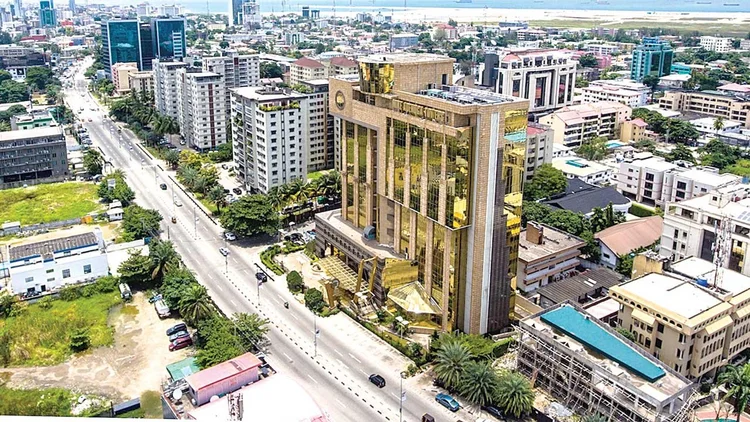

Lagos’ high-end property market has recorded a staggering three-fold increase in valuation over the last 24 months, driven by a combination of persistent currency devaluation and a flight to safety by high-net-worth investors. According to recent market data from major real estate consultancies, luxury residential assets in prime corridors such as Ikoyi, Victoria Island, and Banana Island have seen prices surge from an average of ₦500 million to over ₦1.5 billion for premium units. For the Nigerian economy, this hyper-appreciation in the luxury segment serves as a dual-edged sword: while it underscores the resilience of real estate as a hedge against inflation, it also highlights the deepening capital concentration in non-productive assets and the widening affordability gap in the broader housing market.
The primary catalyst for this price explosion is the continued volatility of the Naira. Following the unification of the foreign exchange windows, the resulting devaluation has significantly inflated the replacement cost of luxury developments. Because the high-end segment relies heavily on imported finishing materials—ranging from Italian marble and German kitchens to advanced smart-home systems—developers have been forced to price new inventories in line with current dollar-to-naira realities. Consequently, existing property owners have recalibrated their asking prices upward to maintain value in real terms, effectively turning luxury real estate into a “hard currency” proxy within the local economy.
From an investment perspective, the surge reflects a “flight to quality.” Amidst a high-inflation environment where traditional financial instruments like bonds and treasury bills have struggled to provide positive real returns, wealthy Nigerians and the diaspora are pivoting to bricks and mortar. This demand is further bolstered by the entry of institutional investors and real estate investment trusts (REITs) looking to diversify their portfolios. The economic implication of this trend is a significant “wealth effect” for current property holders, which may stimulate luxury consumption; however, it also risks creating a real estate bubble if the pace of price growth continues to outstrip the underlying rental yields and organic economic growth.
The luxury boom also carries significant fiscal implications for the Lagos State Government. The tripling of property values provides a substantial opportunity to increase Internally Generated Revenue (IGR) through Land Use Charge, Capital Gains Tax, and stamp duties. If properly captured, these revenues could provide the fiscal liquidity needed to fund critical urban infrastructure, such as the ongoing Fourth Mainland Bridge and the expansion of the Blue and Red rail lines. However, for the broader economy, the focus on the premium end of the market has led to a “supply-side mismatch,” where developers prioritize high-margin luxury projects over the mass-market housing needed to address Nigeria’s estimated 28 million-unit housing deficit.
Furthermore, the construction activity associated with these luxury high-rises remains a vital contributor to the industrial sector. The sector’s demand for cement, steel, and labor provides a localized stimulus, supporting thousands of jobs in the artisanal and professional services categories. Yet, the high cost of entry into this market effectively excludes the middle class, potentially leading to long-term social friction and urban fragmentation. To ensure a balanced economic outcome, policy interventions may be required to incentivize “inclusionary zoning,” where luxury developers are encouraged to contribute to affordable housing pools in exchange for tax breaks or expedited planning approvals.
The long-term outlook for the Lagos luxury market remains bullish, provided that the city maintains its status as Africa’s premier commercial hub. As multinational corporations and tech unicorns continue to expand their footprints in the region, the demand for executive residential spaces is expected to remain robust. However, the sustainability of these price levels will ultimately depend on the broader stabilization of the Nigerian macroeconomy. If the central bank successfully tames inflation and stabilizes the Naira, the pace of appreciation may normalize, allowing for a more sustainable growth trajectory that attracts long-term capital rather than just speculative “hot money.”