
Nigeria’s renewed investment in rail infrastructure is drawing fresh attention to the economic potential of freight rail as the Lagos–Ibadan corridor records significant cargo volumes and offers businesses an alternative to the country’s heavily road-dependent logistics system.
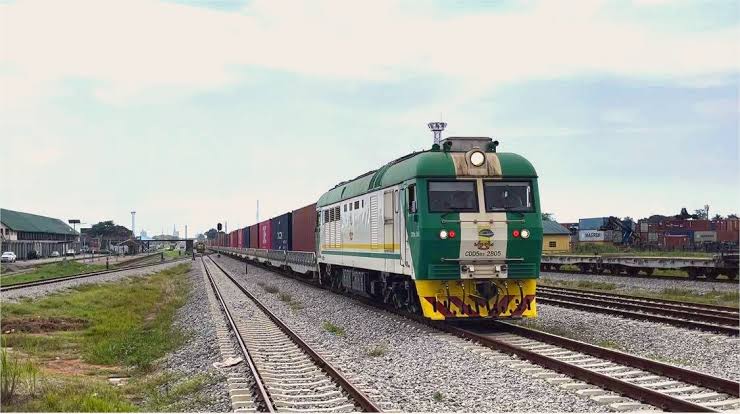
Between January and August 2025, the Lagos–Ibadan standard-gauge railway moved 382,340 tonnes of cargo, including cement, steel coils, gypsum, soda ash and containerised goods, according to data reported by The Nation. More than 73,000 tonnes of cargo were transported in April alone.
The figures highlight the potential for rail to take a larger share of freight movement between Nigeria’s busiest commercial gateway and major industrial and distribution centres, particularly as manufacturers, importers and logistics companies contend with high road-transport costs, congestion and unreliable delivery times.
The freight corridor links Apapa Port in Lagos with the Moniya Freight Yard in Ibadan, giving importers an alternative to moving containers entirely by road from the port.
The Nigerian Railway Corporation (NRC), in partnership with private-sector logistics operators, expanded standard-gauge container services on the corridor in February 2025. The service operates on Mondays, Wednesdays and Fridays, with each train capable of carrying up to 35 wagons of 40-foot containers or 70 wagons of 20-foot containers.
For businesses, the significance of the corridor goes beyond the amount of cargo already moved.
Nigeria’s logistics network remains overwhelmingly dependent on road transportation, leaving businesses exposed to fuel expenses, vehicle maintenance, traffic delays, road deterioration and uncertain delivery schedules. A more efficient freight-rail network could reduce the number of heavy-duty trucks travelling between Lagos and the wider southwest while providing businesses with a more predictable long-distance transport option.
APM Terminals has said the rail connection between Apapa and Moniya can save two to three days on average compared with conventional road movement, highlighting the potential time savings for importers using the service.
The development comes as the Federal Government steps up investment in rail infrastructure. In April 2026, the Federal Executive Council approved rail projects valued at almost $3 billion, including Phase 1A of the Lagos Green Line, the Kano Metro City rail network and the Kaduna light rail system.
Although the projects are primarily focused on urban mobility and passenger transportation, the wider investment signals the government’s intention to expand rail capacity and reduce pressure on Nigeria’s road network.
For the economy, however, the commercial impact of rail investment will depend partly on how much freight the network can ultimately absorb.
The Lagos–Ibadan corridor provides an early indication of what that opportunity could look like. Moving larger volumes of containers and industrial materials by rail could lower the number of trucks required for long-distance haulage, reduce road congestion and potentially cut logistics costs for businesses.
The corridor is also becoming an important test of Nigeria’s attempt to bring more private-sector participation into railway operations.
In November 2024, the NRC licensed China Civil Engineering Construction Corporation (CCECC) to operate freight services on the Lagos–Ibadan corridor. Greater involvement by commercial operators could help improve service frequency, equipment utilisation and customer-focused logistics solutions, provided the underlying infrastructure can support sustained growth.
Capacity constraints, train frequency, freight-terminal infrastructure, cargo handling and last-mile connections remain important barriers to wider adoption. Businesses cannot rely on rail for the entire logistics journey if cargo still faces delays or high costs moving between factories, warehouses, terminals and railway yards.
This makes the development of integrated freight infrastructure critical. A railway line connecting a port to an inland terminal is only as useful as the road, warehouse, customs and cargo-handling systems connected to it.
The challenge for policymakers, therefore, is to move beyond building additional railway lines and develop a commercially viable freight network capable of competing with road haulage on reliability, cost and convenience.
For manufacturers and importers, the stakes are high. Logistics is a significant component of the cost of moving goods in Nigeria, and any sustained shift from road to rail could help businesses reduce exposure to some of the costs associated with long-distance trucking.
The Lagos–Ibadan experience suggests that demand for freight rail already exists. The 382,340 tonnes moved between January and August 2025 provide evidence that businesses are willing to use rail when the service is available and commercially practical.
Nigeria’s broader rail ambitions will now be judged not only by the kilometres of track constructed or the number of passenger services launched, but also by the network’s ability to move goods efficiently from ports to industrial and commercial centres.
For the Federal Government, expanding freight capacity alongside passenger infrastructure could therefore deliver a larger economic dividend: fewer trucks on congested roads, more predictable cargo movement and potentially lower logistics costs for businesses.
Nigeria does not simply need more railway lines. It needs a reliable, commercially viable rail network capable of taking a meaningful share of freight off the roads and reducing the cost of doing business.