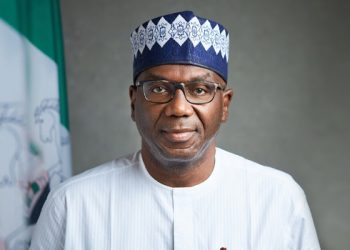

The anti-graft Independent Corrupt Practices and Other Related Offences Commission (ICPC) has confirmed it will continue its investigation into corruption allegations involving former Nigerian Midstream and Downstream Petroleum Regulatory Authority (NMDPRA) boss Ahmed Farouk, even after the high-profile petition from billionaire industrialist Aliko Dangote was formally withdrawn.
The commission’s statement makes clear that the inquiry, which began before Dangote’s withdrawal, remains active and will be pursued “in line with its statutory mandate and in the interest of transparency, accountability and the fight against corruption for the benefit of Nigeria.”
The ICPC’s stance is rooted in its legal powers to investigate corruption regardless of whether a petitioning party chooses to retract their complaint. According to the agency, the case had already been opened when it received a letter on January 5, 2026, notifying it of Dangote’s decision to withdraw the petition filed in December 2025.
Background of the Dispute
In December, Dangote, who chairs the Dangote Group and is widely regarded as Africa’s richest man, filed a petition with the ICPC accusing Farouk of corruption and financial impropriety during his time as NMDPRA chief, including alleged misuse of public resources.
Dangote’s petition urged the commission to arrest, investigate and prosecute Farouk for alleged violations of anti-corruption laws, claiming that the former regulator had “lived beyond his means” and abused his position..
Among the most serious claims were allegations that Farouk spent large sums, reportedly over $7 million on the overseas education of his children without any transparent source of income to support such expenditures.
Farouk, for his part, has publicly rejected the accusations, describing Dangote’s claims against him and his family as “wild and spurious.”
The controversy coincided with Farouk’s resignation as NMDPRA CEO shortly after the petition was lodged, though official statements did not explicitly tie his exit to the allegations.
ICPC: Investigation Continues
Despite the withdrawal from Dangote’s legal team, the ICPC says it has no intention of abandoning the probe. In a statement, the commission noted that the withdrawal letter also indicated that another law enforcement agency had taken over the matter, though it did not specify which.
The ICPC pointed out that its powers derive from law and not merely from petitions, and it reiterated its commitment to pursuing the investigation “in the interest of the Nigerian people and the Nigerian state.”
The commission’s actions reflect its continuing role as one of Nigeria’s principal institutions for fighting corruption and enforcing accountability among public officials.
The case has captured public attention in Nigeria, with civil society organizations and political figures calling for transparent scrutiny of both the allegations and the conduct of regulatory officials. Reports indicate multiple public appeals for thorough investigations by various groups.
The controversy also sparked debates about how corruption, regulatory enforcement, and high-profile business interests intersect in Nigeria’s governance landscape. Some commentators have urged broader probes across regulatory bodies beyond this single case.
Investors watch closely: prolonged corruption investigations and regulatory disputes involving major industrial players like Dangote can affect Nigeria’s business climate, impacting foreign investment, petrol supply certainty, and downstream petroleum sector confidence. Clear governance strengthens economic credibility, while uncertainty may elevate risk perceptions and discourage capital inflows.