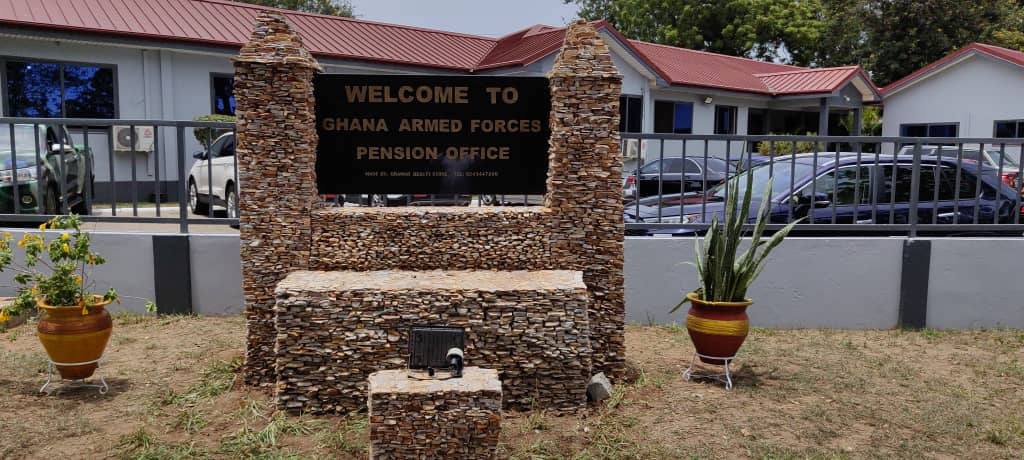

The Ghanaian government has initiated a major fiscal disbursement to settle outstanding gratuity arrears exceeding GH¢1 billion owed to its military personnel, concurrently launching a reformed payment system designed to prevent future delays. This dual action, announced by the Ministry of Defence and effective from 1 March, represents a significant financial commitment aimed at resolving a longstanding liability, honouring retirement contracts, and boosting morale within the armed forces. For Ghana’s economy, the move has immediate budgetary implications and underscores the broader fiscal challenge of managing public sector wage bills while seeking to reinforce institutional stability and domestic confidence.
The clearance of these specific arrears addresses a direct and pressing obligation within the state’s financial ledger. The allocation of over GH¢1 billion constitutes a substantial line-item expenditure that must be balanced against other pressing national needs in infrastructure, healthcare, and education. This payout, while necessary, highlights the ongoing fiscal pressure exerted by Ghana’s public sector compensation commitments, a factor closely monitored by international lenders and credit rating agencies. The government’s decision to prioritise this settlement signals an intent to honour its contractual social obligations, which can positively influence investor perceptions of rule of law and fiscal responsibility, even as it strains short-term liquidity.
Beyond the balance sheet, the economic rationale is deeply interwoven with human capital and institutional integrity. The new payment structure, which guarantees a calculated lump sum to personnel retiring in 2026, transforms a system of uncertainty into one of predictability. This reform is a critical investment in the efficiency and morale of a key state institution. A demoralised military, preoccupied with financial insecurity after service, can become a latent socio-economic risk. By ensuring timely benefits, the government enhances operational focus and reinforces the military’s role as a pillar of national stability—a non-negotiable prerequisite for attracting and retaining the foreign and domestic investment needed for economic growth.
The injection of GH¢1 billion directly into the hands of retired personnel and their families also functions as a targeted economic stimulus. This capital will predominantly flow into local economies through consumption, housing, and small-scale investments, providing a boost to businesses and supporting livelihoods. The multiplier effect of this spending, particularly in communities with a high concentration of veterans, can be significant, fostering economic activity at a grassroots level and contributing to broader national demand.
The policy shift from arrears management to a proactive, streamlined system also aims to curb long-term economic inefficiencies. The administrative cost of managing perpetual debt, fielding grievances, and mitigating the operational impact of low morale is substantial, if difficult to quantify. The new system seeks to eliminate these hidden costs, allowing the Ministry of Defence and related agencies to allocate administrative resources more productively. This reflects a broader governance principle that timely and transparent financial management is inherently more economically efficient than perpetually managing the fallout from delay.
This decisive action on military gratuities ultimately serves as a marker of the government’s fiscal and institutional priorities. It demonstrates a recognition that economic stability is inextricably linked to the stability and confidence of core national institutions. While the immediate payout pressures the national budget, its potential to foster a more secure, focused, and financially secure defence force contributes to the foundational stability upon which all economic activity depends. The success of this reform will be measured not only by the gratitude of retired soldiers but by its contribution to a more predictable and secure economic environment for all of Ghana.