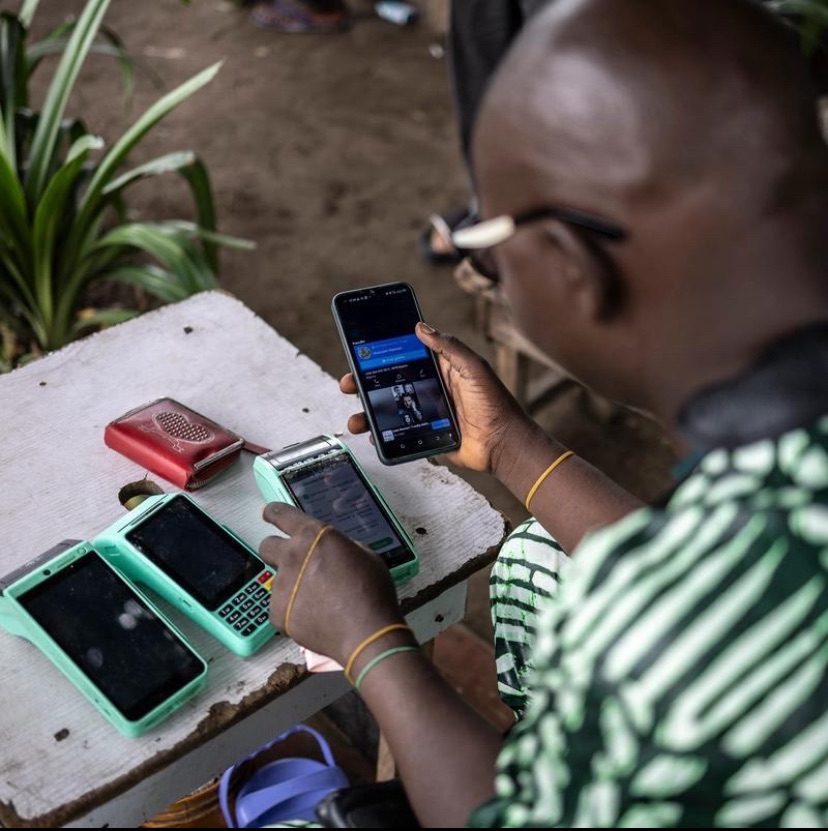

Nigeria’s financial sector is becoming increasingly competitive as traditional banks and fintech companies fight for the attention of millions of customers moving rapidly toward digital financial services.
For decades, commercial banks dominated Nigeria’s financial system. Customers depended on banks for savings accounts, transfers, loans, payments and other financial services. However, the emergence of fintech companies has changed the market, giving consumers more options and forcing traditional banks to rethink how they serve their customers.
Fintech platforms have attracted users by offering fast transfers, easy account opening, digital payments, savings products, loans and other services through smartphones. Many of these platforms have built their businesses around convenience, allowing customers to complete transactions without visiting a physical branch.
The growing popularity of fintechs has created strong competition for banks, particularly among younger Nigerians who are more comfortable using mobile applications for their financial needs.
Traditional banks, however, are not standing still. Many have invested heavily in mobile banking applications, digital payment platforms, artificial intelligence and other technologies designed to improve customer experience.
Banks also have a major advantage: they already have large customer bases, established infrastructure and long-standing relationships with businesses and individuals. Their access to deposits and wider financial services also gives them significant strength in the competition.
Another important factor is regulation. Banks operate under strict regulatory requirements, while fintech companies are also becoming subject to greater oversight as regulators seek to protect consumers and maintain stability in the financial system.
The competition is therefore no longer simply about who can provide the cheapest or fastest transfer. It is increasingly about who can offer a wider range of useful services while maintaining reliability, security and customer trust.
Fintech companies have also forced banks to become more innovative. Features that were once considered advanced, such as instant transfers, digital account opening and app-based financial management, are now becoming standard expectations among Nigerian customers.
At the same time, fintechs face their own challenges. Maintaining strong cybersecurity, dealing with fraud, complying with regulations and building sustainable revenue models can be expensive. Customer complaints over failed transactions and service interruptions can also affect confidence.
For consumers, the rivalry could be beneficial. Greater competition can lead to better services, more convenient financial products and potentially lower transaction costs.
The battle between banks and fintechs is unlikely to produce one clear winner. Instead, Nigeria’s financial industry could increasingly become a combination of traditional banking and financial technology.
Some banks are already partnering with fintech companies rather than competing directly with them, while fintechs are expanding into areas traditionally controlled by banks.
As Nigeria’s digital economy continues to grow, the companies that understand changing customer expectations, invest in technology and maintain trust are likely to have the strongest advantage.
The real battle, therefore, is not simply between banks and fintechs. It is a race to determine who can provide Nigerians with faster, safer, simpler and more accessible financial services.