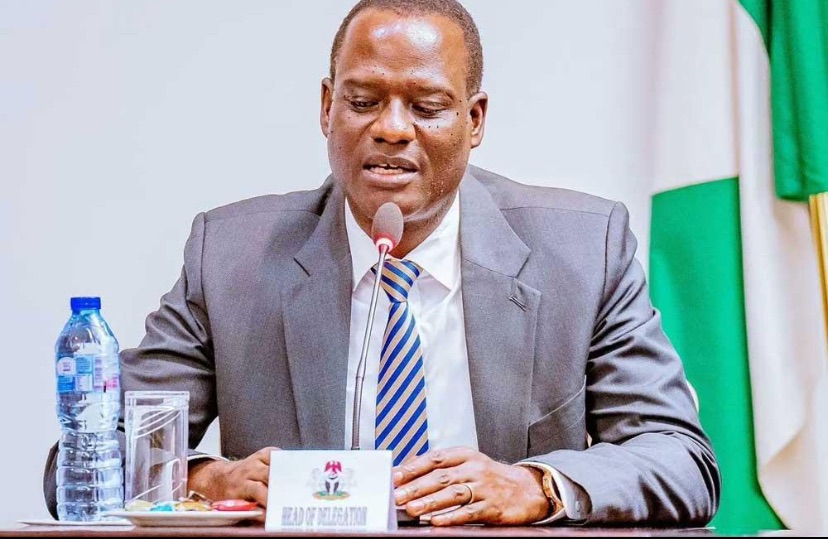

Nigeria’s Minister of Finance and Coordinating Minister of the Economy, Mr. Taiwo Oyedele, has proposed the creation of a Special Commercial Dispute Resolution Tribunal to ensure business-related cases are resolved much faster, saying delays in the justice system discourage investment and slow economic growth.
Oyedele made the proposal while delivering his inaugural lecture as a Fellow of the Capital Market Academics of Nigeria (CMAN) during the association’s Second Biennial Conference held in Abuja. The conference focused on how Nigeria’s capital market can drive inclusive and sustainable economic development.
According to the minister, one of the biggest challenges facing investors in Nigeria is the slow pace of resolving commercial disputes. He noted that business-related court cases currently take an average of 15 years to pass through the High Court, Court of Appeal and the Supreme Court.
He explained that such lengthy legal battles create uncertainty, reduce investor confidence and increase the cost of doing business.
To solve the problem, Oyedele suggested establishing a dedicated tribunal staffed by judges and arbitrators with expertise in commercial, financial and capital market matters. He said the tribunal should make use of digital case management systems and operate under strict timelines to ensure disputes are settled quickly.
The proposed tribunal, he added, would handle disagreements involving businesses, investors, suppliers and joint venture partners, helping to protect investments and improve confidence in Nigeria’s business environment.
The minister stressed that nearly every financial transaction, including bonds, loans and investment agreements, depends on legally enforceable contracts. As a result, an efficient dispute resolution system is essential for the growth of Nigeria’s capital market.
Beyond judicial reforms, Oyedele urged Nigerians to change the way they view government borrowing. He argued that debt should not automatically be seen as negative, but should instead be judged by how the borrowed funds are used.
According to him, borrowing to finance productive projects that generate returns greater than the cost of the loan is a smart financial decision. He warned against criticizing every government loan without first examining whether the money is being invested in projects capable of boosting economic growth.
He also encouraged business owners to rethink their reluctance to accept outside investors. According to him, owning a smaller share of a large, successful company often creates more wealth than keeping full ownership of a small business with limited growth.
The minister outlined what he described as the “seven laws of capital attraction,” explaining that investors value trust, stable government policies, strong institutions and the rule of law more than generous tax incentives.
He said investors prefer countries where policies remain consistent and contracts are respected. Frequent policy changes, foreign exchange uncertainty and weak legal enforcement, he noted, often drive investors away.
Oyedele further stressed that long-term investment depends on strong institutions such as an independent judiciary, a credible central bank and an efficient public service rather than on individual political leaders.
He also called on government officials, professionals and the media to communicate economic reforms more effectively, saying Nigeria often loses investment opportunities because positive policy changes are not properly explained to investors.
Meanwhile, the Director-General of the Securities and Exchange Commission (SEC), Dr. Emomotimi Agama, urged closer collaboration between regulators and academics. He said quality research provides the foundation for sound policymaking and effective regulation.
Agama explained that the SEC is implementing major reforms following the introduction of the Investments and Securities Act 2025 and the country’s new 10-year Capital Market Master Plan. He said these reforms require continuous research, constructive debate and fresh ideas to ensure they meet international standards.
He encouraged researchers to produce practical recommendations that would improve investor confidence and strengthen Nigeria’s financial markets.
Also speaking at the conference, the President of the Capital Market Academics of Nigeria, Prof. Uche Uwaleke, called for stronger partnerships between universities, financial institutions and government agencies.
He said Nigeria has both skilled academics and experienced financial professionals but lacks an organised system that allows both groups to work together.
Uwaleke recommended that universities recognise industry experience when appointing and promoting lecturers in finance-related fields. He also proposed that retired bankers, investment experts and capital market professionals be engaged as adjunct lecturers to better prepare students for careers in the financial sector.
He further urged financial regulators to create structured research fellowships and sabbatical programmes for academics, while calling on the Federal Government to establish a Financial Markets Research Partnership that would fund studies on capital markets, infrastructure financing, pensions, insurance and financial inclusion.
According to him, stronger cooperation between academia, regulators and the private sector will help develop better policies, strengthen Nigeria’s financial system and support long-term economic growth.