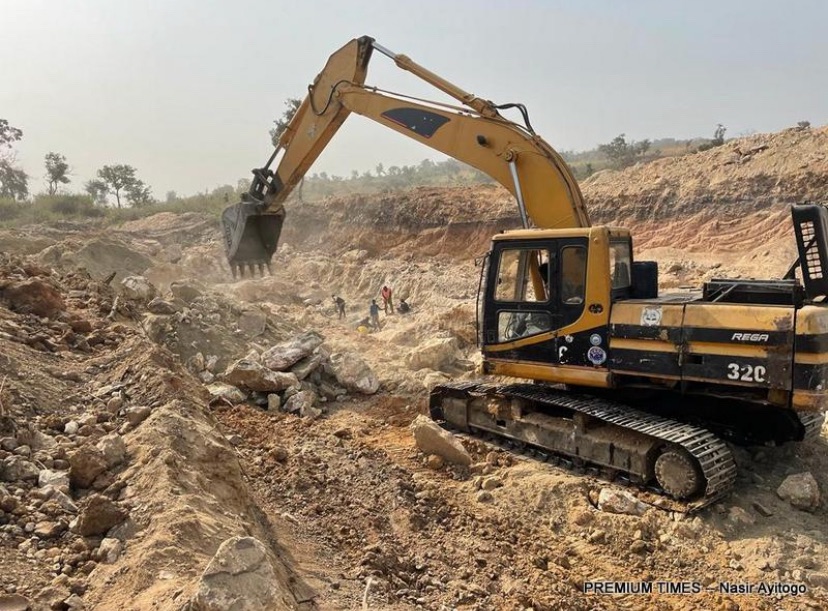

The Federal Government has restated its commitment to transform Nigeria’s solid minerals industry into a major contributor to the economy by growing the sector to about N30 trillion by 2030.
The announcement was made by the Executive Secretary and Chief Executive Officer of the Solid Minerals Development Fund (SMDF), Fatima Shinkafi, during the first Annual Lecture of the Faculty of Physical and Earth Sciences at the University of Lagos.
According to Shinkafi, the government wants to increase the value of the mining sector by 25 times over the next few years through reforms, increased investment, and stronger collaboration between government, universities, and private investors.
She explained that although Nigeria is blessed with more than 44 commercially available mineralsfound in over 500 locations, the sector still contributes less than one percent to the country’s Gross Domestic Product (GDP). Valuable minerals such as gold, lithium, iron ore, coal, barite, bitumen, and gemstones remain largely underdeveloped.
Shinkafi said the current administration introduced a major reform plan after President Bola Tinubu took office in 2023. Led by the Minister of Solid Minerals Development, Dele Alake, the strategy focuses on attracting investors, improving geological data, tackling illegal mining, supporting local mineral processing, and strengthening industry regulations.
As part of these reforms, more than 2,500 inactive mining licences have been revoked, while security agencies known as Mining Marshals have arrested over 300 illegal miners and recovered nearly 100 illegal mining sites across the country.
The government says these efforts are already producing positive results. Revenue generated from the mining sector increased from N16 billion in 2023 to N38 billion in 2024, before rising above N70 billion in 2025. This represents a growth of more than 337 percent within two years.
The reforms have also attracted about 2.6 billion dollars in new investment commitments. One of the biggest projects is a 1.3-billion-dollar alumina refinery, described as the largest mining investment ever recorded in Nigeria. Officials believe projects like this will create jobs, increase exports, and support industrial growth.
To encourage research and innovation, the SMDF also introduced the Early-Stage Mineral Exploration and Research Grant Endowment (EMERGE). The programme will provide funding for university researchers working on mineral exploration, critical minerals, and new technologies. Some approved research projects will receive up to 100 percent funding, while successful applicants will also benefit from mentorship, technical support, and investment opportunities.
Shinkafi encouraged universities to submit quality research proposals and urged more young women to consider careers in mining, geology, and earth sciences. She said the industry offers equal opportunities for anyone with the knowledge and determination to succeed.
The Vice-Chancellor of the University of Lagos, Professor Folasade Ogunsola, praised the partnership between the university and the SMDF, saying research institutions have an important role in helping Nigeria unlock the full value of its mineral resources.
The Federal Government believes the mining industry can help reduce Nigeria’s dependence on crude oil and become a major source of revenue, employment, and economic growth. With continued reforms, stronger security, increased investment, and improved research, officials are confident the sector can play a bigger role in building a more diversified economy by 2030.