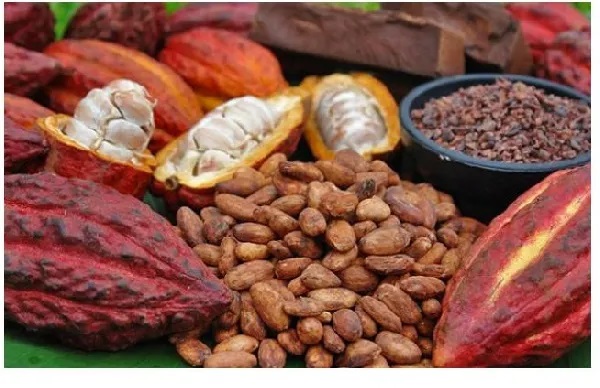

The Federal Government has launched the distribution of one million improved hybrid cocoa seedlings under the National Cocoa Development Plan, marking a significant step toward revitalising Nigeria’s cocoa industry, improving farmer productivity, and strengthening the country’s position in the global cocoa market.
The programme was officially flagged off on Wednesday at the Cocoa Research Institute of Nigeria (CRIN) in Ibadan, Oyo State, by the Minister of Agriculture and Food Security, Senator Abubakar Kyari. He described the initiative as a key pillar of President Bola Tinubu’s Renewed Hope Agenda aimed at driving agricultural transformation and expanding non-oil export earnings.
Speaking at the ceremony, Kyari said the intervention extends beyond the distribution of planting materials, describing it as a long-term strategy to restore the competitiveness of Nigeria’s cocoa industry.
“Today’s event is not merely the distribution of planting materials. It is the commencement of a strategic national intervention to restore the strength of Nigeria’s cocoa industry, improve the livelihoods of our farmers, increase export earnings, and reposition our country as a leading player in the global cocoa economy,” he said.
The hybrid seedlings, developed by the Cocoa Research Institute of Nigeria, are designed to produce higher yields, mature earlier than conventional varieties, and offer improved resistance to diseases and changing climatic conditions. The seedlings will be used to rehabilitate ageing cocoa plantations while supporting the establishment of new commercial farms across cocoa-producing states.
The minister noted that Nigeria’s cocoa production has been constrained by ageing tree stocks, declining farm productivity, limited access to improved planting materials, inadequate extension services, and the growing impact of climate change. Addressing these structural challenges, he said, is essential to restoring sustainable growth in the sector.
Beyond increasing production, the government is pursuing policies to expand domestic cocoa processing capacity, allowing Nigeria to export more value-added products such as cocoa butter, cocoa powder, and chocolate instead of relying predominantly on raw cocoa bean exports. The strategy is expected to generate higher export revenues, create jobs across the value chain, and reduce the economy’s dependence on crude oil earnings.
Kyari also disclosed that the programme incorporates digital farm mapping and traceability systems to ensure compliance with the European Union Deforestation Regulation (EUDR). Meeting these international sustainability standards will improve Nigerian cocoa’s access to premium export markets and strengthen its competitiveness globally.
Industry stakeholders view the initiative as an important milestone for rebuilding Nigeria’s cocoa sector. If effectively implemented alongside sustained farmer support, improved financing, and stronger extension services, the programme could significantly raise national cocoa output, enhance rural incomes, and reinforce agriculture’s contribution to economic diversification.