
The Federal Government has expressed confidence that the completion of the Ajaokuta-Kaduna-Kano (AKK) gas pipeline will attract more investment in gas infrastructure across northern Nigeria, as three newly commissioned gas facilities in Kano are expected to serve up to 2,500 cars and tricycles and 200 trucks daily.
The facilities, developed by Rolling Energy Limited in partnership with the Midstream and Downstream Gas Infrastructure Fund (MDGIF), were commissioned on Tuesday, November 10, 2026, by the Minister of State for Petroleum Resources (Gas), Ekperikpe Ekpo.
According to reports by The Guardian and Nairametrics on Wednesday, November 11, the projects comprise a liquefied-to-compressed natural gas (LCNG) distribution hub and retail station at Tamburawa, in Dawakin Kudu Local Government Area, and an LCNG daughter and retail station at Hotoro, in Tarauni Local Government Area.
The Tamburawa facility has a designed distribution capacity of 300,000 standard cubic metres per day, while the Hotoro facility has a capacity of 21,000 standard cubic metres daily.
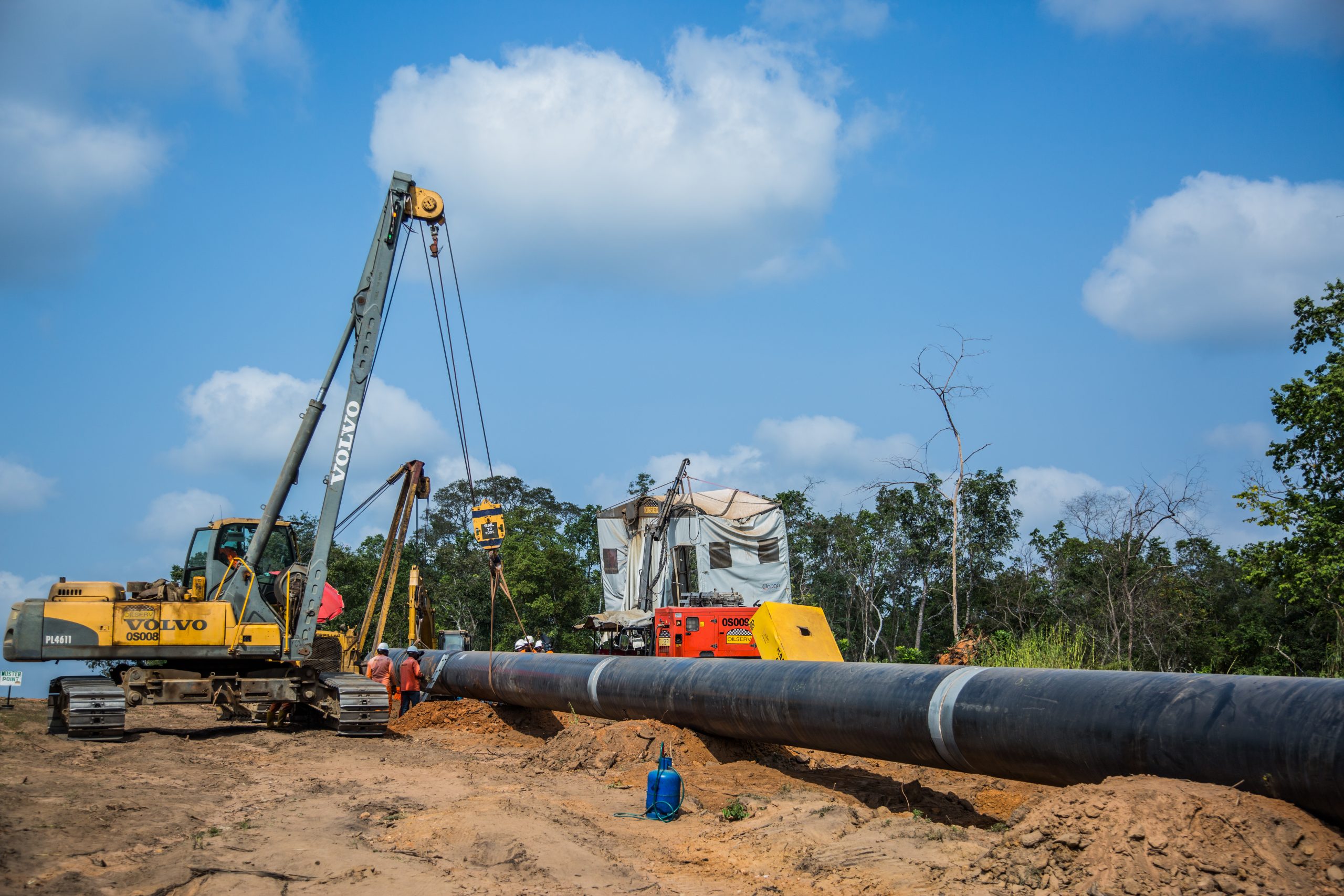
Speaking at the commissioning, Ekpo said the completion of the AKK pipeline would provide additional gas supply opportunities for the emerging infrastructure network in the North.
He put the pipeline’s completion at about 90 per cent, adding that gas infrastructure investments were being developed ahead of its full operation.
The minister said the projects demonstrated the government’s commitment to moving beyond policy announcements to investments that would make natural gas more accessible to households, businesses and transport operators.
The Executive Director of MDGIF, Oluwole Adama, said the facilities could refuel up to 2,500 cars and tricycles and 200 trucks daily, potentially reducing waiting times and operating costs for commercial transporters.
Adama also highlighted the potential savings from switching to compressed natural gas.
According to him, petrol in Kano sells for approximately ₦1,420 per litre, while the equivalent energy from CNG costs about ₦600.
He said a commercial tricycle operator spending ₦14,200 daily on 10 litres of petrol could spend approximately ₦6,000 on CNG for the same energy requirement, representing potential daily savings of ₦8,200.
Meanwhile, Rolling Energy’s founder, Mubarak Danbatta, said the Tamburawa facility would serve as a distribution hub for investors and operators in Kano, Jigawa, Zaria and surrounding areas.
The development is expected to strengthen gas distribution beyond southern Nigeria and create opportunities for investment in vehicle conversion, gas transportation, maintenance and logistics.
However, the long-term benefits will depend partly on the availability of reliable gas supplies, affordable conversion costs and the expansion of refuelling infrastructure to support growing demand.
The AKK pipeline is therefore expected to play a critical role in connecting northern Nigeria to the country’s gas supply network, while the Kano facilities provide immediate infrastructure for expanding domestic gas consumption.