
Nigeria’s Federal Executive Council (FEC) has approved a major financing package valued at approximately $2.76 billion, €200 million and ₦215 billion to accelerate investments across transportation, agriculture, power, infrastructure and micro, small and medium-sized enterprises (MSMEs), reinforcing the Federal Government’s strategy to stimulate economic growth and improve productivity.
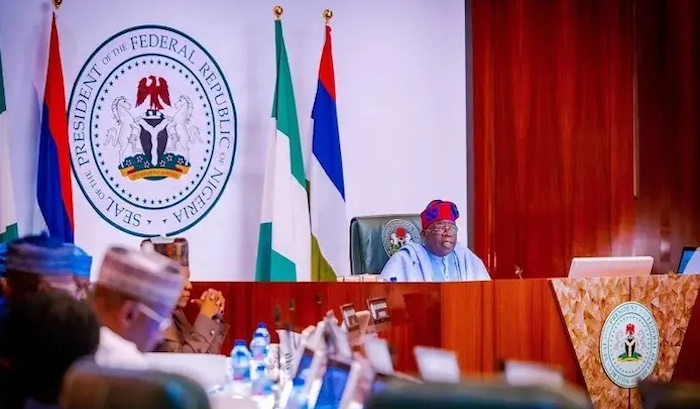
The approvals were announced by the Minister of Finance and Coordinating Minister of the Economy, Taiwo Oyedele, following Monday’s FEC meeting chaired by President Bola Tinubu. According to the minister, the package emerged from 14 memoranda presented by the Ministry of Finance and is aligned with the administration’s Renewed Hope Agenda.
A significant portion of the domestic funding, ₦215 billion has been earmarked for the Presidential Compressed Natural Gas (CNG) Initiative, which aims to reduce transportation costs through the deployment of CNG-powered buses, electric vehicles, tricycles and the expansion of vehicle conversion centres across the country.
“The first approval focuses on transportation and how to reduce its cost,” Oyedele said, noting that lower transport costs are expected to ease inflationary pressures and improve mobility for businesses and households.
In the agriculture sector, FEC approved $900 million to support rural technical training, expand Special Agro-Industrial Processing Zones (SAPZ) and strengthen agricultural value chains. The investment is designed to improve food production, reduce post-harvest losses and encourage agro-processing, helping Nigeria diversify its economy beyond crude oil.
To expand electricity access in underserved communities, the Council also approved $160 million for rural solar electrification projects in Niger State. The financing comprises $150 million from the Islamic Development Bank and $10 million in counterpart funding, supporting Nigeria’s transition toward cleaner and more reliable energy sources.
Infrastructure development also featured prominently in the approvals, with $1.2 billion allocated for Section Two of the Sokoto–Badagry Super Highway. The highway, which traverses 11 states, is expected to improve regional connectivity, reduce logistics costs, facilitate trade and support long-term economic development.
To strengthen access to finance for smaller businesses, FEC approved €200 million alongside $500 million to be channelled through the Development Bank of Nigeria (DBN). The funds will provide more affordable credit to MSMEs, a sector widely regarded as the backbone of Nigeria’s economy due to its contribution to employment and enterprise development.
“We must continue to support small businesses because supporting them is supporting ourselves,” Oyedele said.
The approvals underscore the Federal Government’s continued reliance on development finance to bridge Nigeria’s infrastructure deficit while promoting inclusive growth. If efficiently deployed, the investments could improve transport efficiency, enhance agricultural productivity, expand renewable energy access and strengthen the operating environment for businesses. However, analysts note that timely implementation, transparency and effective project execution will be critical to ensuring the financing translates into measurable economic gains.