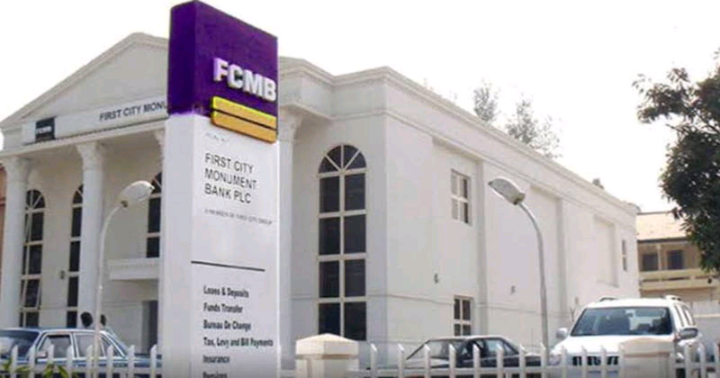

The banking group First City Monument Bank (FCMB) has projected a profit after tax (PAT) of ₦62.5 billion for the first quarter of 2026, following a strong performance that helped it outpace its results from each of the first three quarters of 2025.
FCMB’s optimistic forecast comes on the back of its robust nine‑month 2025 performance, which saw a profit before tax of ₦134.497 billion as at 30 September 2025, a sizable increase compared to the same period in the previous year.
The bank’s success rests on what analysts describe as a “balanced strategy”, one that emphasises core banking operations, disciplined risk management, and efficient capital use.
In the first quarter of 2025 alone, FCMB delivered gross earnings of ₦252.7 billion, exceeding its internal forecasts. The bank’s ability to turn a surge in interest income, stemming from higher yields on assets amid Nigeria’s high‑rate environment into stronger net interest income underpinned this growth.
This upward trend has been sustained even amid challenges like elevated funding costs and Nigeria’s macroeconomic headwinds. Despite a significant foreign‑exchange loss recorded in the nine‑month results, FCMB’s core banking revenue, from lending and other banking services, grew sharply, helping it remain profitable.
Moreover, FCMB’s recent ₦160 billion capital raise, part of its recapitalisation push ahead of looming regulatory thresholds, appears to be paying off. That capital injection has strengthened the bank’s base, improved its net interest margins, and boosted return on equity.
The recapitalisation strategy is considered comprehensive and phased, designed to meet new regulatory capital requirements while avoiding excessive dilution of shareholder value. FCMB has emerged as a model of how Tier‑2 banks can navigate Nigeria’s evolving banking landscape with prudence and resilience.
If FCMB hits the projected ₦62.5 billion profit for Q1 2026, it would kick off the year strongly, reinforcing investor confidence that the bank is well positioned for further growth. Given its recent trend of outperforming guidance, many view this projection as conservative.
In addition, as Nigeria’s banking sector braces for regulatory changes and increased capitalisation requirements, FCMB’s strengthened capital base and disciplined approach offer a buffer, potentially setting the bank up to lead consolidation and expansion efforts across the industry.
Yet, risks remain. The broader economic climate, shaped by inflation, fluctuating exchange rates, and regulatory shifts could weigh on interest income, loan demand, and non‑performing loan (NPL) ratios. Navigating those headwinds will require continued operational discipline and strategic foresight.
Nevertheless, FCMB’s forecast is a strong signal: even in a challenging environment, a well-managed bank with the right capital structure can deliver strong returns.
FCMB’s projected profit arrives as Nigeria’s banking sector braces for tighter capital rules and macroeconomic headwinds. A strong quarter could boost investor confidence, encourage capital inflows, and enhance credit supply, which are vital moves for economic growth as Nigeria seeks to stabilise its financial system and support recovery in business and consumer lending.