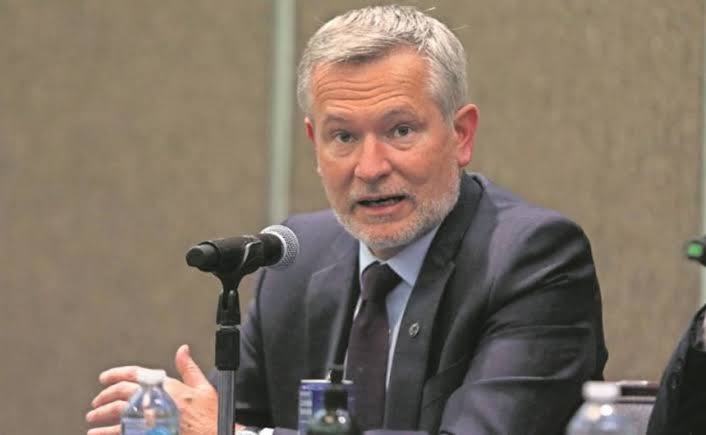

The European Union has committed nearly €45 million in humanitarian assistance to Nigeria in 2026 as its ambassador, Gautier Mignot, warned that the country may have the world’s largest population of people living below the poverty threshold.
Mignot spoke in Abuja on Saturday, October 17, 2026, during the commemoration of the International Day for the Eradication of Poverty, calling for sustained action by the Federal Government and development partners.
“Today, Nigeria is probably the country in the world with the highest number of people living under the poverty threshold,” he said, according to Vanguard in a report published on October 17, 2026.
The ambassador cited figures showing that 133 million Nigerians were living in multidimensional poverty in 2022, adding that estimates from different sources suggested the situation had worsened.
The National Bureau of Statistics (NBS), in its Nigeria Multidimensional Poverty Index 2022 report released on November 17, 2022, estimated that 133 million people, representing 63% of the population, experienced multidimensional poverty. The measure captures overlapping disadvantages in areas such as healthcare, education, housing and living standards, rather than income alone.
Mignot said the EU’s humanitarian assistance, delivered through its European Civil Protection and Humanitarian Aid Operations, would focus particularly on communities affected by conflict and other crises.
He stressed that emergency relief needed to be linked to longer-term recovery and stronger social protection systems to help vulnerable households rebuild their livelihoods.
The ambassador also highlighted the EU-backed Supporting Sustainable Social Protection Systems in Nigeria programme, which works with partners including UNICEF, GIZ, the International Labour Organisation, ActionAid and Oxfam.
The programme operates in Abia, Benue, Oyo, Sokoto, Kebbi, Adamawa and Borno states, supporting stronger social protection policies, improved data systems and better identification of vulnerable households.
Mignot acknowledged government initiatives, including the National Social Safety Net Programme, the Nigeria Community Action for Resilience and Economic Stimulus, and the Renewed Hope Social Protection Programme.
He said effective poverty reduction required coordination between government institutions, development partners and local communities, alongside respect for human rights, peace and security.
The ambassador’s warning underscores the challenge of translating public programmes and international assistance into improved living conditions for millions of Nigerians.