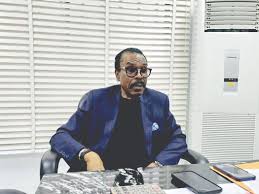

As artificial intelligence reshapes the global economy, energy — not algorithms — will determine which nations lead the next era of growth, according to Bismarck Rewane, Managing Director and Chief Executive Officer of Financial Derivatives Company Limited.
Delivering the keynote address titled “The African Energy Bank: Financing Africa’s Energy Future” at the 23rd Annual Aret Adams Memorial Lecture Series, 2026, Rewane argued that the proposed African Energy Bank is a strategic imperative amid worsening global energy imbalances.
“The world moved aggressively toward ‘no fossil fuels.’ But energy demand did not disappear,” he said.
He noted that every AI-driven process, from data centres to autonomous systems, depends on electricity. Yet while global financing for hydrocarbons has tightened under ESG and net-zero commitments, renewable energy expansion has not been rapid enough to bridge supply gaps — creating structural pressures, especially in Africa.
Highlighting what he described as Africa’s energy paradox, Rewane said the continent accounts for about 18 per cent of the global population but produces less than 2 per cent of global output. Despite vast reserves of oil, gas, solar and hydro resources, Africa remains the least electrified region worldwide.
Nigeria, he added, illustrates the contradiction. With ambitions of building a $1 trillion economy, its per capita electricity consumption stands at about 173 kWh annually, compared to over 13,000 kWh in the United States.
“Produce energy, consume it efficiently, and use it productively — life expectancy and prosperity improve,” Rewane argued.
He traced economic history from the agrarian revolution through coal, oil and the digital age, noting that every major expansion in global GDP has been powered by energy transformation. However, he stressed that resource endowment alone does not guarantee progress.
“Resources are not enough. Management determines outcomes,” he said, pointing to China and India as examples of countries that leveraged energy-intensive industrialisation to drive sustained growth.
Rewane linked the African Energy Bank proposal to calls by Bola Ahmed Tinubu for African nations to mobilise domestic savings — estimated at nearly $4 trillion — to fund development priorities. He also referenced remarks by Minister of State for Petroleum Heineken Lokpobiri, who described the bank as a vehicle to close financing gaps, particularly for natural gas as a transition fuel.
However, Rewane cautioned that governance credibility will be decisive. Drawing parallels with the formation of the African Development Bank in 1964, he warned against political missteps that could undermine investor confidence.
“This is not a game for rookies,” he said. “It requires deep capital, institutional discipline and governance credibility.”
With global institutions such as the World Bank and European Investment Bank deploying hundreds of billions of dollars into energy over the past decade, he described the proposed $5 billion capitalisation for the African Energy Bank as modest relative to the scale of need.
Ultimately, Rewane framed the initiative as more than a financing platform. Reliable electricity, he stressed, underpins AI, industrialisation, healthcare and digital economies.
“The revolution cannot be reversed. The question is whether Africa will power it — or be left behind by it,” he stated.