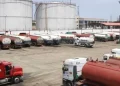
Dangote Cement has reinforced its dominance in Africa’s construction materials sector, maintaining its position as the continent’s largest cement producer with an annual production capacity of 55 million metric tons.
The company’s scale underscores its strategic importance to Africa’s fast-growing infrastructure and housing markets, where governments and private developers continue to invest heavily in roads, bridges, commercial real estate, and industrial projects. Dangote Cement’s operations span several African countries, giving the company one of the broadest manufacturing footprints in the region’s building materials industry.
Industry analysts say the company’s production capacity places it in a strong position to benefit from rising urbanisation across Africa. According to the United Nations, the continent is expected to experience some of the fastest urban population growth globally over the next two decades, increasing demand for cement and other construction inputs.
Dangote Cement’s integrated production model which includes local manufacturing plants, distribution networks, and export terminals, has also helped shield the company from some of the supply-chain disruptions and foreign exchange pressures affecting manufacturers across emerging markets.
The company remains a key player in Nigeria’s industrial sector, where cement demand continues to be driven by public infrastructure spending and private real estate development. Analysts note that sustained government investments in transportation corridors, housing initiatives, and energy infrastructure could further support long-term cement consumption growth.
Beyond Nigeria, Dangote Cement has steadily expanded its regional presence, strengthening operations in markets including Ethiopia, Tanzania, Senegal, Zambia, and South Africa. This geographic diversification has helped reduce overreliance on a single market while positioning the company to capture broader continental demand.
Market observers say maintaining a 55 million metric ton annual production capacity gives Dangote Cement a significant competitive advantage over regional rivals, particularly as African countries increasingly prioritise local manufacturing and industrialisation. Higher local production capacity can also reduce dependence on imported cement, helping governments conserve foreign exchange reserves.
However, the sector still faces challenges. Rising energy costs, inflationary pressures, logistics bottlenecks, and currency volatility remain key risks for cement manufacturers operating across Africa. Energy-intensive production processes mean fluctuations in gas, diesel, and electricity costs can materially affect profitability.
Despite these headwinds, Dangote Cement continues to be viewed as one of Africa’s most strategically important industrial companies. Investors and market analysts are expected to closely monitor the company’s future expansion plans, export strategy, and operational efficiency as infrastructure demand across the continent accelerates.