
Monday, July 20, 2026
  • Login
No Result
View All Result
The Business Times
  • News
  • BT Exclusive
  • Economy
  • Business
  • Financial Markets
  • Politics
  • Energy
  • Insights
  • Sports
  • News
  • BT Exclusive
  • Economy
  • Business
  • Financial Markets
  • Politics
  • Energy
  • Insights
  • Sports
No Result
View All Result
The Business Times
No Result
View All Result
Home Business

Cow vs. Car: Why a Lagos Bull Now Costs More Than a Toyota

bySodiq Adeoyo
April 19, 2026
in Business, Economy
0
Cow vs. Car: Why a Lagos Bull Now Costs More Than a Toyota
14
VIEWS
Share on FacebookShare on Twitter

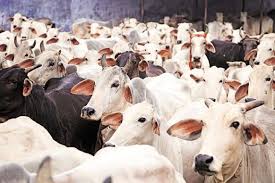
The Lagos State Butchers Association has raised an alarm over the unprecedented spike in cattle prices, with a single cow now fetching as much as 2.5 million, a steep climb from 1.7 million in 2025. This sharp appreciation in the cost of livestock is placing immense pressure on butchers and consumers alike, signaling a period of volatility for Nigeria’s largest red meat market. Beyond the immediate sticker shock, this trend highlights the structural vulnerabilities of the nation’s agricultural logistics and the urgent need for localized ranching initiatives to stabilize the domestic economy.

The current price hike is driven by a combination of insecurity and surging logistics costs. Alhaji Bamidele Kazeem, Patron of the association, noted that cows previously priced at 1.7 million are now consistently selling between 2.3 million and 2.4 million. The supply chain, which relies heavily on livestock transported from northern Nigeria, has been severely disrupted by the increase in fuel pump prices. With diesel and petrol costs skyrocketing, the expense of transporting cattle across the country has become a primary driver of food inflation in the FCT and Lagos, making a single cow more expensive than some motor vehicles bought just a few years ago.

The inability of local producers to bridge this supply gap is largely due to the delayed implementation of planned feedlot and ranching programs. Currently, Lagos remains overly dependent on northern suppliers, leaving the market exposed to any regional security or economic shocks. The association’s call to accelerate the Eko Ranching project in Gbodu, Epe, is a strategic economic necessity. Localized ranching would not only reduce the dependency on high-cost transportation but also create a more resilient supply chain that can withstand the “harsh economic realities” currently facing the retail sector.

Furthermore, the disappearance of mid-range livestock options with cows priced at 1 million now virtually non-existent threatens the livelihoods of thousands of small-scale traders. As traders struggle to remain in business, the potential for job losses in the informal sector grows, adding to the country’s broader economic instability. The situation demands a fast-tracked fiscal policy that prioritizes agricultural infrastructure to ensure that protein sources remain affordable for the average citizen while protecting the commercial interests of the meat industry.

Tags: agricultureBamidele KazeemEko RanchingInflationLagos StatelivestockLogisticsSupply Chain
Sodiq Adeoyo

Sodiq Adeoyo

Next Post
Wealth Explosion: NGX Investors Pocket N8.6 Trillion in Five Days

Wealth Explosion: NGX Investors Pocket N8.6 Trillion in Five Days

Leave a Reply Cancel reply

Your email address will not be published. Required fields are marked *

Recommended

Dust Haze and Thunderstorms to Sweep Nigeria Midweek: NiMet Issues Nationwide Weather Alert

7 months ago
Borno Prioritizes Terrorist Rehabilitation Over Health

Borno Prioritizes Terrorist Rehabilitation Over Health

8 months ago

Popular News

  • Inside Flutterwave’s Journey to a $3 Billion Fintech Giant

    0 shares
    Share 0 Tweet 0
  • NRS Gives Large Taxpayers July 31 Electronic Invoicing Deadline

    0 shares
    Share 0 Tweet 0
  • ECOWAS Backs Nigeria-Morocco Gas Pipeline for Regional Economic Growth

    0 shares
    Share 0 Tweet 0
  • Tinubu Urges ECOWAS Unity Against South Africa Xenophobic Violence

    0 shares
    Share 0 Tweet 0
  • How to Choose a Career That Plays to Your Strengths

    0 shares
    Share 0 Tweet 0

Connect with us

Facebook Twitter Instagram TikTok

Newsletter

Pages

  • About Page
  • Contact
  • Domestic Gas Sales Rise 30% as Nigeria’s Energy Reforms Gain Traction
  • Privacy Policy
  • Terms & Conditions

Navigation

  • News
  • BT Exclusive
  • Economy
  • Business
  • Financial Markets
  • Politics
  • Energy
  • Insights
  • Sports

© 2025 The Business Times NG .

Welcome Back!

OR

Login to your account below

Forgotten Password?

Retrieve your password

Please enter your username or email address to reset your password.

Log In
No Result
View All Result
  • Home
  • News
  • BT Exclusive
  • Economy
  • Business
  • Financial Markets
  • Politics
  • Energy
  • Insights
  • Sports

© 2025 The Business Times NG .