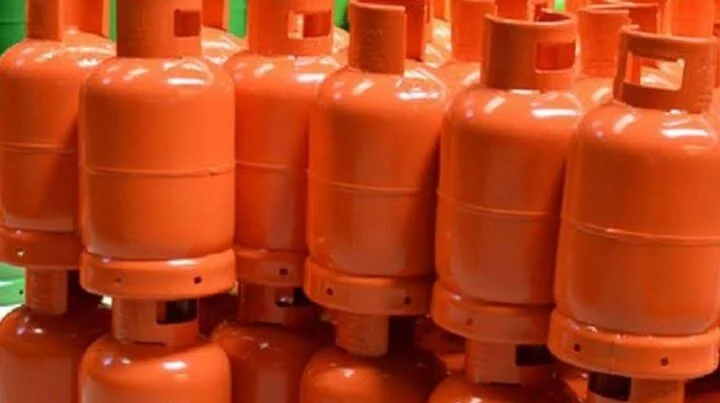

As cooking gas prices hit ₦1,600 per kilogramme, many Nigerians still confuse LPG with the cheaper CNG used in vehicles. They are different fuels, with different properties, uses and pricing systems.
When Nigerians complain that “gas is now ₦1,600,” they are usually talking about cooking gas. But in motor parks and online discussions, the price is sometimes compared with Compressed Natural Gas (CNG), the fuel being promoted for vehicles.
The comparison can be misleading because Liquefied Petroleum Gas (LPG), commonly called cooking gas, and CNG are different fuels.
LPG is made mainly from propane and butane. It is stored in a cylinder as a liquid under pressure and is sold to households by the kilogramme. It is mainly used for cooking and heating, although LPG can also power vehicles fitted with the appropriate certified autogas system.
CNG, by contrast, is made mainly from methane. It remains in gaseous form but is compressed to high pressure and stored in specially designed vehicle cylinders. It is used mainly as a transport fuel and requires a certified conversion system before a petrol-powered vehicle can use it.
The two fuels also differ in the way they are measured. LPG is normally sold by kilogramme, while CNG in Nigeria is priced by standard cubic metre (SCM).
That distinction is important as LPG prices rise. The Guardian reported on September 18, 2026, that retail LPG prices had reached about ₦1,600 per kilogramme in Lagos, while consumers in Osun and Oyo were paying about ₦1,500 and ₦1,300 respectively.
CNG prices are substantially lower on the current official programme structure. The National Automotive Design and Development Council (NADDC) said in August 2026 that CNG was selling at ₦380 per SCM for cars and passenger buses and ₦450 per SCM for heavy-duty vehicles and lorries. The council also said 81 firms had been licensed to retail CNG, compared with about four previously.
However, the figures should not be compared as though ₦1,600 of LPG and ₦380 of CNG represent the same quantity of fuel. They are different products measured in different units, and the energy content of a kilogramme of LPG cannot be directly equated with one SCM of CNG simply by comparing the prices.
Their pricing systems are also different. LPG prices are affected by supply, imports, exchange rates, logistics and distribution costs. NMDPRA data reported in August showed that Nigeria’s LPG supply had increased in July 2026, with domestic sources accounting for most of the supply, although retail prices remained high in several locations.
CNG, meanwhile, is being promoted through the Federal Government’s Pi-CNG & EV programme as a lower-cost alternative for transport. The initiative says it has supported subsidised vehicle conversion kits and the expansion of CNG infrastructure, while the government has also introduced incentives and financing arrangements to encourage adoption.
The difference also matters for safety. LPG cylinders and CNG vehicle tanks are designed for different fuels and operating conditions. A domestic LPG cylinder must not be used as a CNG storage vessel, and a CNG vehicle tank cannot be filled with LPG. Vehicle conversions must use equipment certified for the particular fuel and installed by qualified technicians. Pi-CNG & EV says its conversion network uses certified kits and accredited centres.
The confusion is therefore more than a question of terminology. When Nigerians hear “gas,” they may be referring to LPG for cooking or CNG for transportation. Treating the two as the same product can lead to incorrect comparisons about prices, savings and fuel policy.
The simple distinction is this: LPG is the gas commonly used in household cooking cylinders, while CNG is the compressed natural gas being developed as a vehicle fuel.
Both are gases used as energy sources, but they are not the same fuel and cannot be used interchangeably.
So, the next time someone says “gas is now ₦1,600,” the important question is: which gas?