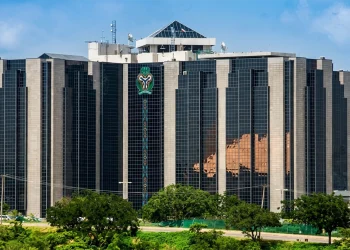

The FinTech Association of Nigeria has thrown its weight behind the latest regulatory measures introduced by the Central Bank of Nigeria (CBN), asserting that the reforms will drastically reduce fraud and bolster consumer trust. Speaking at a Chartered Institute of Bankers of Nigeria (CIBN) induction and award ceremony in Lagos on Sunday, March 15, 2026, the association’s National Treasurer, Mr. Oluwaseun Adesanya, noted that these interventions are essential for safeguarding the nation’s rapidly evolving financial ecosystem.
The structural and security consequence of these reforms includes a new mandate restricting banking applications to a single device. Adesanya explained that this specific policy is designed to eliminate unauthorized access points and provide a more controlled environment for digital transactions. By tightening the link between a user and their hardware, the regulator aims to improve overall system security, which in turn reinforces public confidence in digital banking platforms.
Analytically, the impact of these policies extends beyond individual security to the broader fiscal health of the banking sector. Adesanya highlighted that the reforms would assist banks in curbing losses from non-performing loans (NPLs) by strengthening credit facility frameworks. These synchronized measures four of which were released in just a 48-hour window are viewed as a necessary “sanitization” of the financial system to help institutions avoid heavy provisions for bad debt.
The impact on “Artificial Intelligence and Fraud Prevention” remains a vital dimension of the new financial landscape. Adesanya emphasized that AI is now a non-negotiable tool for detecting anomalies in real-time. By analyzing transaction patterns, AI systems can flag suspicious behavior such as a high-value transfer occurring at 2 a.m. for a customer who typically transacts during business hours. He warned that financial institutions failing to adopt these advanced technologies risk becoming obsolete and vulnerable to sophisticated cyber threats.
Furthermore, the association called for an aggressive increase in consumer education and public awareness. Adesanya urged bank customers to remain vigilant and proactive in understanding evolving financial technologies. He stressed that while regulation and technology provide the foundation for a secure system, the ultimate success of a trusted digital economy depends on a collaborative relationship between regulators, institutions, and an informed public.
The long-term outlook for the Nigerian financial sector suggests a transition toward a more disciplined and tech-driven environment. As the CBN continues to roll out rapid-fire reforms, the focus for stakeholders will shift toward seamless implementation and the integration of predictive AI tools. For the average Nigerian, these changes promise a banking experience that balances the convenience of digital access with the robust security required to protect their assets.