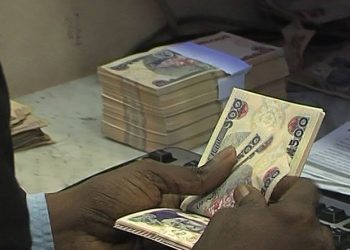

The Central Bank of Nigeria (CBN) is set to raise ₦700 billion through a Nigerian Treasury Bills (NTBs) auction scheduled for May 7, 2026, marking the first issuance for the month and reinforcing its second-quarter liquidity management strategy.
Treasury Bills are short-term government debt instruments with maturities typically ranging from 91 to 364 days. They are issued at a discount and redeemed at face value, with the difference representing the investor’s return. In Nigeria, NTBs are widely used by the CBN to regulate money supply, influence interest rates, and provide a benchmark for short-term borrowing costs.
The planned ₦700 billion issuance comes at a time when financial system liquidity remains under pressure, driven by a combination of monetary tightening, elevated inflation, and increased government borrowing needs. By offering fresh bills to the market, the CBN effectively mops up excess cash, helping to stabilize the naira and curb inflationary pressures.
Market participants expect strong demand from institutional investors, including banks, pension fund administrators, and asset managers seeking relatively risk-free returns amid ongoing economic uncertainty. However, analysts say the auction’s stop rates the final interest rates accepted will be closely watched for signals on the direction of monetary policy.
“Yields are likely to remain elevated as the CBN continues its tight stance to anchor inflation expectations,” said a Lagos based fixed-income strategist. Higher NTB yields typically attract capital inflows into the fixed-income market, but they also raise borrowing costs for the government and can crowd out private sector credit.
The auction also aligns with the Federal Government’s broader domestic borrowing programme for the second quarter, as authorities seek to finance budget deficits while minimizing reliance on external debt. Domestic instruments like NTBs are generally preferred due to lower currency risk, although they can exert pressure on local interest rates.
For investors, the offering presents an opportunity to lock in attractive yields in a high-interest-rate environment. Yet, the outlook remains shaped by macroeconomic variables, including inflation trends, exchange rate stability, and potential shifts in global monetary conditions.
Recent inflation readings have remained elevated, prompting the CBN to sustain a hawkish stance, meaning a policy bias toward higher interest rates to control price growth. This approach has supported yields across the fixed-income curve, making government securities increasingly appealing relative to equities.
Still, some analysts caution that persistent reliance on short-term borrowing instruments may create refinancing risks, as large volumes of maturing bills need to be rolled over frequently. This dynamic could amplify volatility in money markets if investor demand weakens.
Looking ahead, the success of the May 7 auction will serve as a key barometer for investor appetite and liquidity conditions in Nigeria’s financial system. It will also provide further insight into how effectively the CBN is balancing its dual mandate of maintaining price stability while supporting economic growth.